Step-by-Step Guide to Installing a Home Exhaust Fan
A practical homeowner’s guide to safely and efficiently mounting an exhaust fan
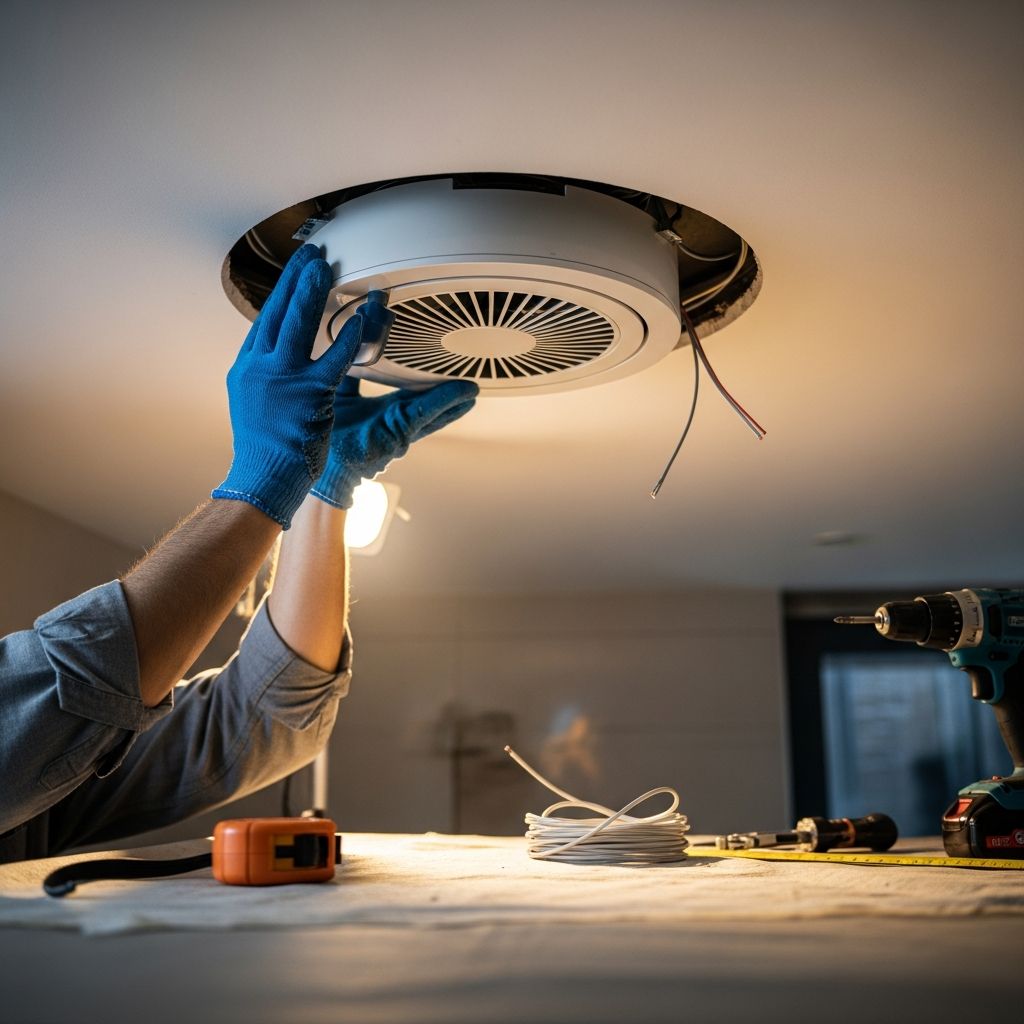
How to Install an Exhaust Fan in Your Home
Adding an exhaust fan is one of the most effective upgrades you can make for battling moisture, odors, and stale air in a bathroom, laundry room, or kitchen. A properly mounted fan helps prevent mold, protects finishes from moisture damage, and makes indoor air feel fresher and more comfortable.
Why Exhaust Fans Matter in Modern Homes
Exhaust fans remove humid, polluted, or odor-filled air from a room and expel it outdoors, which reduces moisture buildup on walls, ceilings, and windows. This is especially important in bathrooms, where steamy showers can quickly lead to peeling paint, warped trim, and mildew growth if humid air lingers too long.
By continuously replacing stale air with fresher air from adjacent spaces, a correctly installed fan can also reduce lingering smells from cooking, laundry, or cleaning products. Over time, this improves comfort, protects building materials, and can even support better indoor air quality.
Planning Your Exhaust Fan Project
Before picking up a saw or screwdriver, careful planning will make the installation smoother and safer. Start by deciding which room needs better ventilation and where the fan will discharge air outdoors. Ceiling-mounted units are common in bathrooms, while wall-mounted or inline fans may suit other spaces better, depending on framing and duct routes.
Next, consider whether you are replacing an existing fan or cutting a brand-new opening. A replacement usually reuses the same opening and often the same duct path, while a new installation requires evaluating joist locations, available attic or wall space, and proximity to an exterior wall or roof for the vent termination.
Choosing the Right Exhaust Fan
Not every exhaust fan is suitable for every room. The key specification to look for is airflow, usually listed in cubic feet per minute (CFM). A small half bath may need only a modest fan, while a large master bathroom or laundry area requires a more powerful model to keep moisture in check.
Noise level, measured in sones, is another important factor. Quieter units tend to cost more, but they are more likely to be used consistently because they are less disruptive. Other optional features include integrated lights, heaters, humidity sensors, and motion sensors, so choose a unit that fits both your ventilation needs and your daily habits.
Essential Tools and Materials
Gathering everything ahead of time helps prevent mid-project delays. At a minimum, you will need hand tools for cutting, fastening, and making safe electrical connections. Depending on where the fan vents, additional roofing or siding materials and sealants may be required.
- Measuring tape, pencil, and straightedge
- Stud finder and non-contact voltage tester
- Drywall saw or keyhole saw
- Drill/driver with assorted bits
- Screws suitable for wood framing
- Wire stripper and appropriate wire connectors
- Electrical cable and electrical box (if needed)
- Ducting (flexible or rigid) and clamps or foil tape
- Exterior vent cap or hood
- Caulk or sealant rated for the material you are sealing
- Safety glasses, dust mask, and work gloves
Safety and Code Considerations
Working with electricity and cutting into building materials always demands attention to safety. Shut off power to the circuit at the main service panel and verify that it is off with a tester before touching any wiring. Never rely solely on a wall switch to disconnect power, because many switches only interrupt one conductor.
Local codes often require that bathroom exhaust fans discharge directly outdoors, not into attics, crawlspaces, or wall cavities. Check local building and electrical codes before you start, and when in doubt, consult or hire a licensed professional—especially when running new circuits or making complex roof or wall penetrations.
Measuring Fan Size and Airflow Needs
To match a fan to a room, you can use simple sizing guidelines based on room dimensions. For a typical bathroom with a standard ceiling height, a commonly used rule of thumb is to choose a fan with roughly one CFM per square foot of floor area, then round up to the next available size. Larger or taller rooms and spaces with jetted tubs often benefit from a higher capacity.
Also check the manufacturer’s recommended maximum duct length and number of bends. Long, twisting duct runs reduce effective airflow, so if your duct path is complex, consider a fan with a higher rated airflow to compensate for duct friction.
Placement Options: Ceiling vs. Wall
Ceiling-mounted fans are ideal in rooms where warm, humid air naturally rises, such as bathrooms with showers or bathtubs. Positioning the fan near the shower or tub, but not directly over it unless the model is rated for that use, improves moisture capture and minimizes condensation on surrounding surfaces.
Wall-mounted fans work well in rooms where ceiling access is limited or where running a short, straight duct through an exterior wall is more practical than going up through an attic and roof. In either case, aim for a location that allows a relatively straight duct run to the outside to maximize performance and reduce noise.
Sample Sizing Reference Table
| Room Type | Approx. Size | Suggested Fan Capacity | Notes |
|---|---|---|---|
| Small half bath | Up to 50 sq ft | 50–70 CFM | Usually toilet and sink only |
| Standard full bath | 50–100 sq ft | 80–110 CFM | Shower or tub plus toilet |
| Large master bath | 100–150 sq ft | 110–150 CFM | Consider two fans for separate zones |
| Laundry room | Variable | 80–130 CFM | Helps remove moisture and detergents |
Marking and Cutting the Opening
Once you have chosen the location, use the fan housing or provided template to outline the opening on the ceiling or wall. A stud finder helps confirm that the opening does not overlap joists, studs, or other obstacles like pipes and ducts. Take a moment to check from the attic or opposite side of the wall, if accessible, to avoid surprises.
After marking, score the outline lightly with a utility knife to minimize drywall paper tearing, then cut along the lines with a drywall saw. Work slowly and avoid plunging the blade too far into the cavity, since wiring or other components may be behind the surface. Remove the cutout piece and vacuum or sweep away debris before test-fitting the fan housing.
Mounting the Fan Housing to Framing
Fan housings are designed to attach securely to framing members using mounting brackets, adjustable rails, or direct screw fastening. Position the housing so that its finished edge will be flush with the finished surface, not buried deep behind the drywall or protruding awkwardly into the room. Adjust the brackets as needed to bridge between joists or studs while keeping the unit level.
Use manufacturer-recommended screws to secure brackets and flanges to the framing, avoiding overtightening that can distort the housing. A firm, rigid installation reduces vibration and prevents rattling noises when the fan runs. Before proceeding, confirm that the duct outlet and wiring knockout on the housing are oriented conveniently toward the planned duct and electrical connections.
Routing and Securing the Duct
The duct is the pathway that carries stale air from the fan to the outdoors. Keep this path as straight and short as possible, with gentle curves rather than sharp bends. Each bend adds resistance to airflow, so minimizing elbows and kinks improves efficiency and reduces noise.
Use ducting of the size specified in the fan instructions and secure connections with clamps or foil tape designed for HVAC use. Support long horizontal duct runs with straps so they do not sag, which can trap condensation or reduce airflow. Where the duct passes through unconditioned attic space, insulating it can help prevent condensation and improve performance, especially in colder climates.
Creating and Sealing the Exterior Vent
At the end of the duct, install a vent hood or cap that directs air away from the building and includes a backdraft damper to prevent outside air from blowing back in. The exact installation method depends on whether the vent exits through the roof, a wall, or a soffit. In all cases, follow the vent manufacturer’s guidance to protect against water intrusion.
Use compatible sealants and flashing around the penetration point to keep rain and moisture out of your home’s structure. On roofs, that may involve integrating the vent flashing with shingles and applying roofing sealant over fasteners. On walls, careful caulking around the perimeter of the vent hood helps block drafts and water.
Making Safe Electrical Connections
With the housing mounted and duct in place, you can connect the fan to the electrical supply. Confirm once more that power is off at the breaker panel, then remove the fan’s wiring compartment cover. Feed the electrical cable through a strain-relief connector into the housing to protect the conductors from abrasion.
Inside the compartment, connect the corresponding wires: the ungrounded (often black) conductor to the fan’s hot lead, the neutral (often white) conductor to the neutral lead, and the equipment grounding conductor (bare or green) to the grounding screw or wire inside the housing. Use approved wire connectors and neatly tuck the connections into the wiring box before replacing the cover.
Installing the Fan Motor and Grille
Many modern exhaust fans come with a housing that is mounted first and an internal fan assembly that slides into place afterwards. This design simplifies installation because the heavier motor and blower can be added after the housing is secured and wired. Carefully align the fan assembly with its tracks or mounting points and fasten it as instructed so it does not vibrate or come loose.
The final interior component is usually a grille or decorative cover. These often attach with spring clips or screws and should sit flush against the ceiling or wall for a finished appearance. Take a moment to clean any dust from the area before snapping the grille into place, ensuring that no insulation or debris blocks the intake.
Testing and Fine-Tuning Performance
Once the installation is complete and all covers are in place, restore power at the breaker and test the fan. It should start promptly, run smoothly, and sound consistent without unusual rattles, grinding, or buzzing. If the fan does not start, switch off power again and double-check all wiring connections.
To get a sense of airflow, hold a thin strip of tissue or a piece of light paper near the grille; it should be drawn toward the intake. If airflow seems weak, verify that the damper inside the fan and the exterior vent damper move freely and that the duct is not kinked or crushed. Addressing these issues early ensures the fan delivers the expected ventilation benefits.
Basic Maintenance to Keep Your Fan Effective
Even a well-installed exhaust fan requires occasional cleaning and inspection. Dust and lint gradually accumulate on the grille and blower blades, reducing airflow and making the fan work harder. A quick cleaning once or twice a year keeps performance strong and prolongs the life of the motor.
Turn off power, remove the grille, and gently vacuum or wipe away dust from the grille, housing, and fan blades. If the exterior vent is accessible, ensure that its damper opens freely and is not blocked by debris, paint, or nesting insects. Regular attention prevents problems such as overheating motors, noisy operation, or poor ventilation.
Frequently Asked Questions
Do all bathrooms need an exhaust fan?
Any bathroom without an operable window or with frequent showers or baths benefits from a dedicated exhaust fan. Even in rooms with windows, fans provide more consistent moisture control because they can be used during cold weather or when opening a window is not practical.
Can a fan vent into an attic or crawlspace?
No, venting into enclosed spaces like attics, crawlspaces, or wall cavities can deposit moisture where it cannot escape easily, leading to mold, rot, and structural damage. Instead, always terminate the duct directly to the outdoors through a roof, wall, or soffit vent designed for this purpose.
Is installing an exhaust fan a DIY-friendly project?
Many homeowners with moderate DIY experience can install or replace an exhaust fan, especially if existing wiring and ductwork are reused. However, running new circuits, creating new roof penetrations, or working with complex framing may be better handled by licensed electricians or contractors for safety and compliance.
How long should an exhaust fan run after a shower?
In most bathrooms, running the fan for about 15–20 minutes after a shower helps clear out lingering moisture. Using a timer switch or humidity-sensing control can automate this process so the fan runs long enough without being left on for hours unnecessarily.
What if my fan is very loud?
Excessive noise can stem from several issues: an undersized duct, loose mounting hardware, or accumulated dust on the blades. If tightening fasteners and cleaning the fan do not help, upgrading to a newer, quieter model and ensuring the duct is properly sized and routed can significantly reduce sound levels.
Final Tips for a Reliable Installation
- Always shut off power at the breaker panel before working on wiring.
- Plan for the shortest, straightest duct route to the outdoors you can reasonably achieve.
- Seal around the housing and duct penetrations to reduce air leaks and prevent moisture intrusion.
- Choose a fan with enough capacity for the room and consider quieter models for everyday comfort.
- Schedule periodic cleaning and inspection so the fan continues to perform efficiently for years.
With thoughtful planning, careful installation, and periodic maintenance, a home exhaust fan can serve as a quiet but powerful ally against moisture, odors, and poor indoor air quality. Whether the project is a straightforward replacement or a brand-new installation, approaching each step methodically will result in a safer, more comfortable living space.
Similar Articles







Read full bio of medha deb