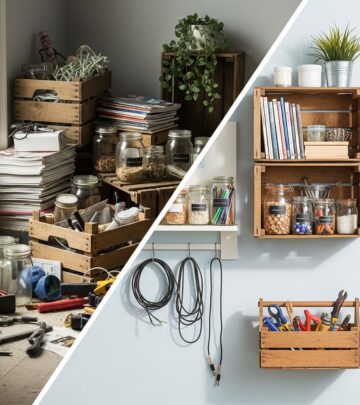
Stress-Free Clutter Control: Real-Life Strategies for Busy Families
Simple systems that keep the mess in check, even when life gets loud.
If toys under the couch, mail on the counter, and shoes at every door feel like your normal, you are not alone. A cluttered home is not a sign of failure; it simply means your spaces are working hard for your family. With a few realistic systems, you can cut the chaos without expecting magazine perfection.
Why Clutter Feels Overwhelming (And What To Do First)
Clutter drains energy because every stray item is a tiny decision waiting to be made: keep, toss, store, or donate. When every room demands decisions, your brain hits decision fatigue long before you reach the bottom of the laundry basket. The solution is not more willpower, it is fewer decisions through simple systems.
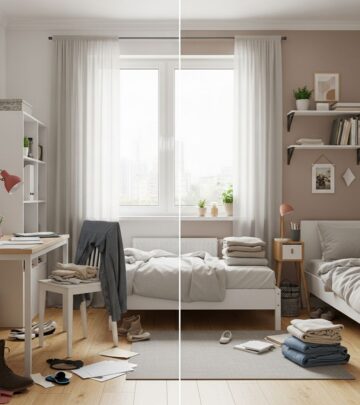
Instead of asking, “How do I organize my whole house?” ask, “What tiny area can I reset today in 15 minutes?” Micro-wins unlock momentum, help you see progress quickly, and build confidence that a calmer home is possible even in a busy season.
- Start with a small, visible area like the coffee table or kitchen sink.
- Set a timer for 10–15 minutes and stop when it rings.
- Focus on clarity, not perfection; visible improvement is the only goal.
The Three-Basket Method For Fast Decluttering
Before diving into specific rooms, use one simple method that works almost anywhere: the three-basket system. Grab three containers and label them in your mind: “Keep here,” “Move elsewhere,” and “Out of the house.” This keeps you moving instead of second-guessing every item.
Work in a small zone at a time—one shelf, one drawer, one corner—and sort quickly. The goal is speed, not deep decisions. Items you are unsure about can go in a clearly dated “maybe” box that you revisit later, which protects you from declutter regret.
- Keep here: Items that belong in this exact space and are used regularly.
- Move elsewhere: Items that matter but are in the wrong room or zone.
- Out of the house: Things to donate, recycle, or trash.
Designing “Homes” For Things, Not Piles
Clutter returns when items do not have a clear, easy-to-use storage home. The more specific the home, the easier it is for every family member to put things away without asking where they go. Vague directives like “Put it in your room” create mystery piles, not organization.
Good storage homes are simple, reachable, and obvious. If you can explain the system to a child in one sentence, it is probably clear enough for tired adults too.
- Use open baskets and bins for everyday items like toys, shoes, and remotes.
- Reserve lidded boxes and high shelves for rarely used or seasonal items.
- Label containers with words, pictures, or both to make the system self-explanatory.
Entryway And Drop-Zone: Controlling The Daily Influx
The area where your family enters the home acts like a filter. Without a simple system at the door, everything you own has an equal chance of ending up on the floor. Think of this space as a landing strip where you control what comes fully into the house.
Even if you do not have a formal entryway, you can still create a mini drop-zone using a wall, a corner, or a hallway. The goal is to provide obvious places for the things that are always in your hands when you walk in.
- Install hooks at adult and child height for coats, backpacks, and bags.
- Use a shallow tray or boot mat near the door for shoes to keep dirt contained.
- Assign a small basket or bin per family member for hats, gloves, and grab-and-go items.
- Place a letter tray or vertical file for incoming mail and school papers to avoid counter piles.
Kitchen Calm: Clearing Counters And Hidden Chaos
The kitchen often doubles as command center, snack station, homework hub, and mail sorter. Countertops become the easiest place to drop anything without a home. To regain control, treat every surface like premium real estate and reserve it only for daily-use items.
Instead of buying endless organizers, first remove what you rarely use and then decide which tools deserve space in the “easy reach” zones. Frequently used items should live closest to where they are used, not where they happened to land the first time.
- Keep only a handful of daily appliances on the counter, like the coffee maker or toaster.
- Store baking supplies together near the oven, and food storage containers near the fridge.
- Use drawer dividers for utensils so you can see everything at a glance.
- Assign one small bin for “current week” snacks so opened boxes and bags have a limit.
Simple Kitchen Storage Ideas
| Problem Area | Quick Fix | Time Required |
|---|---|---|
| Overflowing food containers | Match lids to bases and donate any extras; store lids upright in a narrow bin. | 20–30 minutes |
| Messy spice cabinet | Use a turntable or tiered riser and group spices by type (everyday, baking, specialty). | 15–20 minutes |
| Random junk drawer | Add small containers inside the drawer and limit each to a single category. | 10–15 minutes |
Living Room: Tidy Even When You Are Actually Living There
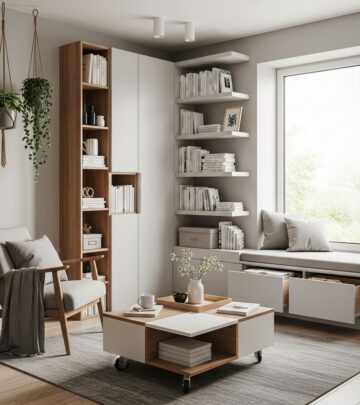
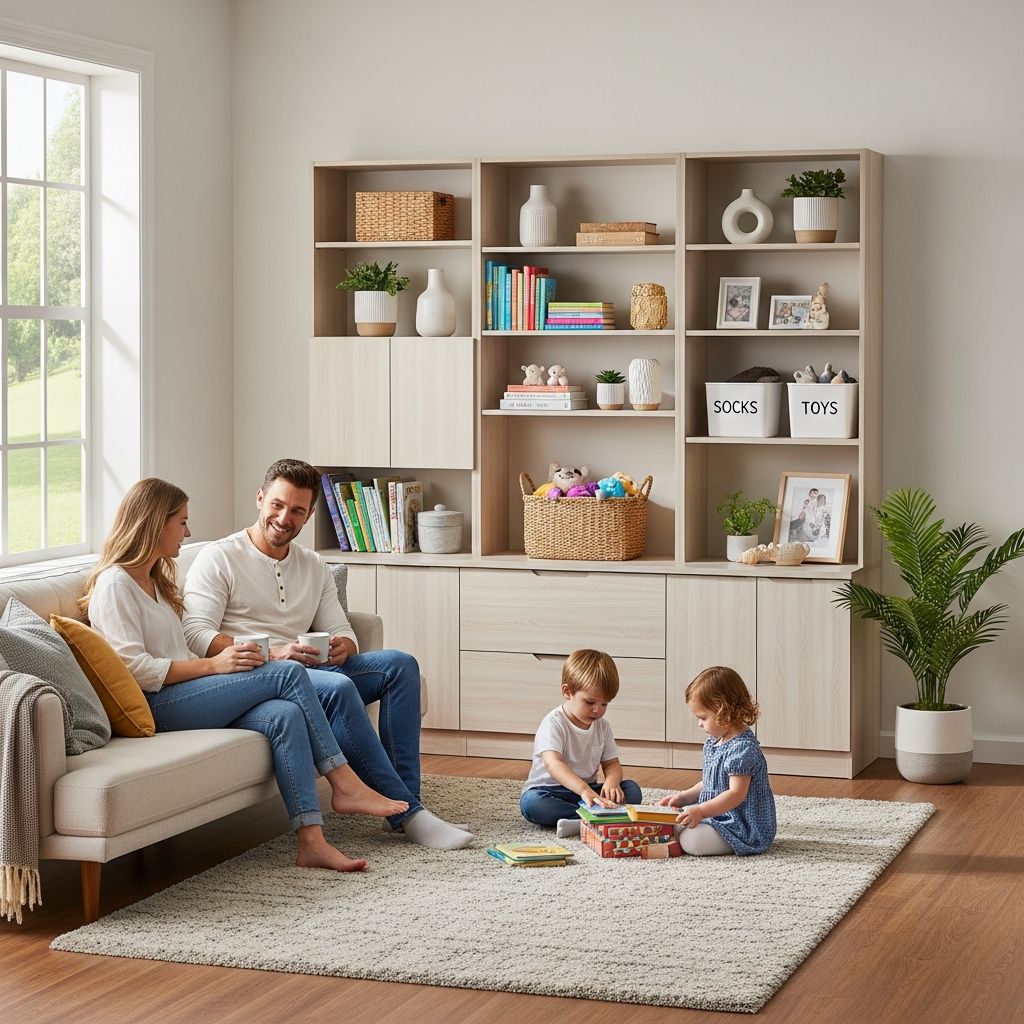
A lived-in family room will never look like a furniture showroom, and that is a good thing. The goal is not to remove signs of life but to make it easy to reset the room at the end of the day. Think in terms of “contain, not hide” when planning storage.
Simple, flexible storage keeps the room functional for everything from family movie night to afternoon play sessions. Storage should be so obvious that even guests can help tidy up.
- Use a large tray on the coffee table to group remotes, coasters, and small items.
- Choose ottomans with hidden storage for blankets, games, or extra pillows.
- Place a lidded basket next to the couch as a quick sweep-up spot for toys or books.
- Limit decorative items on shelves so family essentials have plenty of breathing room.
Similar Articles


Read full bio of medha deb