Stress-Free Kitchen: A Practical Guide to Smarter Storage and Everyday Order
Transform cluttered counters and chaotic cabinets into a calm, efficient cooking space.
An organized kitchen is not about having matching jars or picture-perfect shelves; it is about creating a space where cooking, cleaning, and gathering feel easier and less stressful. By setting up simple, logical systems, your kitchen can support your daily life instead of working against it.
Why Kitchen Organization Matters
Every time you search for a missing lid, clear a pile off the counter to chop vegetables, or dig through a packed drawer, you lose time and patience. An organized kitchen cuts down on frustration, reduces food waste, and makes it easier to keep your home clean.
Good systems also help everyone in the household know where things belong, so putting items away becomes a shared habit rather than a constant solo chore.
Step One: Define How You Use Your Kitchen
Before buying containers or rearranging cabinets, think about how you actually live. Organizing around your real routines creates a kitchen that feels intuitive instead of forced.
- List your main activities: Everyday cooking, meal prep, lunch packing, baking, coffee or tea making, entertaining, kids’ snacks.
- Note your pain points: Crowded counters, overloaded pantry, impossible to find spices, overflowing plastic containers, cluttered sink area.
- Prioritize: Focus first on the areas that slow you down the most, not the ones that simply look messy.
Create Functional Zones (Not Just Pretty Cabinets)
Zones group similar tools and ingredients together near where you use them. Instead of organizing by category alone, organize by task so your movements are shorter and more efficient.
- Cooking zone: Store pots, pans, cooking utensils, oils, and frequently used spices near the stove.
- Prep zone: Keep cutting boards, knives, mixing bowls, and measuring tools near your main prep surface.
- Cleaning zone: House dish soap, sponges, towels, trash bags, and cleaning sprays under or near the sink.
- Breakfast/coffee station: Corral mugs, coffee or tea supplies, cereals, and quick-grab items in one area.
- Snack zone: Use a low shelf or bin for healthy snacks where kids or busy adults can help themselves.
Example Zone Layout Table
| Zone | Location Idea | Key Items |
|---|---|---|
| Cooking | Cabinet or drawers beside the stove | Pots, pans, spatulas, spoons, baking sheets, oil, salt, pepper |
| Prep | Near the largest clear counter | Cutting boards, knives, mixing bowls, colanders, measuring cups |
| Cleaning | Under the sink or nearby lower cabinet | Dish soap, dishwasher pods, sponges, towels, trash bags |
| Drinks/Breakfast | Upper cabinet next to the fridge or kettle | Mugs, glasses, coffee, tea, sweeteners, oats, cereal |
| Snacks | Low pantry shelf or bin | Snack bars, crackers, portioned nuts, fruit cups |
Declutter First, Then Organize
No amount of bins can fix a space that simply has too much stuff. A short, focused decluttering session will make every later decision easier.
- Pull out by category: Take out all mugs, all plastic containers, or all baking pans at once to see duplicates.
- Ask realistic questions: Do you use it at least once a year? Does it serve a unique purpose? Would you miss it if it disappeared?
- Create clear piles: Keep, donate, recycle, and toss. Decide quickly and avoid overthinking every item.
When possible, let go of single-use gadgets, worn-out pans, excess water bottles, and chipped dishes that crowd your cabinets.
Smart Storage for Cabinets
Cabinets often hold a mixture of items stacked in unstable piles. A few simple tools can turn vertical space into something useful and safe.
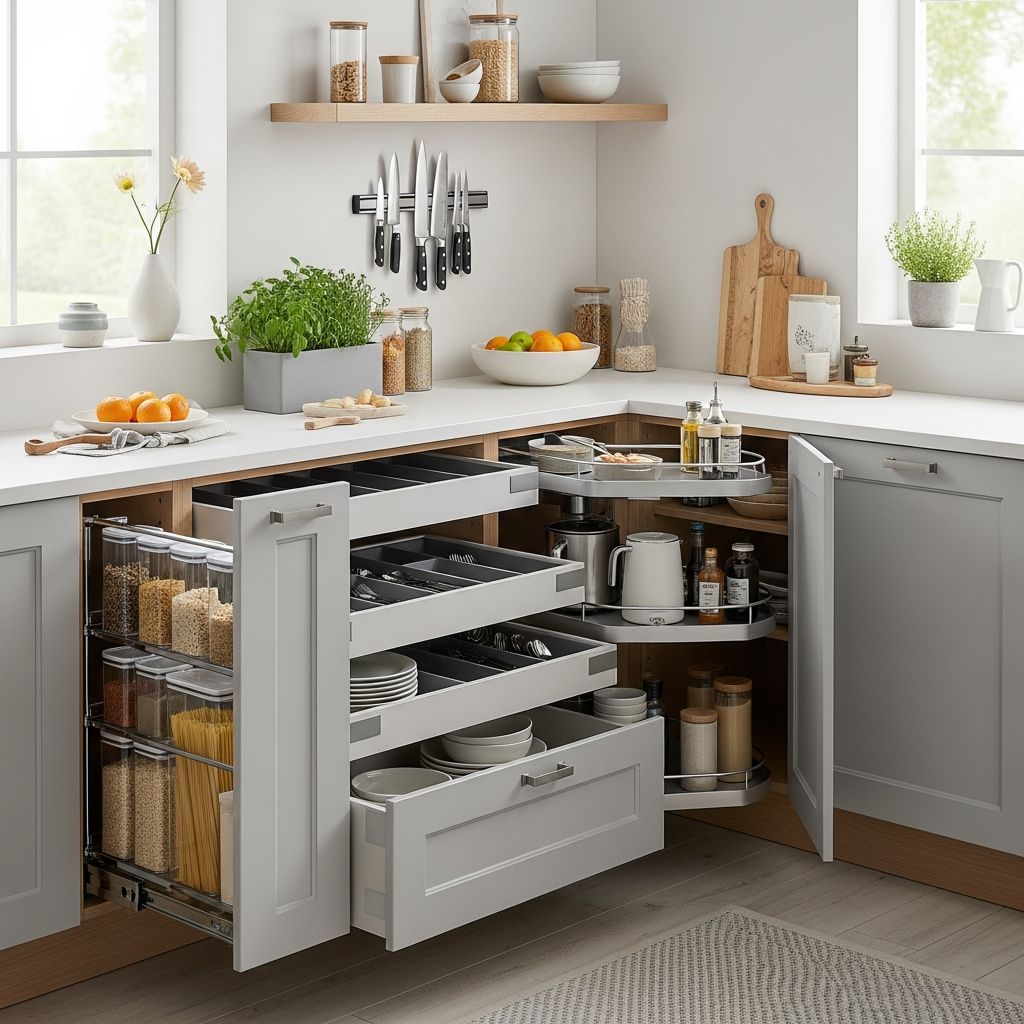
- Use shelf risers: Add tiered stands for plates, bowls, or pantry goods so you can see and reach items in the back.
- Try vertical organizers: Store baking sheets, cutting boards, and trays upright instead of stacked flat.
- Group by frequency: Place everyday dishes and cookware at eye or waist level and rarely used items on higher shelves.
- Add pull-out baskets: In deep cabinets, slide-out baskets or trays prevent things from getting lost in the back.
Drawer Systems That Actually Work
Drawers are often catch-all spaces. Giving each drawer a clear purpose keeps clutter from spreading across the whole room.
- Assign roles: One drawer for cutlery, one for cooking tools, one for baking tools, one for miscellaneous household items.
- Use adjustable dividers: Expandable dividers or small bins keep utensils, gadgets, and measuring spoons from jumbling together.
- Limit the “junk drawer”: Keep a small section with labeled compartments for batteries, tape, pens, and scissors rather than a full chaotic drawer.
- Stand items where possible: Store spatulas and wooden spoons on their sides or upright in divided sections to fit more pieces.
Taming Plastic Containers and Lids
Food storage containers can easily become the most frustrating area in the kitchen. The goal is to be able to grab a container and its lid without a five-minute search.
- Match sets and discard extras: Recycle or donate containers that have no compatible lid or base.
- Nest by size: Stack containers of similar shapes together, largest at the bottom, smallest at the top.
- Store lids separately: Use a shallow bin, file sorter, or narrow rack to stand lids upright by size.
- Limit how many you keep: Choose a realistic number based on your fridge and storage space rather than keeping every free container.
Pantry and Food Storage Strategies
A well-organized pantry helps prevent buying duplicates and reduces expired food. You do not need perfectly matching containers to create order; clear categories and labels are far more important.
- Group by type: Keep breakfast items together, baking supplies together, canned goods in one area, snacks in another.
- Use bins for loose items: Corral packets, pouches, and small snacks in open bins so they do not get lost.
- Decant only when helpful: Use clear containers for staples you buy regularly, like rice, pasta, or oats.
- Rotate older items forward: Place new groceries at the back and bring older items to the front to use them first.
Simple Pantry Organization Table
| Category | Storage Idea | Label Tip |
|---|---|---|
| Breakfast foods | One bin for cereals, another for oats and granola | Use broad labels like “Breakfast” instead of brand names |
| Snacks | Clear, shallow bins on a mid-level shelf | Note “Snacks” plus any dietary details such as “Nut-free” |
| Canned goods | Store in rows on a sturdy shelf | Group by type: soups, beans, tomatoes, vegetables |
| Baking supplies | Labeled containers or bins for flour, sugar, chips, and cocoa | Include both name and date opened if you bake infrequently |
Making the Most of a Small Kitchen
Even a tiny kitchen can function smoothly if every inch is used intentionally. Focus on vertical storage, flexible pieces, and reducing duplicates.
- Use wall and door space: Mount hooks, rails, or magnetic strips for utensils, knives, and potholders.
- Add over-the-door organizers: Use them on pantry or cabinet doors for wraps, foils, spices, or snacks.
- Choose stackable items: Opt for nesting mixing bowls, stackable pots, and space-saving dish racks.
- Limit “just in case” items: In a compact space, each rarely used gadget prevents more essential tools from fitting comfortably.
Countertops: Clear, Not Bare
Clear counters make cooking easier and cleaning quicker, but you still need certain items within reach. Aim for a balance between accessibility and open space.
- Designate a landing zone: Keep mail and keys off cooking surfaces by using a small tray or basket away from food prep areas.
- Limit appliances: Store rarely used appliances in cabinets or a nearby closet and keep only daily-use machines out.
- Use trays and caddies: Gather oils, salt, and pepper on a small tray near the stove; store utensils in a jar or crock rather than loose on the counter.
- Protect a main prep space: Choose one primary counter section that remains clear as much as possible.
Under-the-Sink Organization
The space under the sink often turns into a dark, crowded zone. With a bit of structure, it can become a useful hub for cleaning and dish care.
- Use tiered or sliding shelves: Build around the plumbing with small shelves or sliding baskets for sprays and cleaners.
- Separate categories: Keep dishwashing items in one bin, general household cleaners in another, and trash bags in a third.
- Use vertical space: Install a small tension rod to hang spray bottles by their handles.
- Label clearly: Labels make it easy for everyone in the house to put items back where they belong.
Labeling for Long-Term Success
Labels are a simple, inexpensive tool that dramatically increases the chances that your kitchen will stay organized over time. They serve as visual reminders and reduce decision fatigue.
- Label shelves and bins, not just jars: Even plain containers become clear when the shelf itself says “Baking” or “Snacks”.
- Keep wording simple: Use broad categories that still apply when brands and packaging change.
- Update as needed: Do a quick review every few months and adjust labels if your habits or food preferences shift.
Establish Easy Daily Habits
Organization is not a one-time project; it is a set of habits that keep your systems working. Simple routines prevent clutter from building back up.
- Five-minute reset: At the end of the day, spend a few minutes clearing counters, loading or starting the dishwasher, and putting items back into their zones.
- One-in, one-out rule: When you bring in a new gadget, mug, or storage container, let go of an older or less-used item.
- Weekly sweep: Once a week, scan the fridge and pantry, toss expired items, and note what needs to be used soon.
- Assign shared tasks: Have other household members return items to labeled bins or shelves after use.
Frequently Asked Questions About Kitchen Organization
How do I start organizing if my kitchen is very cluttered?
Start small and narrow your focus to one drawer, one cabinet, or one counter section instead of trying to tackle the entire room in a single day. Set a short timer, work through one area completely, and enjoy the quick win before moving on to the next space.
Do I need expensive organizers to have a neat kitchen?
No, you can use boxes, jars, and containers you already own to create basic zones and categories. Specialized organizers can be helpful, but the real power comes from decluttering, grouping like items, and choosing specific homes for everything.
How often should I re-evaluate my kitchen setup?
A light review every few months usually works well, especially when seasons change or your cooking habits shift. If a drawer or cabinet keeps getting messy quickly, treat that as a sign that your system for that area needs a simple adjustment.
What should always stay on the countertop?
Limit it to what you use daily, such as a coffee maker, a frequently used cutting board, or a small utensil crock. If an item is used only weekly or less, consider giving it a home in a cabinet, drawer, or pantry instead.
How can I keep my family from undoing my organization?
Involve them in the setup, use clear labels, and walk them through where things go and why. When the system feels logical and easy to follow, it is far more likely that everyone will participate in maintaining it.
Bringing It All Together
An organized kitchen is achievable in any home by combining realistic decluttering, thoughtful zones, and simple daily routines. Instead of chasing perfection, design a space that makes meals smoother, cleanup faster, and daily life a little calmer.
Similar Articles



Read full bio of medha deb