Stripping Gloss Paint: Complete Guide
Master proven techniques to safely and effectively remove stubborn gloss paint from wood, metal, and more for flawless surface prep.
Gloss paint creates a durable, shiny finish ideal for high-traffic areas but poses challenges when renovation calls for its removal. This comprehensive guide explores reliable techniques to eliminate gloss paint from various surfaces, ensuring clean preparation for repainting or refinishing. Whether tackling wood trim, metal doors, or even vehicle exteriors, understanding the right tools and methods prevents damage while delivering professional results.
Why Gloss Paint is Tough to Remove
Gloss finishes contain high levels of resins and oils, forming a hard, non-porous layer that resists standard cleaning. Unlike matte paints, gloss repels water and solvents initially, requiring aggressive approaches to break its bond with the substrate. Factors like multiple layers, age, and surface type amplify difficulty—old gloss on wood often penetrates deeply, while automotive gloss on metal demands precision to avoid etching clear coats.
Safety Essentials Before Starting
Protect yourself and your workspace with these must-haves:
- Personal Protective Equipment (PPE): Nitrile gloves resist chemical penetration; safety goggles shield eyes from splashes and flakes; N95 respirators filter fumes and dust.
- Ventilation: Work in open areas or use exhaust fans to disperse volatile organic compounds (VOCs) from strippers.
- Surface Protection: Drop cloths, plastic sheeting, and painter’s tape safeguard floors and adjacent areas.
- Emergency Prep: Keep neutralizing agents like baking soda for acids and vinegar for bases nearby.
Always test methods on inconspicuous spots to check for substrate damage, especially on delicate woods or painted vehicles.
Chemical Stripping: Powerful Solvent Solutions
Chemical strippers excel at softening multiple gloss layers without excessive sanding. Methylene chloride-based formulas act fast but demand caution due to toxicity; safer, low-VOC alternatives like citrus or soy-based products take longer but reduce health risks.
Step-by-Step Chemical Application
- Choose a thick, clingy stripper for vertical surfaces to prevent runs.
- Apply generously with a brush, working into crevices.
- Cover with plastic wrap taped at edges to retain moisture and enhance dwell time (15-30 minutes).
- Watch for bubbling or wrinkling, signaling readiness.
- Scrape with a carbide or plastic blade, directing residue into a tray.
- Rinse with water or mineral spirits; repeat for stubborn spots.
Chemicals shine on detailed moldings but create messy sludge requiring thorough cleanup. Expect 1-2 hours per section on ornate staircases.
Heat-Based Removal: Quick and Controlled
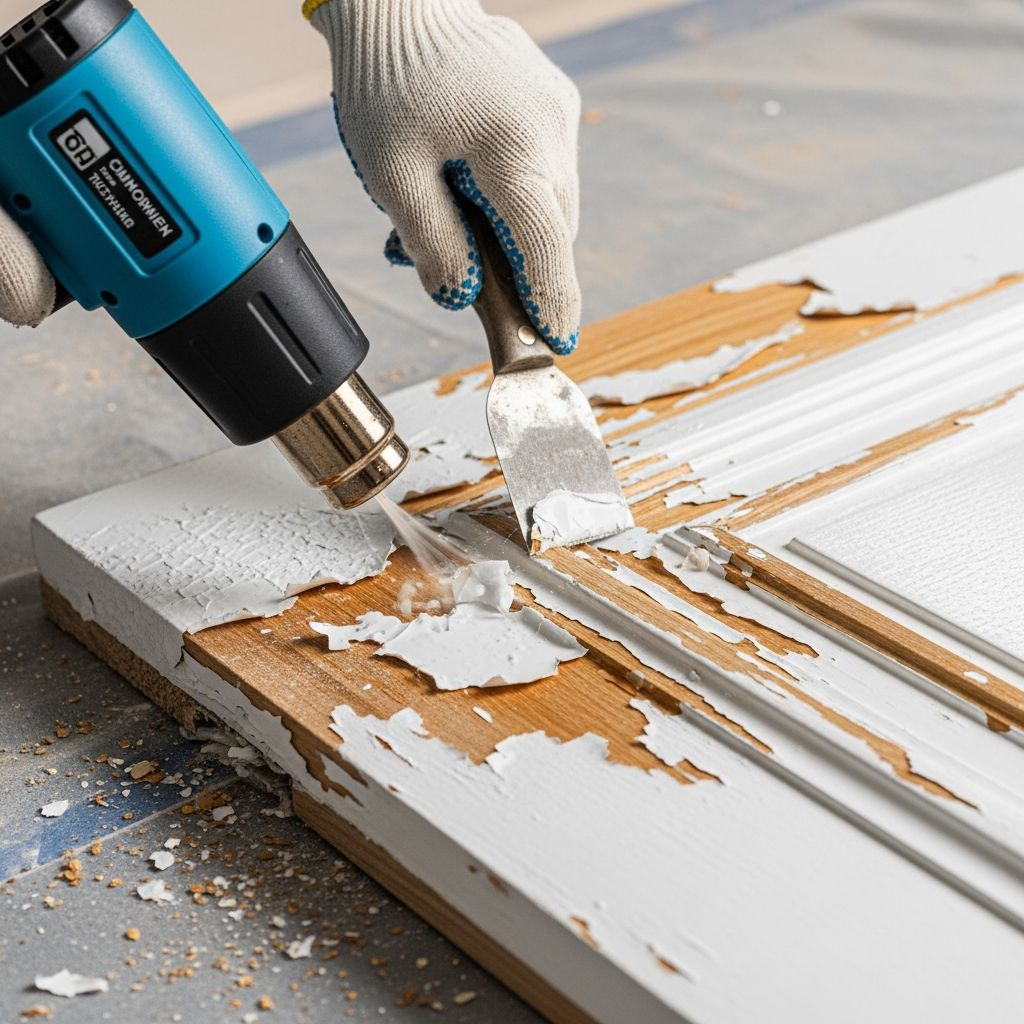
Heat guns bubble gloss paint by vaporizing binders, allowing easy scraping. Infrared lamps offer gentler, flameless options for precision work.
Heat Gun Technique Breakdown
| Step | Action | Tips |
|---|---|---|
| 1. Prep | Set gun to 500-800°F; test on scrap. | Avoid overheating wood to prevent charring. |
| 2. Heat | Wave 2-4 inches above surface in circles. | Bubbles form in 10-20 seconds. |
| 3. Scrape | Use flat blade at 30° angle. | Work downward to control flakes. |
| 4. Clean | Vacuum debris; wire brush residue. | Wear mask for fine particles. |
Heat guns finish jobs faster with less mess than chemicals, ideal for flat wood but riskier on lead-painted vintage pieces—test for lead first.
Mechanical Methods: Abrasion for Precision
Sanding and scraping suit thin gloss layers or final smoothing. Start coarse (80-grit), progress to fine (220-grit) for smooth bases.
- Orbital Sanders: Random orbit models reduce swirl marks on broad areas.
- Wire Brushes: Effective for crevices but can gouge softwoods.
- Clay Bars (Vehicles): Lubricated clay removes gloss overspray from paint without abrasion.
For cars, pair clay with soapy shampoo for minimal marring, outperforming thinners on clear-coated surfaces.
Surface-Specific Strategies
Wood Trim and Doors
Combine heat and chemicals for multi-layered gloss. Sand edges post-stripping for feathering into bare wood.
Metal Surfaces
Avoid harsh acids; use aircraft-grade removers or heat to prevent pitting. Buff afterward for shine.
Glass and Vehicles
Razor blades at shallow angles lift gloss without scratching; clay follows for polish. Skip solvents on single-stage paints.
Plaster Walls
Gentle scraping preserves paper facing; infrared strippers minimize dust.
Tool Comparison: Choosing the Best Method
| Method | Speed | Mess Level | Best For | Cost |
|---|---|---|---|---|
| Chemical Stripper | Medium | High | Detailed wood | Medium ($20-40/gal) |
| Heat Gun | Fast | Low | Flat surfaces | Low ($20-50 tool) |
| Sanding | Slow | Medium | Thin layers | Low (paper only) |
| Clay Bar | Fast | Low | Vehicles/glass | Low ($10-20 kit) |
Heat guns often win for speed and cleanup on wood, while clay dominates vehicle jobs.
Common Mistakes and Fixes
- Oversaturation: Excess stripper drips—use less and cover tightly.
- Rushing Heat: Scorched wood—lower temp and move constantly.
- Poor Cleanup: Residue causes peeling—neutralize and rinse twice.
- No Testing: Damaged finishes—always patch-test.
Post-Removal Surface Prep
Degrease with TSP substitute, sand lightly, and prime promptly. Vacuum thoroughly to eliminate dust.
Frequently Asked Questions (FAQs)
Can I use vinegar to remove gloss paint?
Vinegar softens water-based gloss mildly but fails on oil-based; pair with scraping for light jobs.
Is paint stripper safe for indoor use?
With ventilation and PPE, yes—opt for low-VOC formulas.
How long does gloss stripping take?
1-4 hours per door, depending on layers and method.
What’s best for old lead paint?
Certified removal services; avoid heat to prevent vaporizing lead.
Does heat gun work on all paints?
Best for oil/alkyd gloss; ineffective on latex without high temps.
Advanced Tips from Pros
Incorporate Floetrol in original applications for easier future stripping. For vehicles, quick detailer enhances clay glide. Maintain tools: clean scrapers immediately to extend life.
Mastering gloss removal transforms dated spaces into modern havens. Practice on scraps, prioritize safety, and enjoy durable, fresh finishes.
References
- OSHA Guidelines for Paint Stripping Operations — Occupational Safety and Health Administration. 2023-01-15. https://www.osha.gov/laws-regs/regulations/standardnumber/1926/1926.62
- Paint Stripping Best Practices — EPA. 2024-05-20. https://www.epa.gov/lead/renovation-repair-and-painting-rrp-rule
- Wood Finishing Techniques — Fine Woodworking Magazine. 2025-02-10. https://www.finewoodworking.com/
- Automotive Paint Removal Standards — Society of Automotive Engineers (SAE). 2024-11-01. https://www.sae.org/standards
- Heat Gun Safety Protocols — Consumer Product Safety Commission (CPSC). 2023-08-12. https://www.cpsc.gov/
Similar Articles



Read full bio of medha deb