Stripping Paint from Wood Trim: Complete Methods
Master multiple techniques to safely restore painted wood trim to its original condition.
Removing paint from wood trim can be one of the most rewarding home improvement projects, allowing you to restore the natural beauty of your woodwork or prepare it for a fresh coat of finish. Whether your trim has accumulated layers of paint over decades or you’re dealing with fresh drips from a recent painting project, understanding the available techniques and their proper application is essential for achieving professional results without damaging the underlying wood.
Understanding Your Paint Removal Options
Before beginning any paint removal project, it’s important to recognize that multiple approaches exist, each with distinct advantages depending on your specific situation. The method you choose will depend on factors such as the amount of paint present, the surface area involved, the condition of the wood underneath, and your comfort level with different tools and materials.
Professional restoration specialists typically employ a combination of techniques rather than relying on a single method. This layered approach often produces superior results, particularly when dealing with heavily painted trim that has accumulated multiple finish coats over time.
Chemical Paint Strippers: Dissolution Through Solvents
Chemical paint strippers work by softening the paint layers, making them easier to remove without excessive scraping or sanding. These products are available in three primary formulations, each suited to different applications and project scales.
Types of Chemical Strippers
- Liquid formulations: These pourable solutions work well for horizontal surfaces and large, flat areas where you can apply an even coat
- Gel products: Thicker consistency makes gel strippers ideal for vertical surfaces such as door frames, as they adhere better and won’t drip
- Paste varieties: The heaviest formulation, paste strippers cling to detailed surfaces and are particularly effective for ornamental trim with curves and recesses
Application Process
Begin by preparing your work area with adequate ventilation, as chemical strippers produce fumes that require either outdoor use or significant airflow from open windows and fans. Lay down drop cloths to protect flooring and surrounding surfaces from the caustic material.
Pour a modest amount of stripper into a glass or metal container—never apply directly from the original packaging, as this prevents waste and allows better control. Using a paint brush or applicator, work from the top of your project downward, ensuring thorough coverage into crevices and detailed areas where paint accumulates.
Allow the stripper to work according to the manufacturer’s specific instructions, which typically ranges from 15 to 40 minutes depending on the product strength and paint layers. This waiting period is crucial; premature scraping will be ineffective, while extended exposure may damage the wood grain.
Removal and Cleanup
Once the stripper has softened the paint sufficiently, use a paint scraper, putty knife, or specialty scraper to remove the softened finish. Maintain a controlled angle—approximately 30 degrees—to prevent gouging the wood beneath. Work in smooth, even strokes, taking particular care with detailed areas that require more delicate handling.
For stubborn spots or intricate details, reapply stripper and wait for additional working time. After removing the bulk of the paint, scrub the entire surface with nylon brushes or abrasive pads to eliminate all traces of the old finish and stripper residue.
Heat Gun Method: Thermal Softening for Paint Release
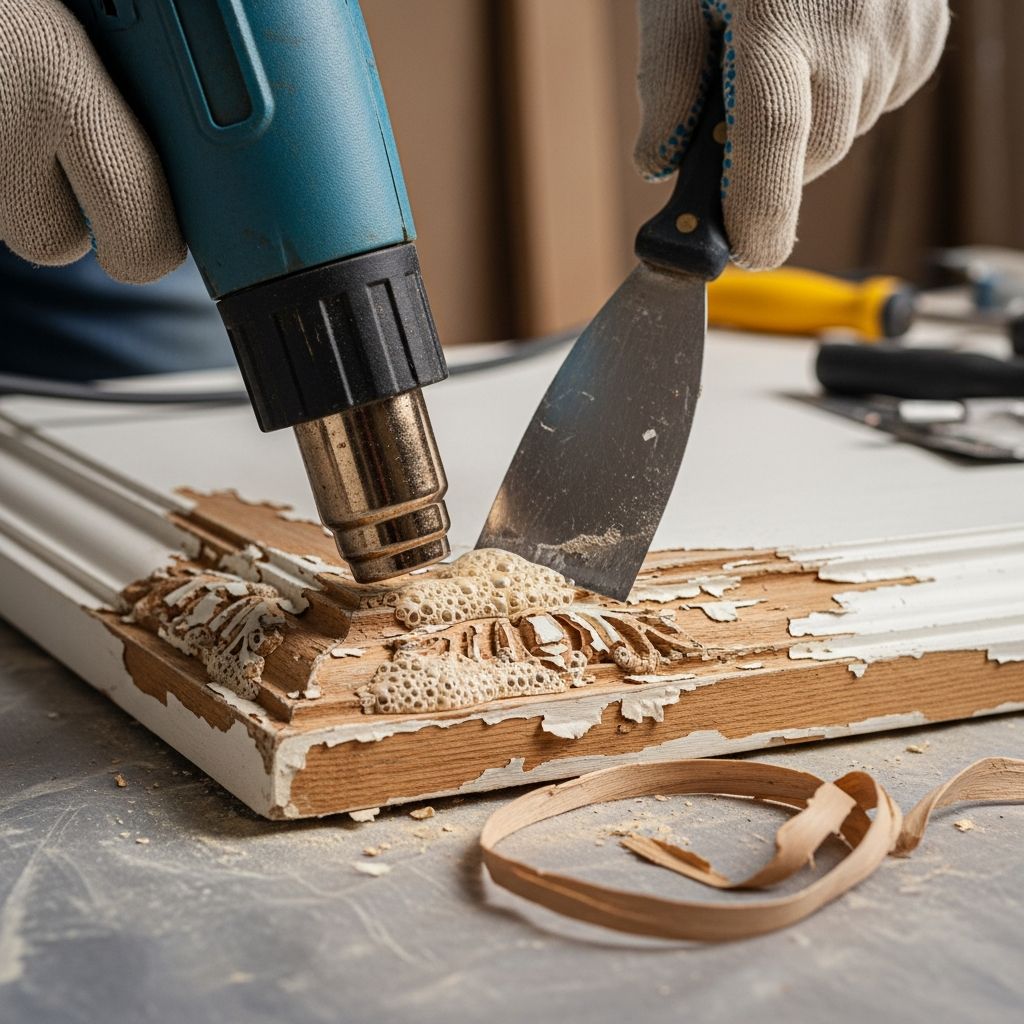
Heat guns provide an alternative approach by using thermal energy to blister and bubble paint from the wood surface, loosening the bond between paint and substrate. This method is particularly effective for removing varnish and other protective finishes alongside paint.
Proper Heat Gun Technique
Position the heat gun approximately two inches from the painted surface, maintaining this distance consistently to avoid scorching the wood. Move the nozzle back and forth across small sections of the surface in smooth, deliberate motions until the paint begins to bubble and blister visibly.
While applying heat with one hand, hold a paint scraper in the other hand at roughly a 30-degree angle. As the paint bubbles, use the scraper like a plow to push the loosened paint away from the wood surface. This coordinated approach prevents the paint from cooling and re-adhering before you can remove it.
Critical Safety Note: If you notice the finish beginning to smoke, cease operations immediately. Smoke indicates excessive heat that risks damaging or charring the wood, and may indicate the presence of materials requiring specialized removal procedures.
Handling Detail Areas
Return to detailed areas or crevices with the heat gun and use a contoured scraper designed specifically for narrow recesses. The combination of curved scraper edges and targeted heat application allows you to access areas that would be difficult with standard tools. Any stubborn flecks remaining after this process can typically be removed with the scraper alone, though applying gentle but firm pressure is necessary—excessive force risks gouging the wood surface.
Sanding: Mechanical Paint Removal
Sanding offers a straightforward mechanical approach to paint removal, particularly for flat surfaces. This method proves efficient when applied correctly but requires attention to wood preservation and safety considerations.
Preparation and Safety
Before beginning sanding operations, thoroughly clean the painted surface with degreasing cleaner, dish soap, or general household cleaner, then allow it to dry completely. Remove any hardware such as knobs, hinges, or other attached elements that would interfere with sanding or become damaged by the equipment.
Sanding generates substantial dust, making safety equipment non-negotiable. Wear protective goggles to shield your eyes and a properly fitting face mask or respirator to prevent inhalation of dust particles. Avoid using electric sanders indoors; instead, work outdoors or in spaces with exterior exhaust capability.
Grit Progression
Begin with coarse 80-grit sandpaper in either a manual hand sander or power sander, applying sufficient pressure to remove the paint without damaging the underlying wood. Progress to medium 150-grit abrasive, then finish with fine 220-grit sandpaper. Between each grit change, brush away accumulated dust from the surface to evaluate your progress and prevent finer grits from becoming clogged.
Always sand with the grain of the wood to maintain a uniform appearance and prevent cross-grain scratches that become visible under finish coats. This directional approach also prevents the sandpaper from catching and tearing wood fibers along the edges.
Upon completion, wipe the entire surface with a damp cloth to remove remaining dust, allowing the wood to dry before applying new finish.
Manual Removal for Fresh Paint
When dealing with recently applied paint or accidental drips, manual removal often proves most practical before the paint fully cures.
Wet Paint Removal
For wet paint, use a damp, lightly soapy rag to scrub away as much paint as possible while it remains malleable. Rinse thoroughly with clean water and allow the surface to dry completely. Wait at least 72 hours before proceeding with additional treatments to ensure all moisture has evaporated from the wood.
Dried Paint Cleanup
Once paint has dried, use a metal putty knife to gently loosen dried clumps without gouging the trim. Carefully pick and peel off remaining paint fragments with your fingers, working slowly to avoid splintering the wood.
For paint that has settled into grooves, cracks, or surface depressions, dampen a rag with denatured alcohol and scrub the affected areas. The alcohol dissolves paint residue in tight spaces where mechanical removal proves difficult. Allow the alcohol to evaporate for several hours before evaluating the results.
Lead Paint Safety Considerations
Any paint applied before 1978 may contain lead, which presents serious health risks, particularly to children and pregnant women. Lead exposure can cause neurological damage, developmental delays, and other severe health consequences.
Before beginning any paint removal work, test the surface with a lead test kit following the instructions provided with the packaging. If lead is detected, specialized removal procedures and professional assistance may be necessary, and federal and state regulations may apply to your project.
If lead is absent, standard removal methods can proceed safely with appropriate dust control and personal protective equipment.
Selecting the Right Method for Your Project
| Method | Best For | Advantages | Limitations |
|---|---|---|---|
| Chemical Stripper | Detailed trim, curved surfaces, multiple paint layers | Effective on complex shapes, minimal wood damage, suitable for delicate work | Requires ventilation, involves chemical handling, extended drying time |
| Heat Gun | Flat and gently curved surfaces, varnish removal | No chemical fumes, relatively quick, good for moderate layers | Risk of scorching, less effective on heavy buildup, requires two-hand coordination |
| Sanding | Flat surfaces, light to moderate paint | Efficient, no chemical exposure, thorough surface preparation | Generates significant dust, can damage wood if pressure too high, time-consuming for heavy paint |
| Manual Removal | Fresh paint, light drips, recently applied finishes | Minimal equipment, immediate action possible, low cost | Only effective on wet or newly dried paint, limited to small areas |
Combining Techniques for Optimal Results
Professional restoration often employs a combination approach. For heavily painted trim, begin with a heat gun to remove bulk paint layers, follow with chemical stripper for stubborn spots and detailed areas, then finish with light sanding to achieve a smooth, refinished surface ready for new paint or stain.
This sequential method reduces time spent on any single technique while addressing the particular strengths of each approach. The initial heat gun work removes volume quickly, chemical stripper handles remaining buildup and details, and final sanding creates a uniform substrate for new finish application.
Post-Removal Finishing
After successfully removing old paint, inspect the wood for any damage, stains, or irregular areas. Fill gaps or gouges with appropriate wood filler, sand smooth once dried, and clean the entire surface of all dust and debris.
If the wood was previously painted, the removal process typically removes some of the original paint layer. Plan to repaint or restain the trim after 72 hours of complete drying to protect the wood and achieve your desired aesthetic finish.
Frequently Asked Questions
How long does paint removal typically take?
Duration varies based on surface area, paint layers, and method selected. Chemical stripper applications typically require 15-40 minutes of working time plus application. Heat gun work proceeds more quickly but requires two-handed coordination. Sanding timelines depend on grit progression and surface condition.
Can I use pressure washing to remove paint?
High-pressure water can damage delicate wood trim and force water into grain and joints, causing swelling and rot. It is not recommended as a primary removal method for valuable woodwork.
What should I do with chemical stripper waste?
Follow local disposal regulations, as many paint stripper formulations require special handling. Contact your local waste management facility for proper disposal procedures specific to your area.
Is it better to strip or replace old painted trim?
For historically significant or original trim, stripping and restoration preserves authenticity and often costs less than replacement. For severely damaged trim or modern synthetic materials, replacement may be more practical.
References
- How to Remove Paint From Wood — The Home Depot. Accessed April 2026. https://www.homedepot.com/c/ab/how-to-remove-paint-from-wood/9ba683603be9fa5395fab9012cd1ea0f
- How to Remove Paint from Trim — Tub O’ Towels. Accessed April 2026. https://www.tubotowels.com/blogs/cleaning-tips/remove-paint-trim
- How to Safely Strip Paint from Woodwork — Ask This Old House. YouTube. Accessed April 2026. https://www.youtube.com/watch?v=oR20LbydCYo
- Lead-Based Paint Disclosure Requirements — U.S. Environmental Protection Agency. https://www.epa.gov/lead/lead-based-paint-disclosure-requirements
Similar Articles



Read full bio of Sneha Tete