Transform Your Concrete Porch Into A Wood Deck: 4-Step Guide
Upgrade your drab concrete porch into a stunning wood deck with expert techniques for lasting beauty and durability.
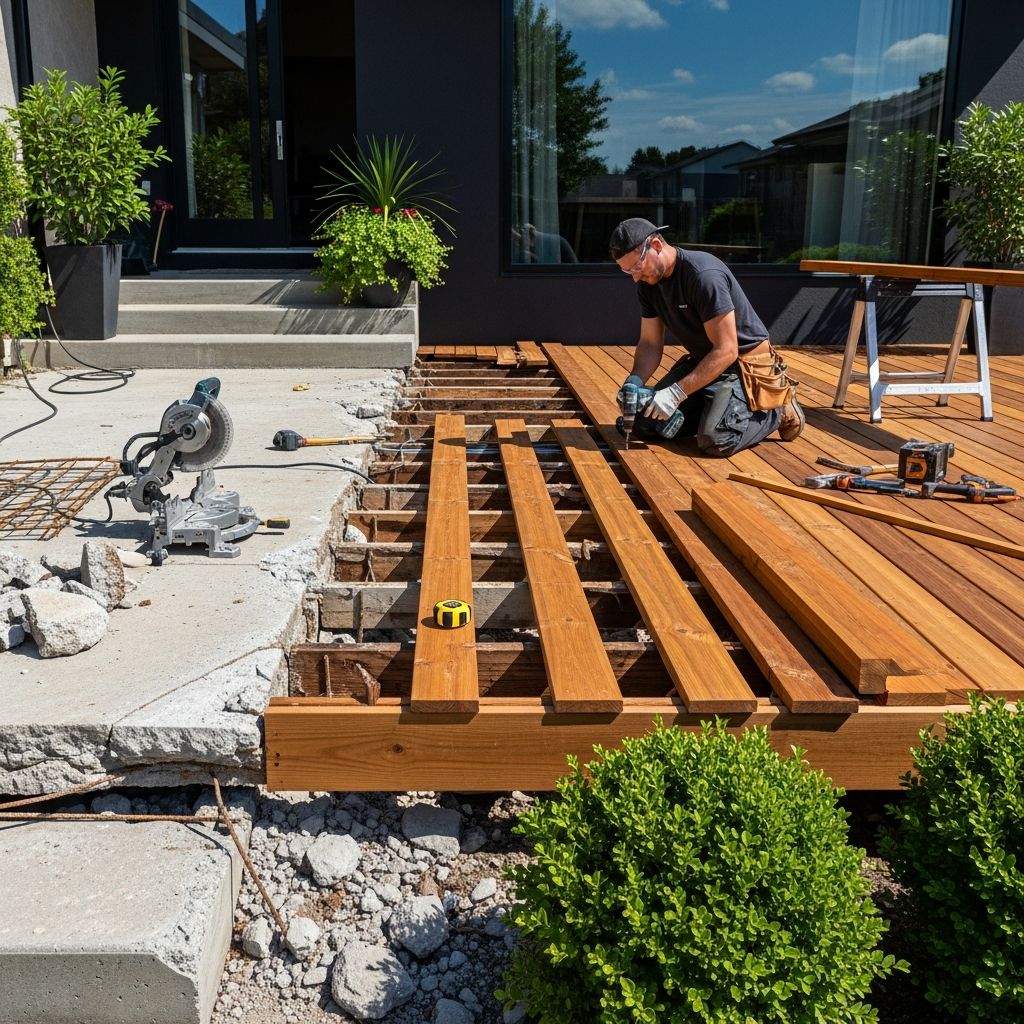
Transform Your Concrete Porch into a Beautiful Wood Deck
Converting a plain concrete porch into an inviting wood deck elevates your home’s exterior appeal and creates a cozy space for relaxation. This renovation hides unsightly concrete while adding warmth and texture that complements any architectural style. With proper planning, the project enhances functionality and property value without requiring a full demolition.
Why Choose Wood Over Concrete?
Concrete porches often crack, stain, or feel cold underfoot, diminishing outdoor enjoyment. Wood overlays provide a natural look, better insulation, and customizable designs. Unlike resurfacing paint or tiles, wood allows airflow to prevent moisture buildup, extending the structure’s life. Homeowners report increased usability for gatherings and daily lounging after such upgrades.
Assessing Your Porch Before Starting
Begin with a thorough inspection. Check for cracks wider than 1/4 inch, which could worsen under wood weight. Ensure the surface slopes at least 1/4 inch per foot away from the house for drainage. Clean thoroughly to remove dirt, moss, or sealers that might interfere with adhesion. Repair minor cracks using concrete caulk to avoid water infiltration that leads to freezing damage in cold climates.
- Measure porch dimensions accurately for material estimates.
- Test slope with a level and 10-foot board.
- Verify structural integrity; consult professionals for unstable slabs.
Selecting the Right Materials for Longevity
Material choice determines durability and aesthetics. Pressure-treated lumber resists rot but requires sealing. Cedar or redwood offers natural decay resistance and attractive grain, ideal for staining. Kiln-dried Douglas fir provides strength and weather tolerance at a lower cost. For low-maintenance, consider hardwood tiles or composites that clip over concrete without sleepers.
| Material | Pros | Cons | Best For |
|---|---|---|---|
| Pressure-Treated Pine | Affordable, strong | Needs frequent sealing | Budget projects |
| Cedar/Redwood | Natural rot resistance, beautiful finish | Higher cost | Premium looks |
| Kiln-Dried Fir | Weather-resistant, stable | Requires waterproofing | Moderate climates |
| Hardwood Tiles | Easy install, slip-resistant | Less customizable | Quick renovations |
For sleepers—elevated support beams—use 2×4 or 2×6 pressure-treated lumber. Secure with 3-inch masonry screws and exterior adhesive. Add PVC spacers (3.5 inches) under sleepers for ventilation. Flashing tape over sleepers repels water effectively.
Essential Tools and Supplies Checklist
Gather tools for efficiency: circular saw, table saw for ripping boards, drill with masonry bits, level, tape measure, and powder-actuated nailer or Ramset for concrete fastening. Safety gear includes gloves, goggles, and dust masks. Supplies: deck screws (2.5-3 inches), construction adhesive, waterproof stain, and caulk.
Step-by-Step Installation Guide
1. Prepare the Surface
Pressure wash the concrete and let dry 48 hours. Fill cracks and seal edges. Mask off walls and posts to protect from adhesives.
2. Install Sleepers for Elevation
Sleepers prevent direct wood-concrete contact, allowing drainage. Position perpendicular to future deck boards, spaced 16 inches on center. Elevate front edge risers to match house level. Apply adhesive, predrill holes, and secure with screws. Use a level for each; shim if needed for perfection. Cover with flashing tape post-installation.
3. Lay the Decking Boards
Start from the house outward. Leave 1/8-inch gaps for expansion. Screw boards into sleepers, pre-drilling to avoid splits. For tongue-and-groove, align carefully. Trim edges for clean borders.
4. Add Finishing Touches
Install trim around posts using pressure-treated 2x4s. Apply two thin coats of waterproof stain, working into gaps. This seals against moisture while highlighting wood grain.


Common Challenges and Pro Tips
Uneven concrete demands custom ripping of sleepers—measure front, middle, back per board. Nail guns may fail on hard slabs; switch to Tapcon screws. In humid areas, prioritize ventilation to combat mold. Test drainage post-install by hosing down the deck.
- Avoid direct board-to-concrete contact to prevent rot.
- Opt for screws over nails for removability.
- Stain within a week of installation for best absorption.
Maintenance for Lasting Beauty
Annual inspections catch issues early. Sweep debris, re-stain every 2-3 years, and re-caulk edges. Composites need less care but clean with mild soap. Proper upkeep ensures 20+ years of service.
Cost Breakdown and Savings Tips
A 10×10-foot porch costs $800-$2,000 in materials. Sleepers: $100-200; decking: $400-1,200; fasteners/sealant: $100-200. DIY saves 50% over pros. Buy in bulk from lumber yards for deals on cedar.
| Item | Estimated Cost |
|---|---|
| Sleepers (20 pieces) | $150 |
| Decking Boards | $800 |
| Fasteners & Adhesive | $100 |
| Stain & Tape | $150 |
| Total | $1,200 |
Frequently Asked Questions
Can I install wood directly on concrete?
No, direct contact traps moisture, causing rot. Always use sleepers for airflow.
What if my porch isn’t sloped?
Add tapered sleepers or consult a contractor to install proper drainage first.
How long does installation take?
A weekend for DIYers on a standard porch; larger areas may need 2-3 days.
Is composite better than wood?
Composites require less maintenance but wood offers authentic warmth and stain options.
Will this work in wet climates?
Yes, with flashing tape, waterproofing, and good ventilation, as proven in rainy regions like Oregon.
This transformation turns a functional concrete slab into a welcoming retreat. With attention to drainage, materials, and sealing, your wood deck will endure seasons of enjoyment.
References
- Family Handyman: Deck Building Guides — Family Handyman. 2023-05-15. https://www.familyhandyman.com/project/how-to-build-a-deck-over-a-concrete-patio/
- Pressure-Treated Southern Pine Standards — Southern Forest Products Association. 2024-01-10. https://www.southernpine.com/pressure-treated-southern-pine/
- Wood Decking Durability Research — USDA Forest Service, Forest Products Laboratory. 2022-08-20. https://www.fpl.fs.usda.gov/documnts/fplrn/fplrn0320.pdf
- Concrete Repair Manual — Portland Cement Association. 2023-11-05. https://www.cement.org/docs/default-source/publications/concrete-repair-manual.pdf
- Exterior Wood Coatings Guidelines — American Wood Council. 2024-03-12. https://awc.org/publications/
Similar Articles








Read full bio of medha deb