Trimming Shag Rugs: 7 Essential Tools For DIY
Master the art of resizing shag area rugs at home with simple tools and techniques to achieve professional results without fraying.
Trimming Shag Rugs: DIY Guide
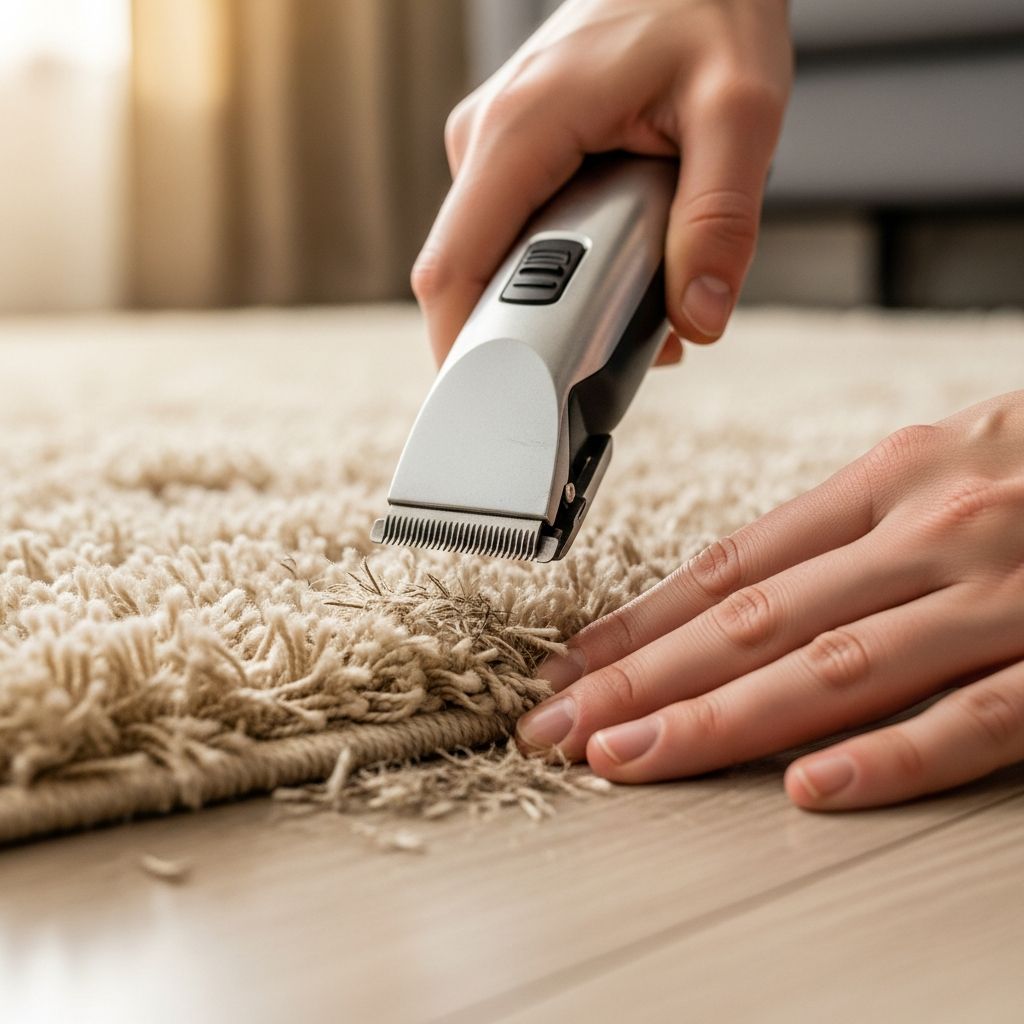
Resizing shag area rugs offers a cost-effective way to customize flooring for any space. Shag rugs, with their long, plush fibers, present unique challenges during trimming, but with the right approach, you can achieve clean edges and prevent fraying. This guide provides detailed instructions, tool recommendations, and pro tips drawn from practical DIY experiences.
Why Resize Your Shag Rug?
Standard rug sizes often fail to match room dimensions perfectly, leading to awkward overlaps or gaps under furniture. Trimming allows precise fitting, enhancing room aesthetics and functionality. For shag styles, which feature dense pile heights typically over 1 inch, improper cuts can result in unraveling fibers, making preparation crucial. Homeowners frequently resize remnant carpet pieces or oversized purchases to create custom runners or area rugs.
Essential Tools and Materials
Gathering the correct supplies ensures a smooth process. Focus on sharp, durable items to handle thick shag without tearing.
- Utility knife or sharp razor blade: Essential for clean cuts through dense pile.
- Straight edge ruler or long level: Provides precision for straight lines, often 4-8 feet long.
- Measuring tape: Accurate measurements prevent uneven results.
- Rug binding tape (e.g., Instabind): Double-sided adhesive strips for edge finishing, sold by the foot.
- Hot glue gun with sticks: Secures binding firmly.
- Protective board (wood or cardboard): Shields floors from blade damage.
- Marker or chalk: Non-permanent line marking on rug backing.
These items are affordable and available at hardware stores. For thick shag, opt for heavy-duty utility knives with replaceable blades.
Preparation Steps Before Cutting
Success starts with meticulous planning. Begin in a spacious, well-lit area like a garage or living room with drop cloths.
- Measure your space: Determine exact dimensions needed, adding 1-2 inches for binding.
- Assess the rug: Flip to inspect the backing; wool or synthetic shag holds best.
- Mark cut line: Measure desired trim amount (e.g., 30-40 inches). Place dots every 12 inches along the line using tape and marker.
- Connect dots: Align straight edge over marks, draw continuous line on backing.
Test on a small edge first to gauge fiber behavior. Shag rugs forgive minor imperfections due to their texture.
Step-by-Step Cutting Process
Cutting demands patience to minimize fiber loss. Work slowly for best results.
| Step | Action | Tips |
|---|---|---|
| 1. Position board | Slide wood under cut line, inside rug edge. | Prevents floor scratches; use 2×4 for stability. |
| 2. Score the line | Lightly run blade along marked line multiple times. | Apply firm, even pressure; change blade if dulling. |
| 3. Deepen cut | Press harder to slice through backing and pile. | Follow fabric weave for smoother separation. |
| 4. Separate pieces | Gently peel away trimmed section. | Pull slowly to retain fibers; trim strays with scissors. |
Expect some fiber shedding—vacuum immediately. Wool shag resists fraying better than synthetics.
Binding the Fresh Edge for Durability
Unfinished edges unravel quickly, so binding is non-negotiable. Rug binding tape combines adhesive and glue for longevity.
- Cut binding to match new edge length plus overlap.
- Peel backing tape, align precisely with cut side, press firmly.
- Apply hot glue bead along inner edge, press rug onto it.
- Fold and glue outer edge if double-sided.
Allow 24 hours to set. This method withstands high traffic, unlike simple folding.
Rug Types Best Suited for DIY Trimming
Not all rugs trim equally. Shag excels due to forgiving pile.
| Rug Type | Trimmability | Notes |
|---|---|---|
| Wool Shag | Excellent | Thick pile hides cuts; minimal fraying. |
| Synthetic Shag | Good | May shed more; use strong glue. |
| Jute/Natural Fiber | Fair | Prone to fraying; requires extra binding. |
| Low-Pile Berber | Poor | Visible cuts; professional recommended. |
Avoid oriental or hand-knotted rugs—these demand expert handling to preserve value.
Common Mistakes and How to Avoid Them
DIY pitfalls can ruin rugs, but foresight prevents issues.
- Uneven lines: Always double-check measurements; use clamps on straight edge.
- Floor damage: Never skip protective board.
- Fiber loss: Cut in short sessions; vacuum frequently.
- Poor binding: Ensure glue penetrates fully; test adhesion.
- Dull blade: Swap blades midway for clean slices.
If errors occur, minor trims can salvage edges.
Safety Precautions During the Project
Sharp tools pose risks—prioritize safety.
- Wear cut-resistant gloves and eye protection.
- Secure rug to avoid slips.
- Work in ventilated space for glue fumes.
- Keep pets/children away.
- Dispose of blades safely in punctured containers.
Children-friendly spaces benefit from resized rugs fitting snugly.
Advanced Techniques for Custom Shapes
Beyond straight cuts, create curves or angles.
- Runners: Measure width, cut lengthwise, bind both sides.
- Curved edges: Use flexible ruler; score lightly, trim gradually.
- Multi-section rugs: Cut into quarters, rebind individually.
For complex designs, template with cardboard first.
Cost Comparison: DIY vs. Professional
| Method | Cost Estimate | Time |
|---|---|---|
| DIY | $20-50 (tools/binding) | 2-4 hours |
| Professional | $100-300+ per rug | 1-2 weeks |
DIY saves significantly, especially for multiple rugs.
Maintenance After Trimming
Bound edges last years with care.
- Vacuum weekly, using beater bar off for shag.
- Spot clean gently; avoid steam.
- Rotate quarterly for even wear.
- Re-glue loose binding promptly.
Professional cleaning every 1-2 years preserves pile.
Frequently Asked Questions (FAQs)
Can I trim any shag rug?
Most wool or synthetic shag works well; avoid fragile antiques.
How much can I safely cut off?
Up to 50% of width/length, but test small areas first.
What if my rug frays badly?
Apply extra binding layers or fringe trim as backup.
Is hot glue permanent?
Yes, for rugs; removable with heat if needed.
Can I resize carpet remnants?
Absolutely—same method applies seamlessly.
References
- How To Cut A Rug To Resize It — Bigger Than the Three of Us. N/A. https://biggerthanthethreeofus.com/how-to-cut-a-rug-to-resize-it/
- How to Cut a Rug: Resizing Guide for Beginners — Rugs Direct. N/A. https://www.rugs-direct.com/how-to-cut-a-rug
- How To Cut A Shag Carpet (Easy Shmeasy) — YouTube (Lee Adrian). 2024-10-02. https://www.youtube.com/watch?v=NNGrNmFWvyo
Similar Articles







Read full bio of Sneha Tete