How To Unclog A Toilet With Dish Soap: 5 Easy Steps
Simple, effective method to unclog your toilet using common household dish soap without a plunger.
How to Unclog a Toilet with Dish Soap
A clogged toilet is one of the most common household plumbing problems, and it often catches us at the worst possible time. While many people immediately reach for a plunger or call a professional plumber, there’s a simple, cost-effective solution that you likely already have in your home: dish soap. This method has been trusted by homeowners for years and provides an excellent alternative when you don’t have traditional plumbing tools available.
The dish soap unclogging method works on the principle that soap breaks down oils, grease, and organic matter. Since toilet clogs are often caused by combinations of toilet paper, human waste, and other organic materials, dish soap acts as an effective natural lubricant and cleanser. This approach is safe for your plumbing system, environmentally friendly, and can save you money on expensive plumber visits.
Why Dish Soap Works for Toilet Clogs
Understanding why dish soap is effective for unclogging toilets helps you use this method with confidence. Dish soap is specifically formulated to break down grease and fatty substances. Human waste contains approximately 75 percent water and 25 percent solid matter, with significant fat content. When dish soap comes into contact with these materials, it chemically breaks them down and makes them easier to flush through your pipes.
Beyond its breaking power, dish soap also acts as a powerful lubricant. The slippery nature of soap helps materials slide more easily through the pipes, further assisting in clearing the blockage. Most people find that this method works best for partial clogs and clogs caused by toilet paper or organic waste buildup.
What You’ll Need
The beauty of this unclogging method is its simplicity. You don’t need expensive equipment or specialized tools. Here’s what you’ll need to gather:
- Dish soap (any brand works, though many people prefer Dawn)
- Hot water from your tap
- A large pot or bucket
- A bowl or bucket to catch overflow (optional but recommended as a precaution)
- Patience
Step-by-Step Instructions
Step 1: Add Dish Soap to the Toilet
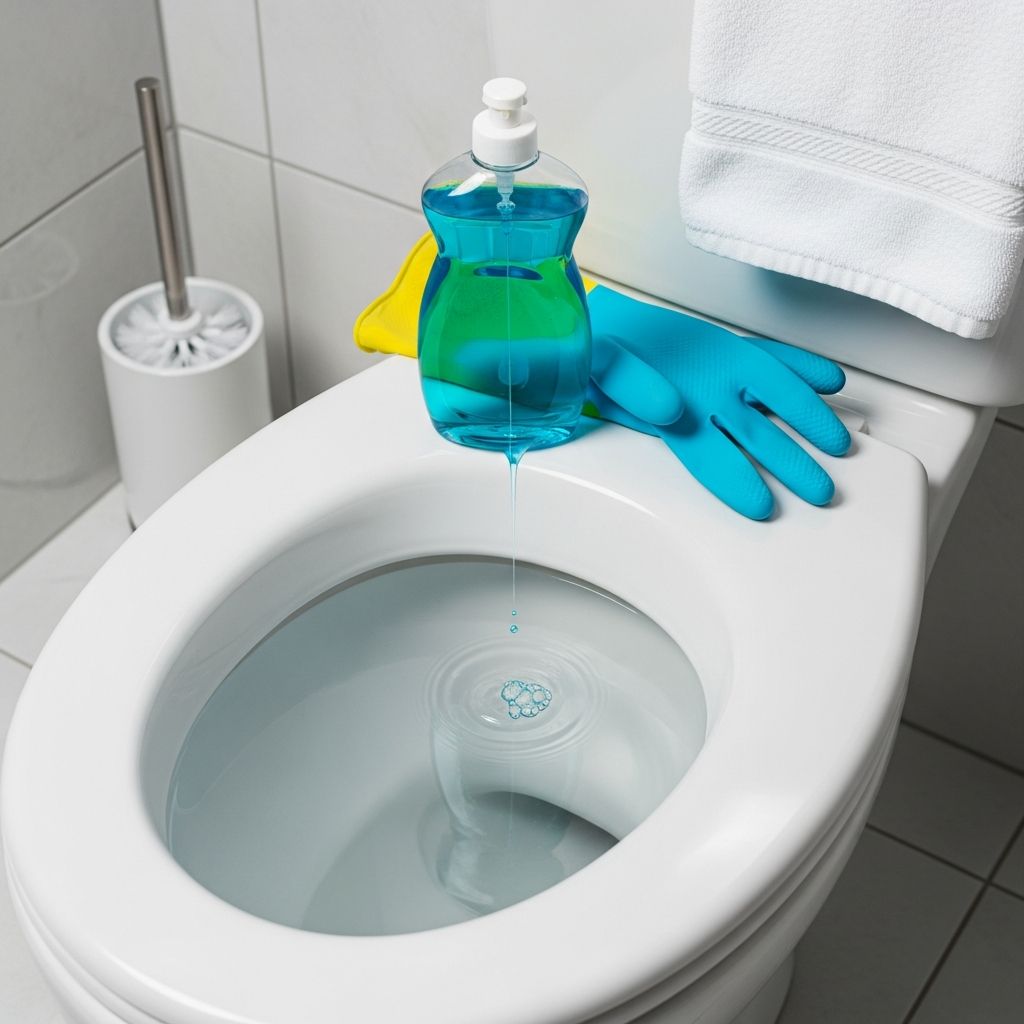
Begin by pouring a generous amount of dish soap directly into the toilet bowl. Most experts recommend using approximately one to one-and-a-half cups of liquid dish soap. You want enough soap to coat the clog thoroughly and penetrate the blockage. Pour the soap slowly to ensure it gets down into the bowl and toward the clog.
Step 2: Let It Sit
This is the most important step in the process: patience. Allow the dish soap to work on the clog for a minimum of 45 minutes. However, for best results, let it sit for approximately 90 minutes to two hours if you have the time. During this waiting period, the soap is breaking down the fatty and organic materials that make up the clog, and it’s lubricating the pipe to help materials move more freely.
Many people find that their toilet actually clears on its own during this waiting period. You may hear a sucking sound or notice the water level dropping, which indicates that the clog has cleared and the toilet is ready to flush normally.
Step 3: Pour Hot Water
If the clog hasn’t cleared after 90 minutes, proceed to the next step. Heat a pot of water on your stove until it’s very hot, but not boiling. Boiling water can crack porcelain, so aim for water that’s hot enough to be effective but not so hot that it damages your toilet. Once your water reaches the right temperature, carefully pour it into the toilet bowl in a slow, circular motion.
The combination of hot water and the dish soap that’s already been sitting in the bowl works together to further soften the clog and help push it through the pipes.
Step 4: Wait Again
After pouring the hot water, allow it to sit for another 30 minutes. During this time, the heat and soap continue to break down the clog materials. Having access to another bathroom during this process is helpful, as you won’t be able to use this toilet.
Step 5: Flush
After the 30-minute wait period, try flushing the toilet. If the clog has cleared, the water should drain normally. If it still seems slow or backed up, you can repeat the hot water step again. Many clogs clear after the first attempt, but stubborn blockages may require additional applications.
Important Safety Precautions
While this method is safe overall, there are several precautions you should take:
- Keep a bowl or bucket next to your toilet in case of overflow while you’re waiting
- Never use boiling water, as extreme heat can crack porcelain toilets
- Avoid mixing dish soap with other chemicals like bleach or drain cleaners
- Make sure you have good ventilation in your bathroom
- Wash your hands thoroughly after handling toilet water
When to Use This Method
The dish soap method works best for certain types of clogs. It’s most effective for clogs caused by toilet paper buildup, human waste, and soap residue. It’s less effective for clogs caused by foreign objects like toys, sanitary products, or large items that have been flushed accidentally. If you suspect a foreign object is causing the clog, you may need to use a toilet snake or call a professional plumber.
Alternative Methods and Comparisons
While the dish soap method is highly effective, several other household methods can also help unclog a toilet:
| Method | Time Required | Cost | Effectiveness | Best For |
|---|---|---|---|---|
| Dish Soap and Hot Water | 2-3 hours | $0-2 | High | Organic clogs, paper buildup |
| Plunger | 10-20 minutes | $15-30 | Very High | Most clog types |
| Baking Soda and Vinegar | 1-2 hours | $1-3 | Medium | Mild clogs |
| Toilet Snake | 15-30 minutes | $20-50 | High | Deep clogs, foreign objects |
| Chemical Drain Cleaner | 1-2 hours | $5-15 | High | Stubborn clogs |
| Professional Plumber | 1-2 hours | $150-300 | Very High | Severe or recurring clogs |
Why Choose Dish Soap Over Other Methods
The dish soap method offers several advantages over other unclogging techniques. First, it’s economical—most households already have dish soap on hand, making this a zero or minimal-cost solution. Second, it’s safe for your plumbing system and doesn’t involve harsh chemicals that could damage pipes or harm the environment. Third, it’s non-toxic, making it safe for households with children and pets. Finally, it requires no special equipment or tools, making it accessible to everyone.
Preventive Measures for Future Clogs
While knowing how to unclog a toilet with dish soap is valuable, prevention is always better than dealing with clogs. Here are several strategies to minimize toilet clogs:
- Use only toilet paper and human waste in the toilet; avoid flushing other materials
- Limit the amount of toilet paper used per flush
- Encourage family members to flush multiple times if needed rather than flushing large amounts at once
- Install a higher-quality toilet with better flushing technology
- Regular plumbing maintenance and inspections
- Keep a wastebasket in the bathroom for non-flushable items
Frequently Asked Questions
Q: How long does the dish soap method typically take to work?
A: The complete process usually takes 2.5 to 3 hours. The initial waiting period is 45 minutes minimum, but 90 minutes is recommended. After adding hot water, you’ll wait another 30 minutes. Many clogs clear during the initial soap-sitting period, so you might see results sooner.
Q: Can I use any type of dish soap?
A: Yes, any brand of liquid dish soap will work, though many people find that Dawn brand is particularly effective. Bar soap and dishwasher tablets won’t work well for this method since you need liquid soap that can flow into the pipes.
Q: What if the dish soap method doesn’t work?
A: If the method doesn’t work after one or two attempts, you can try alternative methods like a plunger, toilet snake, or baking soda and vinegar. If none of these work, it’s time to call a professional plumber, as the clog may be more severe or caused by a foreign object.
Q: Is it safe to mix dish soap with other cleaning products?
A: No, never mix dish soap with bleach or chemical drain cleaners. These combinations can produce toxic fumes. Always use one method at a time, and if switching methods, flush thoroughly first to remove any residual chemicals.
Q: Can I use cold water instead of hot water?
A: Hot water is more effective because it helps soften and break down the clog materials faster. However, if you only have cold water available, the dish soap alone may still work—you’ll just need to allow extra time for it to do its job.
Q: Is this method safe for all toilet types?
A: Yes, this method is safe for standard porcelain toilets. Just avoid using boiling water, as extreme temperatures can cause porcelain to crack. This method is also safe for modern low-flow toilets.
Q: How much dish soap should I use?
A: Use approximately one to one-and-a-half cups of liquid dish soap. More soap isn’t necessarily better; the key is allowing adequate time for the soap to break down the clog. One cup is typically sufficient for most clogs.
Q: Can I use shampoo or body wash instead of dish soap?
A: Dish soap is specifically formulated to break down grease and organic matter, making it more effective than shampoo or body wash. However, in a pinch, these products might provide some assistance due to their similar properties.
Conclusion
Unclogging a toilet with dish soap is an effective, affordable, and safe solution that deserves a place in every homeowner’s plumbing toolkit. Whether you’re dealing with a minor clog caused by excess toilet paper or a more stubborn blockage from organic waste buildup, this simple method often provides the relief you need without expensive plumber visits or harsh chemicals.
By following the straightforward steps outlined in this guide—adding dish soap, allowing adequate sitting time, and carefully pouring hot water—you can resolve most common toilet clogs within a few hours. Remember to be patient, as the waiting periods are crucial to the method’s success. Keep dish soap readily available in your home, and you’ll always have a reliable backup plan for toilet emergencies.
References
- How To Unclog Toilet Without a Plunger using Dish Soap — JMG ENTERPRISES. January 21, 2022. https://www.youtube.com/watch?v=SrPk69rSkA0
- What to Do When Your Toilet Won’t Unclog — Air America AC. https://airamericaac.com/blog/what-to-do-when-your-toilet-wont-unclog/
- Unclogging a Toilet with Dish Soap: A Simple and Effective Solution — Kohler. https://www.kohler.com.vn/en/articles/unclogging-a-toilet-with-dish-soap-a-simple-and-effective-solution.html
Similar Articles



Read full bio of medha deb