Understanding Potato Bugs: Identification and Management
Complete guide to recognizing and controlling Colorado potato beetles in your garden
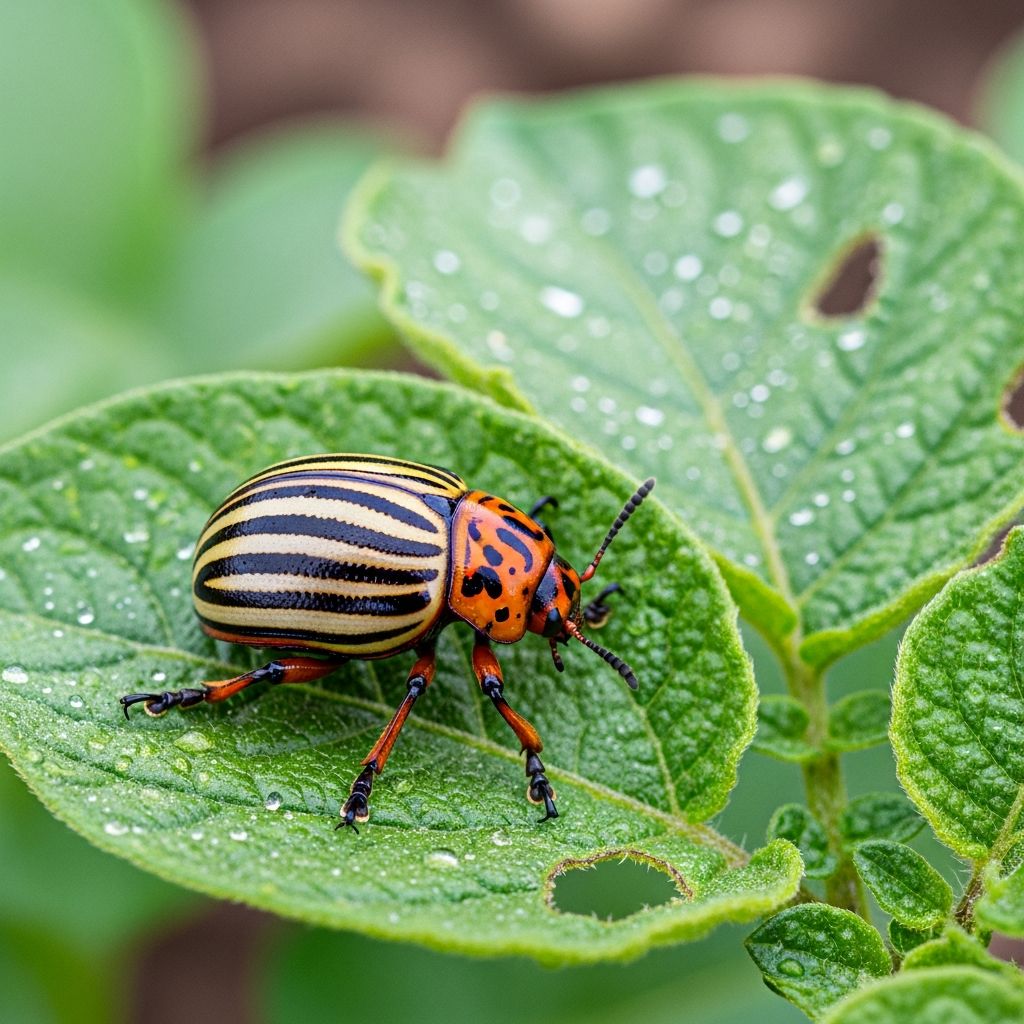
Potato bugs, scientifically known as Colorado potato beetles (CPB), represent one of the most challenging pests that home gardeners and commercial farmers face when cultivating potatoes and other nightshade vegetables. These insects have earned their reputation as destructive garden visitors through their voracious feeding habits and rapid reproductive cycles. Understanding what these pests look like, how they develop, and what damage they cause is the first crucial step in protecting your vegetable garden from significant crop loss.
What Makes Potato Bugs Such Formidable Garden Pests
The Colorado potato beetle stands out among garden insects for several reasons that make it a particularly troublesome adversary for gardeners. These beetles are native to America and Mexico and have been documented as major agricultural pests for well over a century, with populations established in regions like Iowa for more than 150 years. What sets them apart from other garden pests is their ability to develop resistance to various control methods over time. The Entomological Society has documented that potato bugs have developed resistance to numerous insecticides, a capability attributed to their natural ability to overcome the defensive toxins produced by solanaceous plants (the nightshade family).
The destructive nature of potato bugs stems from their complete lifecycle occurring on host plants. Unlike many garden pests that feed only during specific seasons, Colorado potato beetles can produce multiple generations within a single growing season, with each generation capable of causing exponential damage to potato foliage and potentially tubers.
Physical Characteristics and Recognition Guide
Successfully identifying potato bugs at various life stages is essential for implementing timely control measures. The appearance of these insects changes dramatically as they progress through their lifecycle, which is why recognizing all developmental stages proves crucial for early intervention.
Adult Beetle Appearance
Adult Colorado potato beetles are distinctive oval-shaped insects measuring approximately 3/8 to 1/2 inch in length. Their most recognizable feature is their striking color pattern: a yellow-orange prothorax (the segment immediately behind the head) paired with yellowish-white wing covers adorned with ten narrow black stripes running longitudinally. This bold striping pattern makes them impossible to miss once you know what to look for, though the symmetrical pattern on each side of the body serves as an identifying feature.
Egg Stage Recognition
Female beetles deposit their eggs in distinctive clusters on the undersides of leaves, a characteristic that helps differentiate them from other garden pests. The eggs appear bright yellowish-orange and maintain an oval shape. As eggs approach hatching, they undergo a color transformation, shifting toward dark red just before the larvae emerge. This color change serves as a visual indicator that larvae will soon hatch and begin feeding on plant foliage.
Larval Development Stages
Newly hatched larvae display brick-red bodies with distinctly black heads, creating a striking color contrast. As larvae grow and mature through successive instars (growth stages), their coloration changes progressively from brick red to pink or salmon tones, though they retain black heads throughout their development. All larvae develop two rows of dark spots running along each side of their bodies, which serves as a reliable identification feature. Importantly, larvae are hump-backed in appearance and become increasingly larger and more destructive with each growth stage.
The Lifecycle and Seasonal Timeline
Understanding the seasonal progression of Colorado potato beetle populations helps gardeners anticipate pest pressure and time their control efforts effectively. Adult beetles emerge from overwintering sites in soil when temperatures warm in spring, typically becoming active when conditions favor movement. Once beetles locate potato plants or other suitable nightshade hosts, they begin feeding immediately and within days, females start depositing eggs on leaf undersides.
The eggs hatch within one to two weeks depending on temperature, releasing hungry larvae that immediately begin consuming foliage. Larvae proceed through four instars over approximately three to four weeks before pupating in soil. Adults then emerge from the soil and may produce additional generations depending on climate and geographic location. This rapid lifecycle explains why early detection and swift action prove so critical—missing the first generation can result in unmanageable pest populations by mid to late season.
Damage Assessment and Garden Impact
Potato bugs inflict damage through multiple mechanisms throughout their lifecycle. Adult beetles chew holes through leaf tissue, creating a characteristic skeletonized appearance. However, larvae cause more extensive damage, as they consume entire leaf sections rather than creating small holes. Heavy larval feeding can result in near-complete defoliation of plants, severely compromising the plant’s ability to photosynthesize and produce tubers. This feeding damage directly translates to reduced potato yields and smaller tuber sizes.
The cumulative effect of multiple generations can devastate an entire potato crop if left unchecked. A single female can lay hundreds of eggs throughout the growing season, meaning populations can explode exponentially without intervention.
Prevention Strategies Before Pests Arrive
The most effective approach to potato bug management focuses on prevention rather than reactive control after infestations establish. Several cultural practices create conditions less favorable for Colorado potato beetle populations:
- Soil health management: Reducing tillage practices and adding soil amendments based on annual soil testing improves soil structure and microbial communities that support natural pest predators
- Crop rotation: Planting potatoes in different field locations each year prevents beetle populations from establishing predictable foraging patterns and forces them to search for suitable hosts
- Delayed planting: Timing potato planting after peak beetle emergence periods allows them to disperse to other areas before crops become available
- Mulching practices: Applying straw or wood chip mulches creates habitat for beneficial insects including lady beetles, lacewings, and ground beetles that naturally prey on potato bug eggs and young larvae
- Companion planting: Incorporating strong-scented plants like marigolds, cilantro, and alliums as border plantings or trap crops can repel beetles or attract their natural enemies
Physical Barrier Techniques
One of the most straightforward protective methods involves creating physical barriers that prevent beetles from accessing plants. Deploying row covers and insect netting immediately after planting creates a protective envelope that beetles cannot penetrate. The critical timing factor here cannot be overstated: covers must be installed on the same day as planting to prevent beetles from establishing on plants before protection is in place.
For larger garden operations, using wide insect nets and row cover systems over multiple rows simultaneously reduces installation time. Gardeners can adjust coverage based on seasonal weather conditions, removing covers during flowering when pollinator access becomes necessary. Adding hoops to support these covers prevents sagging and maintains consistent barrier integrity.
Active Monitoring and Hand-Picking Methods
Establishing a regular scouting routine represents perhaps the most effective non-chemical management strategy, particularly for smaller potato plantings. A systematic daily scouting approach involves walking through potato patches early in the morning when insects move slowly due to cooler temperatures. During these scouting sessions, gardeners should carefully inspect each plant, turning over leaves to examine undersides where eggs typically appear and larvae hide.
Hand-removing adult beetles and crushing eggs requires patience and attention to detail, but proves remarkably effective when performed consistently. Placing removed insects into containers of soapy water prevents them from escaping and returning to plants. While undeniably unpleasant, this labor-intensive approach eliminates pests without introducing any substances into the garden ecosystem.
For larger plots where comprehensive hand-picking becomes impractical, strategic spot treatments targeting field edges and random stopping points throughout plots can significantly reduce populations even if complete removal remains impossible.
Organic Biological Control Solutions
Several naturally occurring biological agents provide effective organic alternatives to synthetic pesticides for potato bug management:
| Control Method | Active Agent | Application Timing | Advantages | Limitations |
|---|---|---|---|---|
| Bacillus thuringiensis var. tenebrionis (Btt) | Soil bacterium toxic to targeted insects | Early larval stages (1st and 2nd instars) | Safe for beneficial insects; inexpensive; effective against young larvae; stores well in cool conditions | Requires reapplication every 3-7 days and after rainfall; less effective on larger larvae and adults; complete coverage essential |
| Diatomaceous Earth | Fossilized algae with microscopic sharp structures | After damp mornings or rainfall for adhesion | Mechanical action prevents chemical concerns; food-grade formulations available; long residual activity | Weather-dependent; requires reapplication after rain; requires complete leaf coverage |
| Neem Oil | Plant-derived oil from neem tree seeds | As soon as pests detected | Broad-spectrum activity; disrupts insect growth and feeding; relatively low toxicity to mammals | Requires thorough coverage; may require repeated applications; some plants sensitive to oil sprays |
Bacillus thuringiensis var. tenebrionis (Btt) represents a particularly valuable option because it works specifically against beetle larvae while remaining harmless to beneficial insects, humans, and the broader ecosystem. However, its effectiveness diminishes substantially on larger larvae and adult beetles, making early application crucial. The bacterium works by disrupting the larval digestive system after consumption, causing death within days.
Integrated Management for Severe Infestations
When potato bug populations become difficult to manage through single-method approaches, combining multiple control strategies creates more robust protection. This integrated pest management approach uses several complementary techniques simultaneously:
- Physical barriers (row covers and netting) combined with regular hand-picking of any beetles that breach the barrier
- Biological sprays (Btt or neem oil) applied at weekly intervals coinciding with scouting schedules
- Companion plantings for beetle deterrence combined with mulching to support predatory insects
- Crop rotation and delayed planting timing to reduce overwintering populations in subsequent seasons
Consistency proves essential when implementing these combined approaches. Gardeners must maintain regular scouting schedules and reapply biological controls according to label directions rather than following arbitrary timelines.
Natural Predators and Beneficial Insects
The garden ecosystem contains numerous predatory insects that naturally feed on potato bug eggs and larvae. Lady beetles, soldierbugs, and lacewings represent the primary beneficial predators that consume significant numbers of potato bugs. Creating habitat that supports these beneficial populations through mulching, avoiding broad-spectrum pesticides, and maintaining diverse plant communities encourages natural pest suppression that continues throughout the growing season without requiring gardener intervention.
Essential Tools for Effective Management
Successful potato bug management becomes more feasible when gardeners equip themselves with appropriate tools:
- Quality insect netting and row covers in various weights for different seasonal temperatures
- Low tunnels or hoop structures for supporting protective barriers
- Pressure sprayers for even application of biological control products
- Garden hand tools like trowels for carefully removing egg clusters from leaf undersides
- Containers for collecting hand-picked insects
Frequently Asked Questions
When do potato bugs typically appear in gardens?
Adult Colorado potato beetles emerge from overwintering sites in soil during spring when temperatures begin warming. They become increasingly active as conditions favor movement and food availability increases with new plant growth.
How quickly do potato bug populations grow?
Populations can expand exponentially because females lay hundreds of eggs during the season. Multiple generations can occur within a single growing season, with each generation consisting of thousands of individuals if unchecked.
What is the most effective organic control method?
Hand-picking combined with regular scouting provides the most effective approach for smaller plantings. For larger operations, combining physical barriers, biological sprays, and companion planting creates more comprehensive protection than any single method.
Can potato bugs develop resistance to organic controls?
Rotating different control methods and combining various approaches reduces the likelihood of resistance development. The documented resistance to synthetic insecticides demonstrates that relying exclusively on single control strategies can ultimately prove ineffective.
What companion plants repel potato bugs?
Marigolds, cilantro, and alliums (garlic, onions, chives) show effectiveness at deterring beetles or attracting their natural predators. These should be planted as borders or trap crops rather than mixed throughout potato rows to prevent competition.
References
- Potato Bug Control for Home Gardeners with Practical Tips — Bootstrap Farmer. Accessed 2026. https://www.bootstrapfarmer.com/blogs/homesteading/potato-bug-control
- How to Identify, Control, and Prevent Colorado Potato Beetle — Epic Gardening. Accessed 2026. https://www.epicgardening.com/potato-bug/
- Identification, biology and management of Colorado potato beetle — Iowa State University Extension and Outreach. Accessed 2026. https://crops.extension.iastate.edu/encyclopedia/identification-biology-and-management-colorado-potato-beetle
- Insect Control – Potato – New England Vegetable Management Guide — New England Vegetable Management Guide. Accessed 2026. https://nevegetable.org/crops/potato/insect-control
- Pests of Potato — NC State Extension Publications. Accessed 2026. https://content.ces.ncsu.edu/insect-and-related-pests-of-vegetables/pests-of-potato
- Managing Insect Pests of Potato – Extension Entomology — Purdue Extension. Accessed 2026. https://extension.entm.purdue.edu/publications/E-96/E-96.html
Similar Articles







Read full bio of medha deb