Mastering Tubular Locks: Design and Security Insights
Discover the engineering behind tubular locks, their applications, and strategies for enhanced protection in high-use environments.
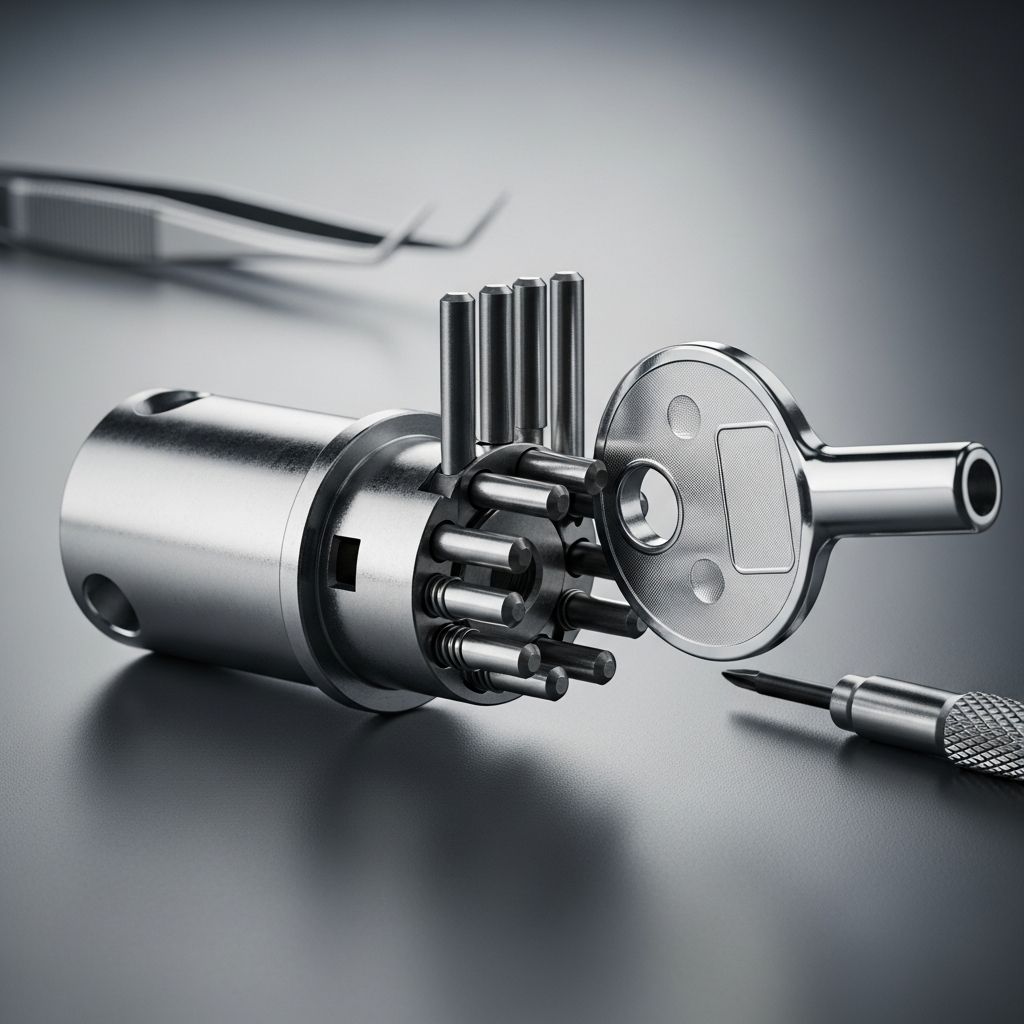
Tubular pin tumbler locks represent a specialized evolution in lock technology, featuring pins arranged in a circular pattern around a cylindrical key. These locks, often recognized by names like circle pin tumbler or radial locks, prioritize compactness and resistance to casual tampering, making them ideal for demanding applications.
The Engineering of Tubular Pin Tumbler Locks
At the core of a tubular lock lies a radial arrangement of pin stacks, typically numbering between four and ten, with six to eight being most common. Unlike traditional flat-key locks, the key here is hollow and tubular, with precise notches cut along its outer circumference. These notches interact with the pins to align them at the shear line, enabling the lock cylinder to rotate freely.
The mechanism relies on key pins and driver pins housed within the cylinder. Springs press the driver pins outward, blocking rotation until the tubular key depresses each key pin to the exact depth. This radial configuration demands specialized tools for manipulation, enhancing baseline security.
- Central Post: A solid core prevents key flexing and ensures precise pin alignment.
- Circular Keyway: Accommodates the key’s tube shape, distributing force evenly.
- Pin Chambers: Arranged radially, they move pins horizontally rather than vertically for compact design.
Common Applications Across Industries
Tubular locks excel in environments requiring frequent access and minimal space. Vending machines frequently employ them due to their short profile and durability under high-traffic conditions. Similarly, they secure bicycle locks, public computer Kensington slots, elevators, and coin-operated laundry equipment.
In commercial settings, variants like tubular cam locks—sometimes called plum blossom locks—protect cabinets, mailboxes, subway gates, and advertising displays. These locks offer customizable lengths and pin counts (4 or 7 pins) to match specific needs.
| Application | Lock Type | Key Benefits |
|---|---|---|
| Vending Machines | Tubular Vending Locks | High security, replaceable cylinders, anti-drill options |
| Cabinets & Displays | Tubular Cam Locks | Multiple sizes (XS to XXXL), versatile for industrial use |
| Bicycles & Computers | Standard Tubular | Compact, tamper-resistant for portable security |
| Push Mechanisms | Tubular Push Locks | Custom telescopic rods, suitable for gates and locomotives |
Security Features That Set Tubular Locks Apart
Manufacturers enhance tubular locks with features like critical key control (CKC), tamper resistance, and custom coding. Roper Lock’s offerings, for instance, include models like Roper Lock for medium-high traffic, ACE Lock with added drill protection for high-traffic areas, and Change-Matic for expansive systems needing quick rekeying.
Anti-drilling steel balls prevent destructive attacks, while universal key systems allow a single keyset to manage multiple locks. With over 10,000 key variations, these locks offer superior configuration options compared to peers.
Compared to standard pin tumbler locks, tubular designs resist traditional picking tools due to their circular layout, where pins require simultaneous radial tension.
Understanding Vulnerabilities and Mitigation Strategies
While robust, tubular locks are not impervious. Their radial pins can be manipulated with specialized picks that apply tension around the circumference. However, features like hardened components and sidebars in high-security models deter such attempts.
To bolster protection:
- Opt for locks with drill-resistant inserts and stainless steel construction.
- Implement master-keyed systems for managed access without compromising individual security.
- Regularly inspect for wear, as high-use environments accelerate pin binding.
- Pair with electronic overrides for layered defense in critical applications.
Change-Matic mechanisms allow field-rekeying, restoring security post-compromise without full replacement.
Selecting the Right Tubular Lock for Your Needs
Choosing a tubular lock involves assessing traffic volume, space constraints, and security level. For low-profile installations like vending or mailboxes, prioritize short cylinders with 7-pin setups. High-traffic zones benefit from tamper-evident models with custom stamping.
Consider pin count: 4-pin for basic applications, 7-pin or more for elevated security. Custom telescopic rods in push locks accommodate varying door thicknesses.
Maintenance Best Practices for Longevity
Proper upkeep extends tubular lock life. Lubricate with graphite powder annually, avoiding oil-based products that attract dust. Clean keyways to prevent debris buildup, which can misalign pins.
In humid or dusty settings, like laundromats, schedule bi-annual inspections. Replace worn keys promptly, as imprecise notches lead to binding.
Frequently Asked Questions (FAQs)
What makes tubular locks more secure than standard pin tumblers?
Their radial pin layout resists conventional picking tools, requiring specialized radial tension for manipulation.
Where are tubular locks most commonly used?
Primarily in vending machines, bike locks, cabinets, elevators, and coin-operated devices due to their compact, durable design.
Can tubular locks be rekeyed easily?
Yes, advanced models like Change-Matic support quick field rekeying for restored security in multi-lock systems.
How many pins do most tubular locks have?
Typically 6-8 pins, though variants range from 4 to 10 for varying security levels.
Are tubular keys interchangeable across brands?
Not always; while some universal systems exist, most require brand-specific keys with thousands of combinations.
Future Trends in Tubular Lock Technology
Advancements integrate tubular mechanisms with smart tech, such as RFID-enabled cylinders for keyless entry. Hybrid models combine mechanical reliability with biometric or app-based overrides, ideal for modern vending and access control.
Sustainability drives eco-friendly materials, like corrosion-resistant alloys, extending service life in harsh environments. Expect continued miniaturization for IoT devices and enhanced anti-pick features via laser-etched pins.
References
- Tubular pin tumbler lock – Wikipedia — Wikipedia Contributors. 2023-10-15. https://en.wikipedia.org/wiki/Tubular_pin_tumbler_lock
- What Are the Types of Tubular Locks Made by Make? — Make Locks. 2023-05-20. https://www.makelocks.com/news/what-are-the-types-of-tubular-locks-made-by-make.html
- Tubular Lock Mechanisms – Roper Lock — Roper Lock. 2024-02-10. https://roperlock.com/product/roper-tubular-lock-mechanism-highest-security/
- How to Pick a Tubular Lock: A Beginner’s Guide — Lockpicks.com. 2023-08-12. https://www.lockpicks.com/blogs/blogs/how-to-pick-a-tubular-lock-a-beginners-guide-to-tubular-lock-picking
- A Guide to Tubular Locks — CLK Supplies. 2023-11-05. https://www.clksupplies.com/blogs/news/a-guide-to-tubular-locks
- Understanding the Anatomy of Different Lock Types — SouthOrd. 2024-01-22. https://www.southord.com/blogs/news/understanding-the-anatomy-of-different-lock-types
Similar Articles



Read full bio of medha deb