Unlocking Stuck Filing Cabinets: Complete Guide
Master practical techniques to free jammed drawers, prevent future issues, and maintain your filing cabinets for lasting performance.
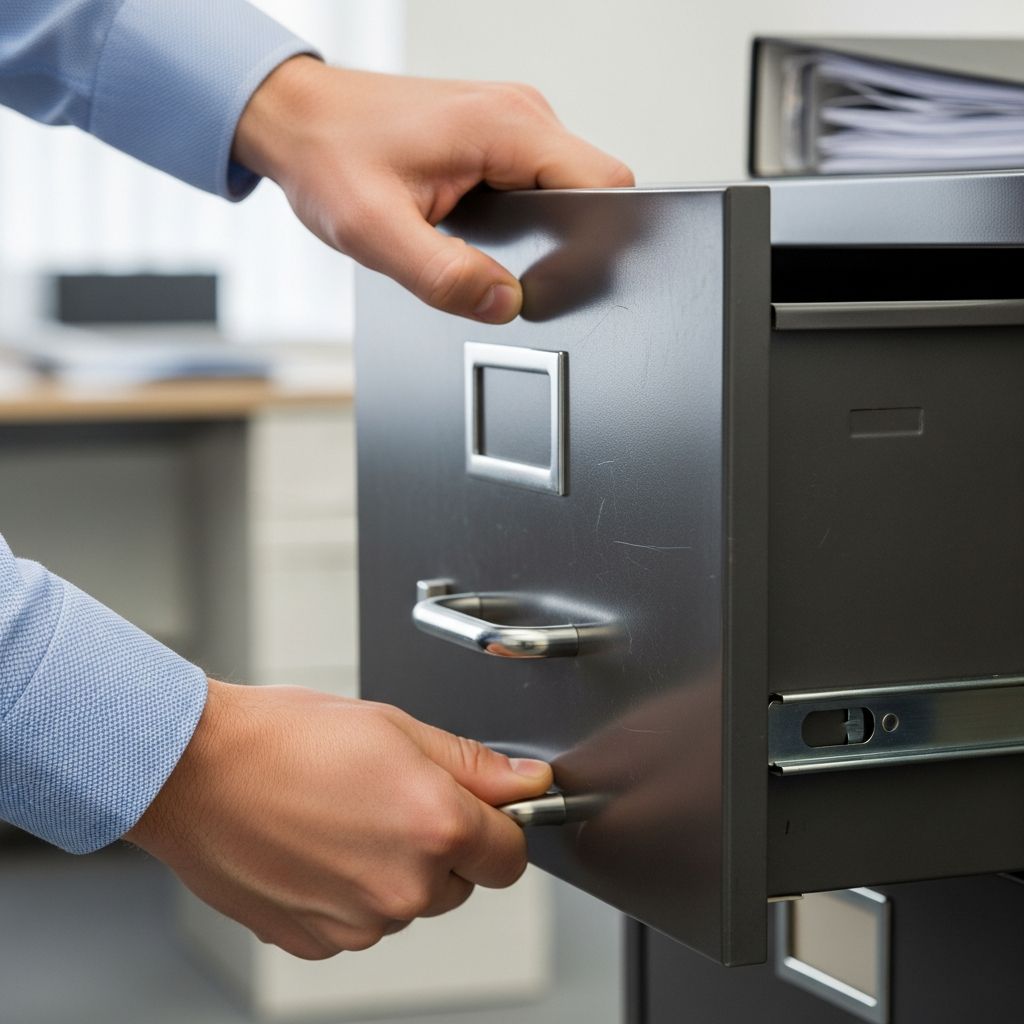
Stuck filing cabinet drawers can disrupt workflows in homes and offices, trapping important documents and causing frustration. This guide provides proven, safe methods to release jammed drawers, alongside preventive maintenance and organization strategies to ensure reliable access to your files long-term.
Understanding Why Filing Cabinets Get Stuck
Filing cabinets jam due to several common factors. Overloading drawers beyond their weight capacity strains slides and locks, leading to misalignment. Accumulated dust, debris, or rust on metal tracks hinders smooth movement. Poor organization causes files to bulge unevenly, creating pressure points. Environmental factors like humidity can warp wood components or promote corrosion in metal units. Identifying the root cause is the first step to effective resolution.
Regular use without upkeep exacerbates these issues. For instance, metal cabinets in humid climates develop rust spots that seize mechanisms, while neglected lubrication dries out drawer glides. Proactive checks can mitigate most problems before they escalate.
Safe Initial Steps Before Forcing a Drawer
Approach a stuck drawer cautiously to avoid damage or injury. Start by removing adjacent drawers to redistribute weight and relieve pressure on the frame. Gently pull upward at a 45-degree angle while applying steady forward pressure—this technique often dislodges minor binds without tools.
Inspect visible tracks for obvious blockages like paper clips or staples. Shake the drawer lightly to shift contents. If locked, verify the key turns fully; a partially engaged lock can mimic a jam. Never use excessive force, as it risks bending rails or cracking the cabinet.
Non-Invasive Techniques to Free Jammed Drawers
Begin with the simplest remedies using household items. Insert a flathead screwdriver or butter knife into the track gap to gently lever the drawer forward. Tap the drawer sides lightly with a rubber mallet to loosen friction without denting surfaces.
For subtle misalignments, apply compressed air to blow out dust from tracks. Warm soapy water on a cloth can loosen grime—wipe tracks thoroughly and dry immediately to prevent moisture damage. These methods resolve 70% of minor jams without disassembly.
Lubrication Essentials for Smooth Drawer Operation
Proper lubrication is key to preventing and fixing sticks. Graphite powder or silicone spray excels for metal tracks, penetrating crevices without attracting dirt. Avoid petroleum-based oils, which gum up over time. Apply sparingly to slides, then work the drawer back and forth to distribute evenly.
A non-greasy dry lubricant is ideal for frequent-use cabinets, as it repels dust buildup.
| Lubricant Type | Best For | Application Tips |
|---|---|---|
| Graphite Powder | Metal tracks | Sprinkle lightly; no residue |
| Silicone Spray | Plastic/wood glides | Spray and wipe excess |
| WD-40 Specialist Dry Lube | Rusty mechanisms | Use after cleaning rust |
| Paraffin Wax | Wood drawers | Rub directly on rails |
Advanced Methods for Stubborn or Locked Drawers
When basic steps fail, progress to targeted interventions. For lock-related jams, use a tension wrench and pick set if skilled, or call a locksmith to avoid drilling. Bent tracks require pliers to realign—wrap jaws in cloth to prevent scratches.
Two-person method: one lifts the cabinet slightly while the other pulls the drawer. For vertical file cabinets, remove top drawers entirely and tilt the unit backward 10 degrees to gravity-assist release. Always support the cabinet to prevent tipping.
Deep Cleaning and Maintenance Routines
Scheduled cleaning prevents recurrence. Empty drawers fully, vacuum interiors, and wipe with mild detergent. For metal surfaces, dust weekly with microfiber cloths to avert scratches. Deep clean quarterly: remove drawers, clean tracks with a soft brush, and polish exteriors.
- Emptied contents before washing.
- Use lint-free cloths for drying.
- Apply metal polish post-clean for protection.
Annual inspections check for rust or wear. Treat spots promptly with fine sandpaper and inhibitors.
Addressing Material-Specific Issues
Metal Filing Cabinets
Prone to rust in moist environments. Position away from windows and use protective mats underneath. Sand corroded areas gently, apply rust converter, then touch-up paint matching the finish.
Wooden Cabinets
Humidity warps drawers. Maintain 40-60% relative humidity. Lubricate with wax; sand swollen edges lightly before reassembly.
Lateral vs. Vertical Files
Lateral cabinets jam from side pressure—ensure even loading. Vertical ones benefit from front-to-back filing to balance weight.
Organization Strategies to Prevent Overloading
Disorganized files cause bulges and binds. Purge annually: discard outdated documents per retention policies. Limit drawers to 80% capacity for easy access.
- Declutter: Sort, label, shred unnecessary items.
- Categorize alphabetically or numerically.
- Use accessories like hanging folders and dividers.
Implement a file retention policy: financial records 7 years, tax docs permanently if needed. This keeps contents manageable.
Repairing Common Damage from Stuck Drawers
Dents from forcing: Place wood block over dent, tap gently with hammer, sand, and paint. Broken glides require replacement rails—match model numbers for compatibility.
Enhance security post-repair: Upgrade locks, add bars across units.
Preventive Habits for Long-Term Reliability
Position cabinets in low-traffic areas away from sunlight and moisture. Label drawers clearly. Schedule bi-annual lubrication and cleaning. Invest in quality units with ball-bearing slides for durability.
Frequently Asked Questions (FAQs)
What if my filing cabinet drawer is completely locked and won’t budge?
Try the two-person lift-and-pull method or lubricate tracks first. If unsuccessful, consult a professional locksmith to avoid structural damage.
Can I use WD-40 on filing cabinet drawers?
Use sparingly for initial de-rusting, then switch to dry lubricants like graphite to prevent dirt attraction.
How often should I clean my filing cabinet?
Dust weekly, deep clean quarterly, and declutter annually for optimal performance.
What’s the best way to organize files to avoid jams?
Keep drawers under 80% full, use consistent labeling, and purge outdated files regularly.
Are there tools I need for drawer repairs?
Basic kit: screwdriver, pliers, rubber mallet, sandpaper, lubricants. Advanced: lock pick set or replacement glides.
Enhancing Security After Resolving Stucks
Post-fix, bolster protection. Replace default locks with high-security models. Install electronic locks for keyless access. Secure cabinets in locked rooms and add cross-bars for multi-drawer units.
References
- How to Maintain and Care for Metal Filing Cabinets — Avios Singapore. 2023. https://www.avios.com.sg/maintain-and-care-for-metal-filing-cabinets/
- How to Maintain a Filing Cabinet — Ace Office Furniture. 2024. https://aceofficesystems.com/blogs/news/how-to-maintain-a-filing-cabinet
- File Cabinet Cleaning Checklist — Checklist.gg. 2024. https://checklist.gg/templates/file-cabinet-cleaning-checklist
- Spring Cleaning Your File Cabinet | Smead 2 Minute Tips — YouTube/Smead. 2011-05. https://www.youtube.com/watch?v=bAm8KzV55tc
- Renovating a filing cabinet, where to lubricate and which lube? — DIYnot Forums. 2020. https://www.diynot.com/diy/threads/renovating-a-filing-cabinet-where-to-lubricate-and-which-lube.530225/
Similar Articles





Read full bio of Sneha Tete