Upgrading Wood Decks: Composite Decking Installation
Transform your existing wood deck with durable composite materials and modern installation techniques.
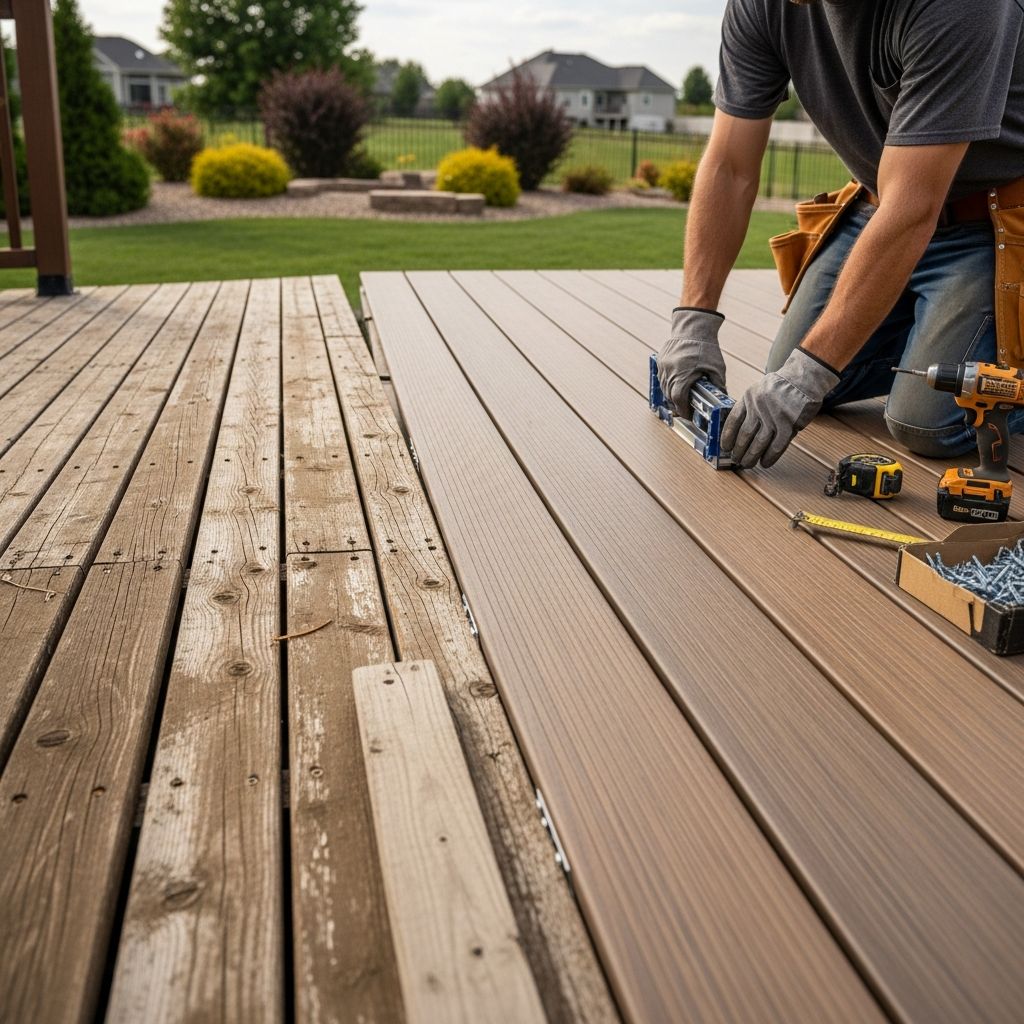
Transforming Your Outdoor Space: A Guide to Composite Deck Installation Over Wood Foundations
Composite decking has revolutionized outdoor living spaces by offering homeowners a low-maintenance alternative to traditional wood. When you have an existing wood deck that needs refreshing, installing composite boards over your current wood frame can breathe new life into your outdoor area without the expense of complete reconstruction. This comprehensive guide walks you through the entire process of upgrading your wood deck with composite materials, ensuring a professional-quality result that will last for decades.
Understanding Composite Decking Materials and Their Advantages
Composite decking represents a fusion of wood fibers and plastic polymers, creating a material that combines the aesthetic appeal of natural wood with the durability of modern engineered products. Unlike solid wood, composite boards resist rotting, warping, and splintering while requiring significantly less maintenance. They do not need annual staining or sealing, making them an economical choice over the long term.
When selecting composite materials for your project, you’ll encounter various products from manufacturers that offer different appearances and performance characteristics. Some composite boards feature grooved designs specifically engineered to work with hidden fastening systems, while others are solid profiles suitable for traditional screw installation. Understanding your chosen product’s specifications is critical before beginning your installation work.
Pre-Installation Assessment and Deck Preparation
Before you commit to installing composite decking over your existing wood structure, a thorough evaluation of the current deck’s condition is essential. Walk the entire deck surface, checking for signs of rot, structural weakness, or damage that would compromise the new installation. Pay particular attention to areas around posts, where the deck meets your house, and anywhere water tends to collect.
Composite decking is only as strong as the wooden frame supporting it. If your existing joists, beams, or posts show signs of decay or have been damaged by weather exposure, these components must be repaired or replaced before proceeding. Installing composite materials over a compromised wood structure will eventually lead to failure and safety concerns.
Once you’ve confirmed that the underlying frame is sound, clean the entire deck surface thoroughly. Remove dirt, debris, and any vegetation growing between boards. This preparation ensures proper contact between the composite boards and their support structure, which is critical for long-term performance.
Tools and Materials You’ll Need
Successful composite deck installation requires both specialized fastening systems and standard carpentry tools. Here’s what you should gather before starting your project:
- Quality composite deck screws (typically 2.5 inches for standard installations)
- Hidden fastening clips and starter strips designed for your specific composite product
- A power drill with both regular and countersink bits
- A circular saw or miter saw for cutting composite boards
- A jigsaw for making curved cuts around posts and obstacles
- Measuring tape, carpenter’s square, and chalk line
- Work gloves and safety glasses
- Clamps for holding boards in position during installation
- Post sleeves and railing components if updating your deck’s perimeter
Many manufacturers provide installation guides specific to their products, and these should be consulted before you begin. Different composite products may have slightly different fastening requirements, spacing recommendations, and compatibility with various clip systems.
Establishing Your Starting Point and Layout Strategy
The direction and pattern of your composite deck boards significantly impact both the visual appeal and the installation process. Most commonly, boards run perpendicular to the house, creating a traditional deck appearance. However, you might choose diagonal patterns or boards running parallel to the house for visual interest.
Begin your layout by measuring the width of your deck and determining how many full boards you’ll need across its width. Ideally, you want to avoid narrow slivers of boards at either edge, as these appear unfinished and are difficult to install securely. If your calculations result in a narrow edge piece, consider ripping one board to a slightly wider width, distributing the adjustment more evenly across the deck.
Before installing the first permanent board, establish reference lines using a chalk line. Measure 16 inches from your house or starting edge and snap a line indicating where your fasteners will sit along the first joist. This ensures consistent spacing and helps you maintain alignment throughout the installation.
Installing Starting Strips and the First Board
Starting strips, also called start-stop clips or starter accessories, serve as the foundation for your composite decking system. These clips attach to your rim joist or ledger board with composite deck screws spaced approximately every 16 inches. The starter strip provides a secure anchor point where the groove of your first composite board will engage.
Pre-drill holes before driving screws into composite materials or wood to prevent splitting and ensure proper fastener seating. Many professionals use a countersink bit to create a slight recess that allows screws to sit flush with the surface, creating a cleaner appearance.
Position your first composite board carefully, ensuring it is perfectly straight and parallel to your house or the deck’s edge. This board establishes the visual line for your entire deck, so take time to get it exactly right. Stand back frequently and sight along the length to verify straightness before fully securing it.
Fastening Systems and Board-to-Board Installation
Modern composite decking installations typically employ two primary fastening approaches: hidden clip systems and visible screw fastening. Hidden clip systems offer a cleaner appearance by concealing fasteners, while visible screw fastening provides maximum accessibility for future board replacement.
Hidden Clip Installation Method
With this approach, specialized clips insert into the grooved edge of composite boards, creating a hidden fastening system. After securing the starter strip, you’ll position the first clip on the rim joist. The clip’s prong slides into the board’s groove, and you secure the clip with composite screws driven from above into the joist below. This method creates a continuous drainage pathway between boards while keeping fasteners out of sight.
Once your first board is secured, you’ll position the next clip on the framing support, then slide your second board onto this clip. The board’s groove engages with the clip’s prong, and you secure this clip with screws. Continue this pattern, working your way across the deck width. Many professionals find that installing all boards dry-fit first, then coming back to secure clips from above, expedites the overall installation process.
Visible Screw Fastening Method
This traditional approach involves screwing boards directly to the framing at each joist support. Pre-drill through the composite board into the center of the joist to prevent splitting and ensure fasteners pull the board snugly against its support. Install a minimum of two screws per board at each joist crossing. This method requires less specialized hardware and makes future board replacement straightforward, though the visible fasteners are more prominent.
Managing Board Spacing and Expansion Gaps
Composite materials expand and contract with temperature and humidity changes, though far less dramatically than natural wood. Manufacturers provide specific spacing charts indicating the gap required between boards based on your installation temperature and local climate conditions. Installing boards too tightly can result in buckling during summer months when heat causes expansion.
Position spacer tabs or maintain consistent gaps using proprietary spacers designed for your composite product. These tools ensure even spacing throughout your deck and accommodate the slight movement that occurs naturally over the seasons. Once installation is complete, these gaps become barely noticeable, but they are essential for long-term deck performance.
Cutting Composite Boards and Working Around Obstacles
Composite materials cut similarly to wood but require sharp blades and proper technique to achieve clean edges. Use a fine-toothed blade and cut slowly to prevent melting or chipping the material. When possible, make cuts before installing boards, as this allows you to work at a comfortable height and take time for precision.
For cuts along board lengths (ripping), mark your cut line clearly and use a circular saw with a fine-toothed blade. Composite dust is fine and can be messy, so wear a dust mask and clear your work area frequently. When cutting across the board width, a miter saw equipped with a composite-rated blade provides clean, square cuts.
Posts, plumbing penetrations, and other obstacles require careful measuring and sometimes angled cuts or notches. Mark cutout locations clearly on the board’s back side, double-check your measurements, and make cuts carefully. You can make cutout gaps slightly oversized if needed, as you’ll cover the gaps with post skirts or trim pieces once installation is complete.
Completing the Installation and Edge Details
As you near the far edge of your deck, you may find that a full-width composite board won’t fit perfectly in the remaining space. In these situations, rip the final board lengthwise to achieve the correct width. Ensure this last board is securely fastened at every joist, providing the same structural support as full-width boards.
Overhanging boards by one to two inches beyond end joists creates a finished appearance while providing structural benefits. Mark your cutting line clearly, make a straight cut using a circular saw with a guide, and trim all overhanging portions uniformly. If you plan to install fascia boards (trim that covers the deck’s edges), these can cover the cut ends and provide additional weather protection.
Post skirts and trim pieces cover gaps where composite boards meet posts and other vertical elements. These finishing touches enhance the deck’s appearance while protecting the composite material from water infiltration and UV exposure. Most manufacturers offer trim components designed to complement their decking profiles.
Railing and Safety Considerations
Building code requirements for deck railings vary by location, but most jurisdictions require railings on decks elevated more than 30 inches above ground. Composite railing systems work seamlessly with composite decking, providing a cohesive, low-maintenance aesthetic.
Railing installations typically involve post sleeves that cover existing support posts, bottom and top rails that span between posts, and balusters (vertical members) that prevent passage through openings. Post sleeves are cut to height and secured with adhesive designed for composite materials. Rails are cut to precise lengths, accounting for post spacing and code requirements regarding baluster spacing.
Flanges and brackets attach rails to posts securely while maintaining proper spacing. Pre-drill all fastener holes to prevent cracking, and follow manufacturer specifications for fastener type and installation procedure. Test the structural integrity of your railing by applying firm pressure—it should not flex excessively or show movement.
Maintenance and Long-Term Care
One of composite decking’s primary advantages is minimal maintenance requirements compared to wood. An annual cleaning with mild soap and water keeps your deck looking fresh and prevents mildew or algae buildup. For stubborn stains, use a soft-bristled brush rather than aggressive scrubbing, which can damage the composite surface.
Composite decking does not require sealing, staining, or pressure washing like traditional wood. The material is engineered to resist fading, staining, and weather damage throughout its lifespan. However, extreme heat can cause some discoloration, so providing shade during the hottest months benefits your deck’s appearance.
Periodically inspect fasteners and clips, tightening any that have loosened due to seasonal movement. Check under the deck annually for debris accumulation, which can trap moisture and accelerate deterioration of the wooden frame structure. Clear gutters and downspouts directing water away from your deck to minimize water exposure to the wooden support structure.
Common Installation Mistakes to Avoid
Understanding typical pitfalls helps you execute a professional installation on your first attempt. One frequent error is installing composite boards over severely compromised wood frames, which inevitably leads to failure. Never skip the structural assessment phase of your project.
Improper spacing between boards causes buckling and creates an unprofessional appearance. Follow manufacturer spacing recommendations exactly, accounting for installation temperature and your local climate. Undersized fasteners, incorrect fastener spacing, or driving fasteners at improper angles compromises board security and creates safety hazards.
Neglecting to pre-drill fastener holes results in splitting, whether in composite boards or the underlying wood structure. Taking an extra minute to pre-drill every fastener location prevents expensive material waste and ensures your deck performs as designed. Similarly, using fasteners not specifically rated for composite materials can cause board damage and void warranties.
Frequently Asked Questions About Composite Decking Installation
Q: Can I install composite decking directly over my existing wood deck?
A: Yes, provided your wood frame is structurally sound with no signs of rot or significant damage. If the wood structure shows decay, repair or replace affected components before installing composite materials.
Q: How much spacing should I leave between composite boards?
A: Spacing requirements vary by manufacturer and installation temperature, typically ranging from 1/8 inch to 1/4 inch. Consult your specific product’s installation guide for precise specifications based on your climate conditions.
Q: What tools do I absolutely need for composite deck installation?
A: At minimum, you need a power drill, circular saw or miter saw, measuring tape, composite deck screws, and fastening clips appropriate for your product. Additional tools like a jigsaw and countersink bits make the work easier and produce better results.
Q: Can I use regular wood deck screws for composite installation?
A: No, you should use composite-rated deck screws specifically designed for this application. Regular wood screws can damage composite materials and may void your product warranty.
Q: How do I prevent my composite deck from getting hot in the sun?
A: Composite materials do absorb heat when exposed to direct sunlight. Installing shade structures like pergolas, umbrellas, or awnings helps reduce heat absorption and keeps the deck more comfortable for barefoot walking.
Q: What is the expected lifespan of composite decking?
A: Quality composite decking typically lasts 25-30 years or more with proper installation and basic maintenance. This significantly exceeds the lifespan of traditional wood decking, making it a worthwhile long-term investment.
Q: Can I repair individual composite boards if they become damaged?
A: Yes, one advantage of proper installation using fastening clips or visible screws is that individual boards can be removed and replaced without affecting surrounding boards. Damaged boards can be cut out and new boards inserted in their place.
References
- How to Install Composite Decking and Railings — Lowe’s. 2024. https://www.lowes.com/n/how-to/build-a-deck-composite-decking-and-railings
- Composite Decking Installation Guide — UltraDeck. 2024. https://www.ultradeck.com/UltradeckWebsite/web/cms/docs/UltraDeckInstallationGuide.pdf
- Decking Installation Guide — NewTechWood. 2023. https://www.newtechwood.com/pdf/Decking-Installation.pdf
- Sylvanix Composite Decking Installation Guide — Culpeper Wood. 2020. https://www.culpeperwood.com/wp-content/uploads/2021/02/Sylvanix-Composite-Decking-Installation-Guide-May-2020-web.pdf
- 2022 Decking Installation Guide — Trex. 2022. https://www.trex.com/content/dam/trex/literature/product-installation/2022-trex-decking-installation-guide.pdf
- Installation Guides — Armadillo Deck. 2024. https://armadillodeck.com/installation-guides/
- Deck Installation Guides — TimberTech. 2024. https://www.timbertech.com/resources/installation-guides/
Similar Articles








Read full bio of Sneha Tete