Should You Use Sulfur In The Garden: 3 Practical Ways
Learn how sulfur improves soil health, plant growth, and garden productivity with expert tips.
Should You Use Sulfur in the Garden?
Sulfur is a fundamental nutrient for plant health and development, yet many home gardeners overlook its importance in their growing practices. While nitrogen, phosphorus, and potassium often dominate gardening conversations, sulfur plays an equally vital role in fostering robust plant growth, enhancing nutrient absorption, and maintaining optimal soil conditions. Understanding when and how to use sulfur can significantly improve your garden’s productivity and plant vitality.
Sulfur serves multiple functions in the garden ecosystem. It helps form essential enzymes and proteins within plants, acts as a natural soil conditioner, and reduces sodium content in soils. Additionally, sulfur is a component of certain vitamins and contributes to the distinctive flavors in crops like mustard, onions, and garlic. For many gardeners, the question isn’t whether sulfur matters, but rather how to determine if their garden needs it and what application methods work best.
What is Sulfur and Why Do Plants Need It?
Sulfur exists in several forms when applied to gardens, with the most common being elemental sulfur and sulfate sulfur. Elemental sulfur, often found as finely ground powder or prilled pellets, requires microbial activity in the soil to convert into the plant-available sulfate form that roots can absorb. This conversion process takes time, making sulfur applications ideal for planning ahead rather than addressing immediate deficiencies.
Plants require only modest amounts of sulfur to thrive—typically between 10 to 30 pounds per acre. Despite these relatively small quantities, sulfur’s impact on plant health is disproportionately significant. Sulfur acts as a structural component in plant tissues, participates in disulfide bond formation in proteins and enzymes, and regulates enzymatic functions, particularly in redox control. It offers protection from oxidative damage through compounds like glutathione and its derivatives, helping plants resist environmental stresses.
Furthermore, sulfur is involved in secondary metabolite production—compounds that help plants defend against pests and diseases naturally. When plants have adequate sulfur, they can synthesize protective compounds more effectively, reducing their vulnerability to common garden problems. This dual function—supporting normal growth while enhancing disease resistance—makes sulfur an underrated ally in sustainable gardening practices.
How to Identify Sulfur Deficiency in Your Garden
Recognizing sulfur deficiency requires careful observation of plant symptoms, as they can sometimes mimic other nutrient problems. The most prominent indicator is yellowing that appears first on the younger leaves and upper portions of plants, which distinguishes it from other nutrient deficiencies that typically affect older foliage first. The yellowing often occurs uniformly across the leaf rather than appearing as interveinal chlorosis, giving affected plants a pale, bleached appearance.
Plants suffering from sulfur deficiency may exhibit stunted growth and reduced productivity, ultimately leading to diminished yields. In some cases, plants may develop weak stems or produce smaller flowers and fruits than normal. Sulfur-deficient plants also tend to be more susceptible to pest and disease pressures, as their natural defense mechanisms are compromised.
However, before assuming your plants need sulfur, conducting a soil test is the most reliable diagnostic approach. A professional soil test will reveal your soil’s pH level, nutrient content, and whether sulfur deficiency actually exists. This prevents unnecessary amendments and ensures you’re addressing the actual problem rather than treating symptoms. Many sulfur deficiency symptoms can overlap with other nutritional issues, making soil testing an essential first step in garden troubleshooting.
When Do You Really Need Sulfur?
Sulfur is not universally needed in home landscapes, and applying it without purpose can create problems rather than solve them. However, certain situations warrant sulfur application. Gardens with naturally alkaline soils—common in areas with limited rainfall and minimal limestone weathering—benefit significantly from sulfur’s acidifying properties. Most plants prefer moderate pH levels, typically between 6.0 and 7.0, and sulfur helps gardeners achieve this balance when soil pH is too high.
Acid-loving plants represent another clear use case for sulfur supplementation. Plants like blueberries, azaleas, rhododendrons, and heaths thrive in acidic soils and respond particularly well to sulfur amendments. For these plants, sulfur acts as a targeted solution, creating the soil conditions they need to flourish. Additionally, plants grown specifically for seed oil production have higher sulfur requirements and typically benefit from regular sulfur applications or sulfur-containing fertilizers.
If you’re planning a dramatic shift in your soil’s pH or suspect serious sulfur deficiency, patience is essential. Increasing soil acidity through sulfur application takes considerable time, ideally beginning at least six months to a year before planting. This advance planning allows the sulfur to gradually convert into plant-available forms, ensuring consistent nutrient availability throughout the growing season.
Three Ways to Add Sulfur to Your Garden
When you’ve determined that your garden needs sulfur, several practical and cost-effective methods can help you augment your soil’s sulfur content. Each approach offers distinct advantages depending on your garden’s current state and your long-term goals.
Amend Your Soil with Compost
One of the most accessible sulfur amendments is compost, which naturally contains sulfur because sulfur occurs in decaying organic materials. Adding compost to your garden introduces this essential nutrient along with numerous other beneficial compounds that improve soil structure and microbial activity. If you’re not already composting at home, starting with kitchen scraps and yard waste offers a simple DIY project that benefits both your garden and the environment by keeping waste out of landfills.
Mulch and manure provide similar benefits, delivering sulfur gradually as they decompose and integrate into the soil. These organic materials also improve soil water retention, temperature regulation, and encourage beneficial microbial populations that further enhance nutrient availability. For gardeners seeking slow-release, natural sulfur supplementation, organic materials represent an ideal approach.
Choose Sulfate-Based Fertilizers
Many commercial fertilizers already contain sulfur compounds, particularly those labeled as sulfate-based formulations. Before purchasing new fertilizer, examine what you’re currently using. The fertilizer you’re already applying to your garden might already supply adequate sulfur. If supplementation is needed, selecting fertilizers specifically formulated with sulfates ensures you’re directly addressing potential deficiency while feeding plants with other essential nutrients.
This approach is particularly convenient because it combines sulfur amendment with regular feeding in a single application. Sulfate forms of sulfur are immediately available to plants, providing faster results than elemental sulfur, though they require more frequent applications as sulfates leach through soil over time.
Add Sulfur-Rich Material in Advance
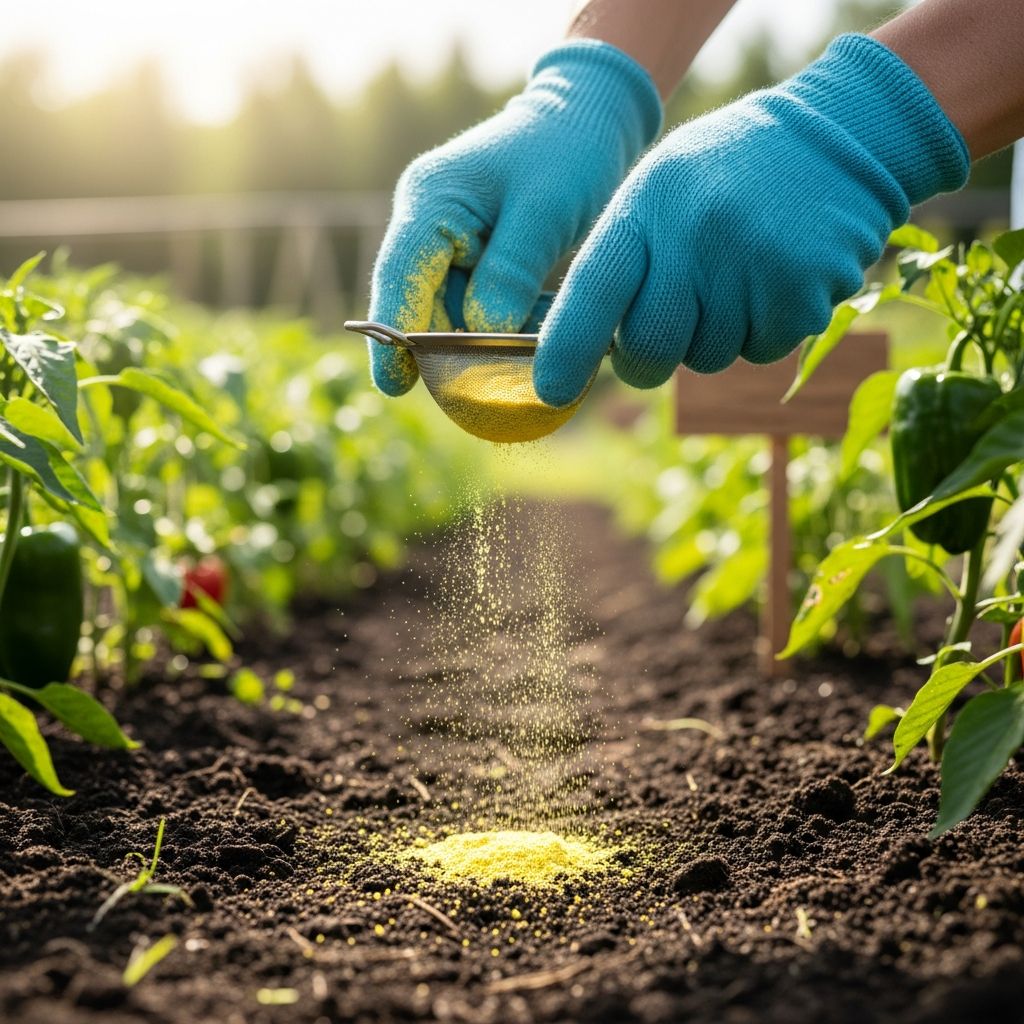
For gardens seriously lacking in sulfur or those where pH modification is desired, adding elemental sulfur well before planting offers the most dramatic results. Pure sulfur amendments, available as 100 percent finely ground powder or prilled pellets, represent the most concentrated sulfur sources. These materials require time for soil microorganisms to convert them into plant-available sulfate form, making advance application essential.
When using elemental sulfur for soil acidification, the amount needed depends on your current pH, target pH, and soil type. The National Gardening Association provides a helpful pH calculator to determine the correct sulfur application rate for your specific situation. Sandy soils require different applications than clay soils, and starting with moderate applications while following product instructions prevents excessive sulfur accumulation, which could impede other nutrient uptake.
Understanding Elemental Versus Sulfate Sulfur
The form of sulfur you choose significantly impacts both your results and timeline. Elemental sulfur sources are highly acidifying, making them beneficial for alkaline soils but potentially problematic for already acidic conditions. These materials work slowly but provide long-lasting effects, making them ideal for permanent pH adjustments. Sulfate sulfur, in contrast, provides immediately plant-available nutrients with faster results but requires more frequent reapplication as sulfates gradually deplete through leaching.
For acid-loving plants or soil that’s significantly too alkaline, elemental sulfur is often the superior choice. For quick nutrient supplementation in soils that don’t need pH adjustment, sulfate-based fertilizers work more efficiently. Understanding your specific needs and soil characteristics helps you select the most appropriate form.
Best Practices for Sulfur Application
Caution and moderation are paramount when working with sulfur. Too much sulfur may be retained in soils, causing other nutrient uptake issues and creating problems more serious than the original deficiency. Always follow product instructions carefully and start with moderate applications. If you’re uncertain whether your plants need sulfur, a soil side-dress of compost or manure won’t harm plants while slowly leeching sulfur into the soil as it composts into the earth.
Timing matters significantly when applying sulfur. For elemental sulfur used as a soil acidifier, applications should occur at least six months to a year before planting to allow adequate conversion time. For fertilizer-based applications, time them according to your regular feeding schedule. Avoid applying excessive sulfur during the growing season unless specifically addressing deficiency symptoms, as this can disrupt nutrient balance.
Monitor your plants throughout the growing season for signs of improvement or adverse reactions. Healthy plants exhibit vigorous growth, appropriate leaf coloration, abundant flowering and fruiting, and strong disease resistance. These indicators suggest your sulfur supplementation is working effectively.
The Broader Role of Sulfur in Plant Health
Beyond addressing deficiency and adjusting pH, sulfur contributes to multiple aspects of plant wellness. It enhances chlorophyll production, improving photosynthetic efficiency and overall plant vigor. Sulfur supports root health and development, enabling plants to access water and nutrients more effectively. It increases disease resistance through both nutrient-driven mechanisms and direct fungicidal properties, as sulfur compounds act as natural fungicides against certain pathogens.
Sulfur also facilitates vitamin production within plants and contributes to seed oil synthesis in oil-bearing crops. For culinary gardeners, sulfur indirectly impacts flavor development in crops like garlic, onions, and mustard, as sulfur is an essential component of the flavor compounds these plants produce.
When to Consult a Soil Test
Given sulfur’s importance but also the potential for problems from excessive application, professional soil testing remains the gold standard for gardening decisions. A comprehensive soil test reveals not only sulfur status but also pH, macronutrient levels, and micronutrient availability. Armed with this information, you can make targeted amendments rather than guessing or applying unnecessary treatments.
Most cooperative extension services offer affordable soil testing, and results typically include recommendations tailored to your specific situation. This investment pays dividends by preventing costly mistakes and ensuring your garden amendments actually address real deficiencies rather than imagined problems.
Frequently Asked Questions
Q: How long does sulfur take to acidify soil?
A: Elemental sulfur conversion takes six months to a year or longer, depending on soil temperature, moisture, and microbial activity. This is why advance planning is crucial for pH adjustment projects.
Q: Can I apply too much sulfur to my garden?
A: Yes. Excessive sulfur can accumulate in soil and interfere with the uptake of other nutrients. Always follow product instructions and start with moderate applications.
Q: Do all plants need sulfur supplementation?
A: No. Most plants obtain adequate sulfur from existing soil or from fertilizers already containing sulfur. Supplementation is primarily needed for acid-loving plants or in severely deficient soils.
Q: What’s the difference between sulfur dust and prilled sulfur?
A: Sulfur dust is finely ground and mixes more easily into soil, while prilled sulfur consists of small pellets that dissolve more slowly. Both provide elemental sulfur but vary in application rate and timing.
Q: Can I use sulfur as a fungicide in addition to soil amendment?
A: Yes. Sulfur’s fungicidal properties protect against certain diseases while simultaneously improving soil nutrition, making it valuable for multiple garden functions.
Q: Should I test my soil before applying sulfur?
A: Absolutely. Soil testing prevents unnecessary applications and ensures sulfur will actually benefit your specific garden rather than creating problems.
References
- Does Your Garden Need Prilled Sulfur? — True Organic. Accessed December 3, 2025. https://trueorganic.earth/does-your-garden-need-prilled-sulfur/
- Should You Use Sulfur in the Garden? — This Old House. Accessed December 3, 2025. https://www.thisoldhouse.com/gardening/23041649/using-sulfur-in-the-garden
- Information On The Role Of Sulfur – What Does Sulfur Do For Plants — Gardening Know How. Accessed December 3, 2025. https://www.gardeningknowhow.com/garden-how-to/soil-fertilizers/sulfur-in-plants.htm
- Sulfur nutrition and its role in plant growth and development — National Center for Biotechnology Information (NIH). December 2023. https://pmc.ncbi.nlm.nih.gov/articles/PMC10730164/
- Learn the Benefits of Sulfur for Plants and How to Use It Properly — Tribhakti. Accessed December 3, 2025. https://www.tribhakti.com/learn-the-benefits-of-sulfur-for-plants-and-how-to-use-it-properly/
- Sulfate Sulfur vs. Elemental Sulfur Part I: There’s a Difference — Crop Nutrition. Accessed December 3, 2025. https://www.cropnutrition.com/resource-library/sulfate-sulfur-vs-elemental-sulfur-part-i-theres-a-difference/
Similar Articles







Read full bio of medha deb