Vinyl vs Aluminum Siding: Installation Guide & Comparison
Complete guide to choosing between vinyl and aluminum siding for your home renovation project.
Vinyl vs Aluminum Siding: A Comprehensive Installation and Comparison Guide
When it comes to updating your home’s exterior, choosing the right siding material is one of the most important decisions you’ll make. Vinyl and aluminum siding are two of the most popular options available to homeowners today, each offering distinct advantages and considerations. Whether you’re planning a complete home renovation or simply replacing worn siding, understanding the differences between these two materials will help you make an informed decision that aligns with your budget, climate, and aesthetic preferences.
Both vinyl and aluminum siding have become industry standards because they offer durability, affordability, and low maintenance compared to traditional wood siding. However, they differ significantly in composition, performance characteristics, installation requirements, and long-term costs. This comprehensive guide will walk you through everything you need to know about both options, from installation techniques to maintenance requirements.
Understanding the Materials
What is Vinyl Siding?
Vinyl siding is manufactured from polyvinyl chloride (PVC), a lightweight and flexible plastic material that’s engineered to withstand outdoor conditions. The color is typically infused throughout the material during manufacturing, which means the color won’t fade as quickly as painted surfaces. Vinyl siding comes in numerous colors, textures, and finishes, including options that mimic the appearance of wood shake, cedar boards, or even stone.
Modern vinyl siding often includes foam backing or insulation layers that enhance energy efficiency. These insulated options provide an R-value that contributes to better temperature regulation within your home. The lightweight nature of vinyl makes it one of the easiest materials to handle during installation.
What is Aluminum Siding?
Aluminum siding consists of thin sheets of aluminum that are typically coated with a factory-applied paint finish. This metal material is known for its strength and ability to withstand extreme weather conditions. Unlike vinyl, aluminum has color applied to its surface rather than infused throughout, which means it may require repainting periodically to maintain its appearance.
Aluminum’s metallic composition gives it inherent fire-resistant properties, making it an excellent choice for areas prone to wildfires or other fire hazards. The material is also fully recyclable, which appeals to environmentally conscious homeowners. However, aluminum is more prone to denting and requires more careful handling during installation.
Appearance and Style Options
Vinyl Siding Aesthetics
One of vinyl’s strongest advantages is the vast array of design options available to homeowners. Vinyl siding comes in dozens of colors and multiple texture options, allowing you to achieve virtually any aesthetic you desire. Whether you prefer a traditional colonial look, modern minimalist design, or rustic charm, vinyl can accommodate your vision. Many manufacturers offer wood-grain textures that closely replicate authentic cedar or wood shake siding without the maintenance requirements.
The factory-finished color of vinyl means you won’t need to paint or touch up the material to maintain its curb appeal. Scratches and minor imperfections are less noticeable because the color runs throughout the material. This aesthetic consistency remains stable over many years.
Aluminum Siding Aesthetics
Aluminum siding presents a more limited palette of design options compared to vinyl. The material typically offers a sleek, modern appearance with a smooth or lightly textured finish. Some homeowners appreciate its clean, contemporary look, while others find the metallic sheen somewhat industrial or dated. The glossy finish can be attractive in certain architectural styles but may not suit all home designs.
One advantage of aluminum is its flexibility in customization through repainting. If you decide to change your home’s color scheme years down the road, aluminum can be repainted to achieve a fresh look. However, this capability also means aluminum requires more aesthetic maintenance over time. Chips, scratches, and weathering can be more visible on aluminum than on vinyl.
Durability and Weather Performance
Weather Resistance Comparison
| Weather Factor | Vinyl Siding | Aluminum Siding |
|---|---|---|
| Extreme Cold | Can become brittle | Handles well |
| Extreme Heat | May warp or melt | Fire-resistant, won’t melt |
| Heavy Rain | Water-resistant | May be noisier |
| Hail and Impact | Resists dents | Prone to denting |
| Coastal/Salt Air | Excellent resistance | May oxidize over time |
Moisture and Mold Resistance
Vinyl siding offers exceptional resistance to moisture damage and won’t rust or corrode under wet conditions. When properly installed with adequate ventilation behind the panels, vinyl effectively prevents mold and mildew growth. Its non-porous surface makes it inhospitable to fungal development. This makes vinyl an excellent choice for humid climates or areas with frequent rainfall.
Aluminum also resists moisture and won’t rust in the traditional sense, but it can oxidize over time, particularly if the protective coating wears down. This oxidation appears as a chalky residue or powdery coating on the surface, requiring occasional cleaning or repainting to restore the material’s appearance. In coastal regions where salt spray is present, aluminum requires more diligent maintenance.
Pest and Insect Resistance
Both vinyl and aluminum siding are completely resistant to termites, carpenter ants, and other wood-boring insects. Unlike natural wood siding, which can be devastated by pest infestations, these synthetic materials provide permanent protection against insect damage. This is a significant advantage over traditional wood siding options.
Energy Efficiency Considerations
Vinyl Siding and Insulation
Vinyl siding, particularly when equipped with foam backing, provides superior insulation value compared to aluminum. Insulated vinyl siding adds thermal resistance to your home’s exterior envelope, helping to reduce heating and cooling costs throughout the year. The foam backing acts as an additional layer of insulation, contributing measurably to your home’s overall energy efficiency rating.
For homeowners in colder climates or those concerned about energy bills, insulated vinyl siding represents an excellent investment. The slight additional cost of insulated vinyl is often recouped through reduced utility expenses over time.
Aluminum and Heat Reflection
Aluminum siding conducts and reflects heat due to its metallic composition. In hot climates, aluminum can reflect some solar heat away from the home, which may provide minor cooling benefits. However, without additional insulation installed behind the aluminum panels, the material conducts interior air conditioning out through the walls. This means aluminum alone is not an energy-efficient solution unless paired with separate insulation installation.
Many modern aluminum siding installations include foam board backing to address this energy efficiency gap. When properly insulated, aluminum can perform comparably to vinyl in terms of thermal performance.
Installation Process and Costs
Vinyl Siding Installation
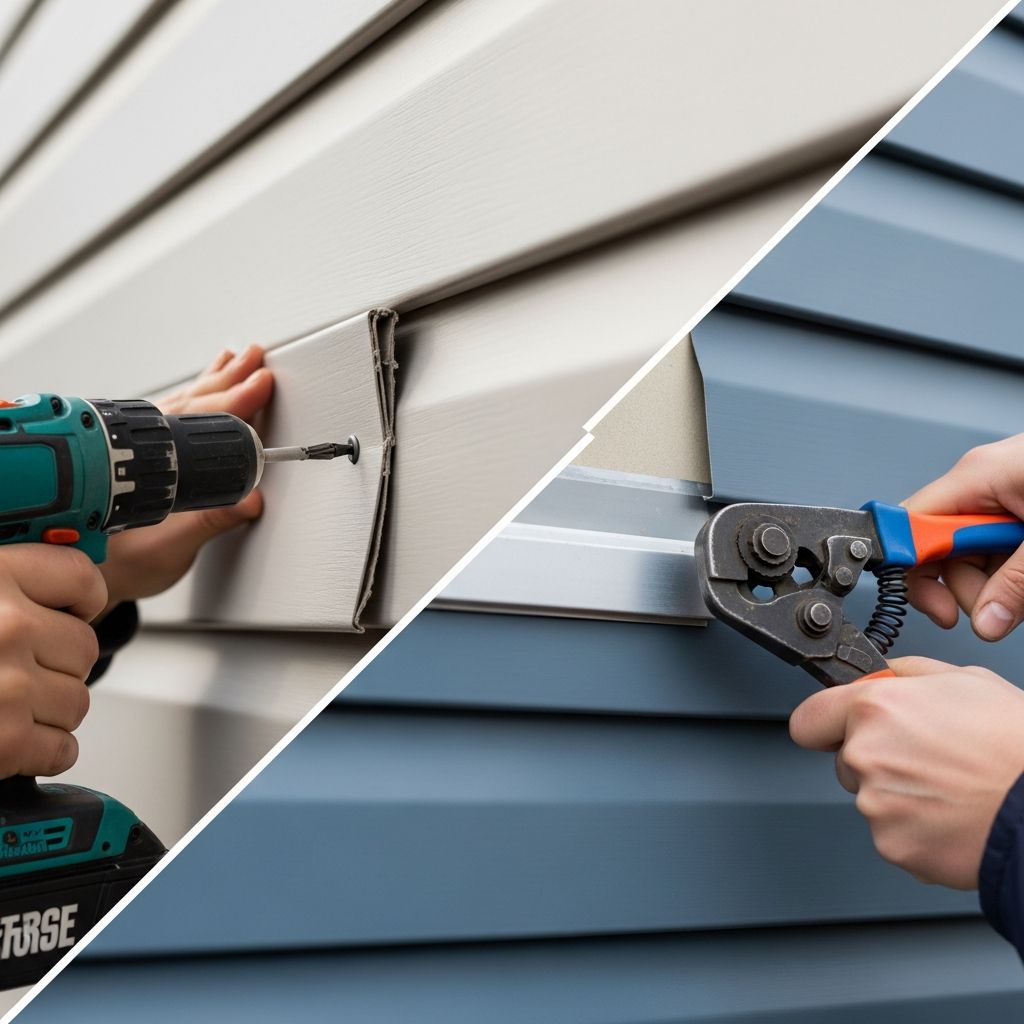
Vinyl siding installation is generally faster and more straightforward than aluminum installation. The lightweight nature of vinyl panels makes them easier for installers to handle, position, and secure. Vinyl pieces can be cut quickly using standard tools, and the installation process doesn’t require the precision needed for aluminum work. These factors contribute to lower labor costs for vinyl installation.
The typical vinyl installation process involves:
- Removing old siding and preparing the wall surface
- Installing moisture barriers and flashing
- Securing starter strips along the foundation
- Installing panels from bottom to top, allowing for proper expansion and contraction
- Installing trim and finishing touches around windows and doors
Aluminum Siding Installation
Aluminum installation requires more precision and careful workmanship. The material is more rigid than vinyl and demands exact measurements and cuts. Aluminum panels must be handled carefully to avoid denting the thin material. Custom paint touchups at seams and around cuts are often necessary to protect the material and maintain appearance. These factors make aluminum installation more time-consuming and potentially more expensive than vinyl installation.
The aluminum installation process typically involves:
- Surface preparation and removal of existing siding
- Installation of protective underlayment
- Careful measurement and precise cutting of aluminum panels
- Installation of panels with proper spacing for thermal expansion
- Application of paint or sealant at cut edges and seams
- Installation of trim and finishing materials
Cost Comparison
Vinyl siding typically costs less than aluminum siding, both in material and installation expenses. The ease of installation and faster labor time contribute significantly to vinyl’s cost advantage. For homeowners working with a limited budget, vinyl siding often represents the more affordable option for achieving a complete siding update.
Aluminum siding, while potentially more expensive initially, may offer longer-term durability in certain climates. However, the ongoing maintenance and repainting requirements can offset the durability advantage in terms of total cost of ownership over 20-30 years.
Maintenance and Longevity
Vinyl Siding Maintenance
One of vinyl’s primary advantages is its minimal maintenance requirements. Vinyl siding rarely requires painting or special treatments. Annual cleaning with a soft-bristle brush and mild soap solution is typically all that’s needed to keep vinyl looking fresh. The color remains stable and consistent year after year without repainting.
Vinyl siding can last 20-40 years with proper installation and basic maintenance. In some cases, vinyl maintains its integrity even longer. The low maintenance requirement makes vinyl an excellent choice for busy homeowners or those seeking a set-and-forget siding solution.
Aluminum Siding Maintenance
Aluminum siding requires more active maintenance than vinyl. The painted surface needs to be cleaned regularly to prevent oxidation and chalking. Depending on climate conditions, aluminum may need repainting every 5-10 years to maintain its appearance and protect the underlying material. Dents and dings require careful repair to prevent corrosion in those areas.
Despite higher maintenance needs, aluminum can last 30-40 years or longer if properly maintained. The key to longevity is staying on top of the paint maintenance schedule and addressing damage promptly.
Environmental Impact
Vinyl Environmental Considerations
Vinyl siding is made from PVC, a plastic-derived material that raises environmental concerns for some homeowners. The material is not biodegradable and remains in landfills for centuries if not recycled. Additionally, if vinyl is burned, it can release harmful chemicals into the atmosphere.
However, vinyl’s exceptional longevity means fewer replacement cycles are necessary, which reduces the overall environmental impact of manufacturing and disposal. Many communities are developing vinyl recycling programs, though recycling infrastructure remains limited in many areas.
Aluminum Environmental Considerations
Aluminum siding holds a significant environmental advantage: it is 100% recyclable and can be recycled indefinitely without degradation. Many aluminum siding manufacturers now incorporate recycled content into their products, reducing the environmental impact of new production. For environmentally conscious homeowners, this recyclability factor represents a major advantage of aluminum over vinyl.
The aluminum industry has developed efficient recycling processes that recover the material for reuse without quality loss. Choosing aluminum with recycled content supports the circular economy and reduces demand for new aluminum extraction.
Climate Considerations
Best Uses for Vinyl Siding
Vinyl siding performs best in mild to temperate climates where extreme temperatures are not common. Areas with moderate rainfall, humidity, and seasonal variation provide ideal conditions for vinyl. Vinyl is particularly well-suited for humid eastern climates and regions with significant precipitation.
Vinyl’s lower cost makes it popular in widespread regions. Insulated vinyl options are particularly valuable in transitional climates with moderate winters and summers.
Best Uses for Aluminum Siding
Aluminum’s versatility makes it suitable for a wider range of climates. Areas experiencing extreme heat, cold, seasonal freeze-thaw cycles, and high precipitation are excellent candidates for aluminum siding. The material’s fire resistance makes it particularly valuable in wildfire-prone regions. Northern climates experiencing heavy snow and freeze-thaw cycles benefit from aluminum’s durability in these conditions.
Coastal areas and regions with intense sun exposure also favor aluminum, particularly when the material is combined with insulation backing for optimal performance.
Making Your Decision
Choose Vinyl If You Prioritize:
- Lower initial investment and installation costs
- Minimal ongoing maintenance requirements
- Wide variety of colors and style options
- Energy efficiency through insulated options
- Quick and straightforward installation
- Excellent moisture and mold resistance
Choose Aluminum If You Prioritize:
- Superior fire resistance and safety
- Better performance in extreme climates
- Environmental recyclability
- Resilience to severe weather conditions
- Long-term durability with proper maintenance
- Customization through repainting options
Frequently Asked Questions
Q: How long does each type of siding last?
A: Vinyl siding typically lasts 20-40 years, while aluminum siding can last 30-40 years or longer with proper maintenance. The actual lifespan depends on climate conditions, installation quality, and maintenance practices.
Q: Which siding is easier to install yourself?
A: Vinyl siding is generally easier for DIY installation due to its lightweight nature and straightforward cutting and assembly process. Aluminum requires more precision and is better left to professional installers.
Q: Can either siding be installed over existing siding?
A: Vinyl can sometimes be installed over existing wood siding if the surface is solid and properly prepared. Aluminum typically requires a flat subsurface. Consult a professional contractor to evaluate your specific situation.
Q: Is aluminum siding fire-resistant?
A: Yes, aluminum siding is non-combustible and fire-resistant. Vinyl can melt under extreme heat, making aluminum the better choice for fire-prone areas.
Q: Which siding option offers better resale value?
A: Vinyl siding is more commonly used and has broader buyer appeal. However, aluminum may be preferred in specific climates or by environmentally conscious buyers. Both are respected choices that add value to a home.
Q: What is the typical cost difference between vinyl and aluminum?
A: Vinyl siding is generally 10-20% less expensive than aluminum siding both for materials and installation. However, long-term costs may vary based on maintenance requirements and climate conditions.
Q: Do both materials require painting?
A: Vinyl siding rarely requires painting due to infused color throughout the material. Aluminum siding may need repainting every 5-10 years depending on climate and wear conditions.
References
- Aluminum Siding vs Vinyl Siding: Pros, Cons & Comparison — CARPS Omaha. 2025. https://www.carpsomaha.com/aluminum-siding-vs-vinyl-siding/
- Aluminum vs Vinyl Siding: Which Is Right for Your Home? — Renoworks. 2025. https://www.renoworks.com/design-inspiration/vinyl-siding-vs-aluminum-siding-best-for-your-home/
- Aluminum vs Vinyl Siding and a Better Alternative — Allura USA. 2025. https://allurausa.com/blog/aluminum-vs-vinyl-siding
- Siding Products and Solutions — Ply Gem. 2025. https://www.plygem.com/siding/
Similar Articles



Read full bio of medha deb