Wallpapering Dollhouses: Complete Guide
Master the art of dollhouse wallpapering with precise measurements, expert gluing techniques, and professional finishing tips for stunning miniature interiors.
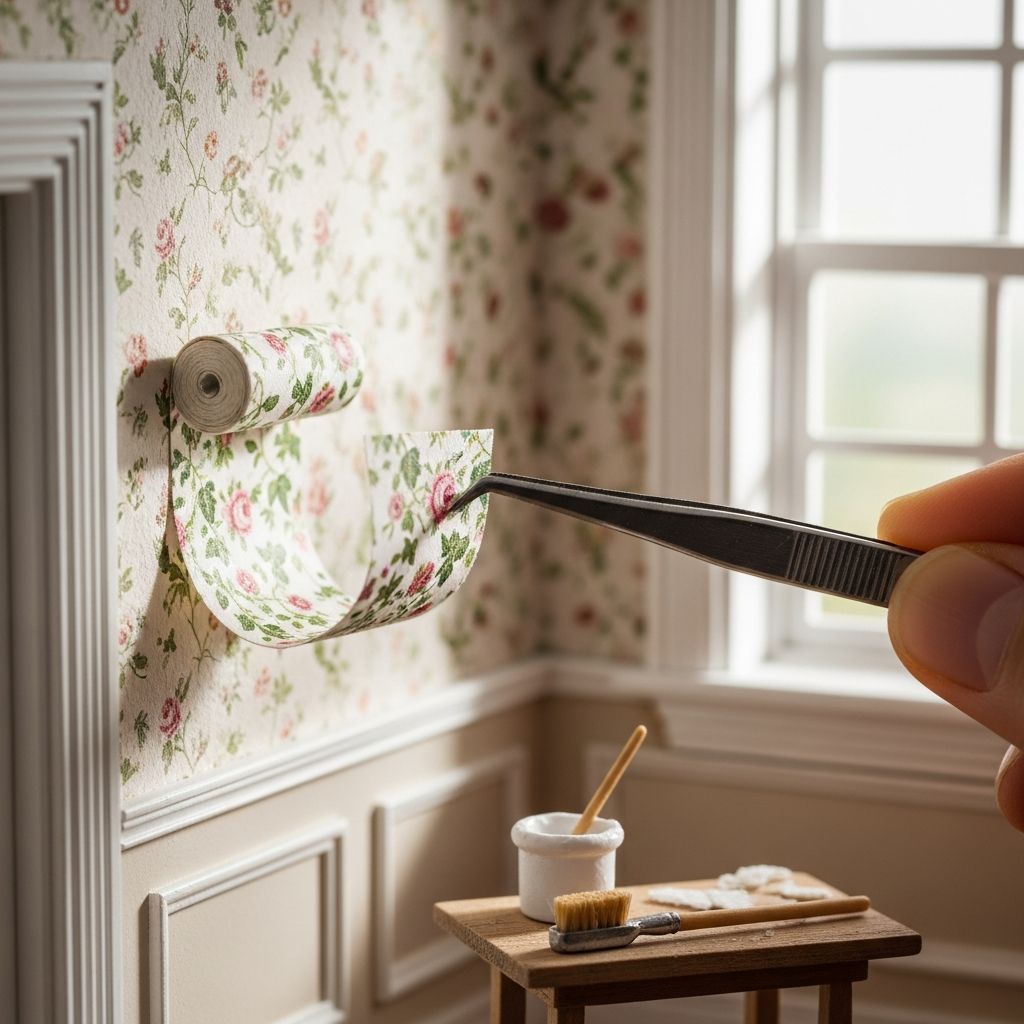
Transforming a plain dollhouse into a detailed miniature masterpiece begins with perfect wallpapering. This craft requires precision, patience, and the right techniques to achieve seamless coverage on tiny walls. Whether you’re working on a classic wooden dollhouse or a custom room box, proper wallpapering enhances realism and protects interiors.
Why Wallpaper Your Dollhouse?
Wallpaper adds depth, color, and personality to miniature spaces. It covers imperfections in raw wood, creates focal points in rooms, and allows for themed designs like Victorian florals or modern geometrics. Unlike paint, wallpaper offers texture and pattern variety, making rooms feel lived-in. High-quality miniature papers scaled to 1:12 or 1:24 ensure authenticity.
Essential Materials for Success
Gather these tools before starting to streamline the process:
- Wallpaper sheets or scrapbook paper in appropriate scale
- Mod Podge or specialized dollhouse wallpaper paste
- Foam brushes, craft knives, and metal rulers
- Credit cards or plastic spatulas for smoothing
- Template paper (tracing or butcher paper)
- Sealer like white acrylic paint or wood primer
- Razor blades and fine sandpaper
Choose papers with non-bleed inks to prevent color runs during gluing. Seal dollhouse walls first with a thin coat of acrylic paint to block moisture absorption and ensure adhesion.
Preparing Your Dollhouse Walls
Preparation prevents bubbles and peeling. Sand rough spots smooth, then apply a sealing coat. For unfinished wood, use latex paint; for painted surfaces, a white primer brightens wallpaper colors. Allow 24 hours drying time. Measure each wall’s height, width, and depth, noting angles, windows, doors, and trim placements. Dollhouses like Greenleaf models often have sloped roofs or staircases requiring custom cuts.
Creating Accurate Templates
Templates minimize waste and errors. Trace wall outlines onto sturdy paper, marking obstacles like window frames or glued elements. Press templates against walls to verify fit, adjusting for crown molding or baseboards by subtracting ½ inch from height. Add ¾ inch to width for overlap on adjacent walls. For odd angles, fold templates around corners. Test templates multiple times before cutting wallpaper.
Selecting and Cutting Wallpaper
Opt for 60-80 lb paper stock that bends without tearing. Scale patterns correctly: 1:12 for standard dollhouses repeats every 8-10 inches real-world equivalent. Cut using templates with a craft knife on a self-healing mat. Add extra for trimming: ¼ inch top/bottom, ¾ inch sides. For multi-wall continuity, match patterns before final cuts. Cut over windows/doors initially; trim later when dry.
Mastering Glue Application Techniques
Glue choice affects durability. Mod Podge works well thinly applied; avoid excess to prevent bleeding. Specialized pastes like Grandma Stover’s offer stronger hold without dilution. Brush glue on walls first for even coverage, or back of paper for precision. Use foam brushes to spread thinly, working quickly as paste dries fast.
| Method | Pros | Cons | Best For |
|---|---|---|---|
| Glue on Wall | Smoother finish, less paper warping | Risk of bubbles if uneven | Complex shapes |
| Glue on Paper | Precise control, easier positioning | Potential color bleed | Flat walls |
| Paste with Spreader | Uniform layer, strong bond | Messier cleanup | Overlaps/corners |
Step-by-Step Wallpapering Process
Follow this sequence for bubble-free results:
- Start with back wall: Measure depth plus ¾ inch width, height minus ½ inch. Apply glue, position from floor up, smooth with credit card from center outward.
- Right wall: Overlap back wall edge by ⅛ inch, matching patterns. Press firmly into corners.
- Left wall: Repeat, trimming excess after drying.
- Odd angles first: Tackle sloped roofs or stairs before main walls to avoid mismatches.
- Multiple walls: Work room by room, allowing 24-hour dry time between coats if needed.
Align bottoms precisely with floors. Smooth relentlessly to expel air. For corners, crease paper gently with a tool.
Handling Windows, Doors, and Trim
Wallpaper over openings initially. Once dry (overnight), score outlines with a fresh razor blade, pushing away from the surface. Peel excess carefully; re-glue edges if lifting, holding 30-45 seconds. Install trim afterward for clean lines. Baseboards and crown molding hide minor imperfections.
Advanced Techniques for Pros
For multi-story houses, wallpaper floors first. Use double-sided tape for temporary holds. Seal finished wallpaper with matte Mod Podge for protection and subtle sheen. On curved walls, score paper backs lightly for flexibility. Pattern matching requires planning: photograph layouts beforehand.
Troubleshooting Common Issues
Problems arise but are fixable:
- Bubbles: Pierce with pin, press out air, re-glue.
- Peeling edges: Dab glue underneath, weight down 30 minutes.
- Color bleed: Use pigment-fast papers, minimal water in glue.
- Misaligned patterns: Templates prevent this; overlap minimally.
- Wrinkles: Work wet paper slowly, use bone folder for creases.
Drying time varies: 1-2 hours tacky, 24 hours full cure. Avoid handling during this period.
Finishing Touches for Realistic Rooms
After wallpapering, add borders, chair rails from cardstock. Paint trim to contrast. Lighting enhances patterns—install LEDs post-wallpaper. Vary papers per room: bold in living areas, subtle in bedrooms. Custom-print papers via services for unique designs.
Maintenance and Longevity Tips
Dust gently with microfiber cloths. Avoid direct sun to prevent fading. For repairs, lift edges with tweezers, reapply glue. Storehouses in cool, dry places. Quality materials ensure decades of display.
Frequently Asked Questions (FAQs)
What is the best glue for dollhouse wallpaper?
Mod Podge or undiluted wallpaper paste like Grandma Stover’s provides the strongest, clearest hold without warping paper.
Should I wallpaper before or after installing windows?
Wallpaper first, then cut openings and add windows/doors to avoid damaging paper.
How do I avoid bubbles when applying?
Smooth from center to edges with a credit card, ensuring full glue coverage on walls.
Can I use regular scrapbook paper?
Yes, if scaled correctly and ink is bleed-proof; heavier stock (60+ lb) performs best.
How long does it take to wallpaper a full dollhouse?
2-4 days per floor, including drying, for beginners; pros finish faster.
References
- Frankie’s Dollhouse: Doing The Wallpaper! — Collective Gen. 2023-01. https://collectivegen.com/2023/01/frankies-dollhouse-doing-the-wallpaper/
- Apply Dollhouse Wallpaper Like a Pro — Itsy Bitsy Mini. N/A. https://itsybitsymini.com/blogs/news/apply-dollhouse-wallpaper-like-a-pro
- Dollhouse Wallpaper Tutorial — Life in Mini. N/A. https://lifeinmini.com/dollhouse-wallpaper-tutorial/
- Dollhouse Miniature Wallpaper Tutorial — YouTube (MiniatureCrush). N/A. https://www.youtube.com/watch?v=n9CAB7gJRjw
- How to WALLPAPER your dollhouse and The BEST GLUE TO USE! — YouTube (Whitney LaBrie Miniatures). N/A. https://www.youtube.com/watch?v=QIUY0cmohvQ
Similar Articles



Read full bio of medha deb