Restoring Watch Clarity: Methods for Removing Scratches
Learn effective techniques to eliminate watch scratches and restore pristine clarity.
Addressing Watch Surface Imperfections: A Comprehensive Guide
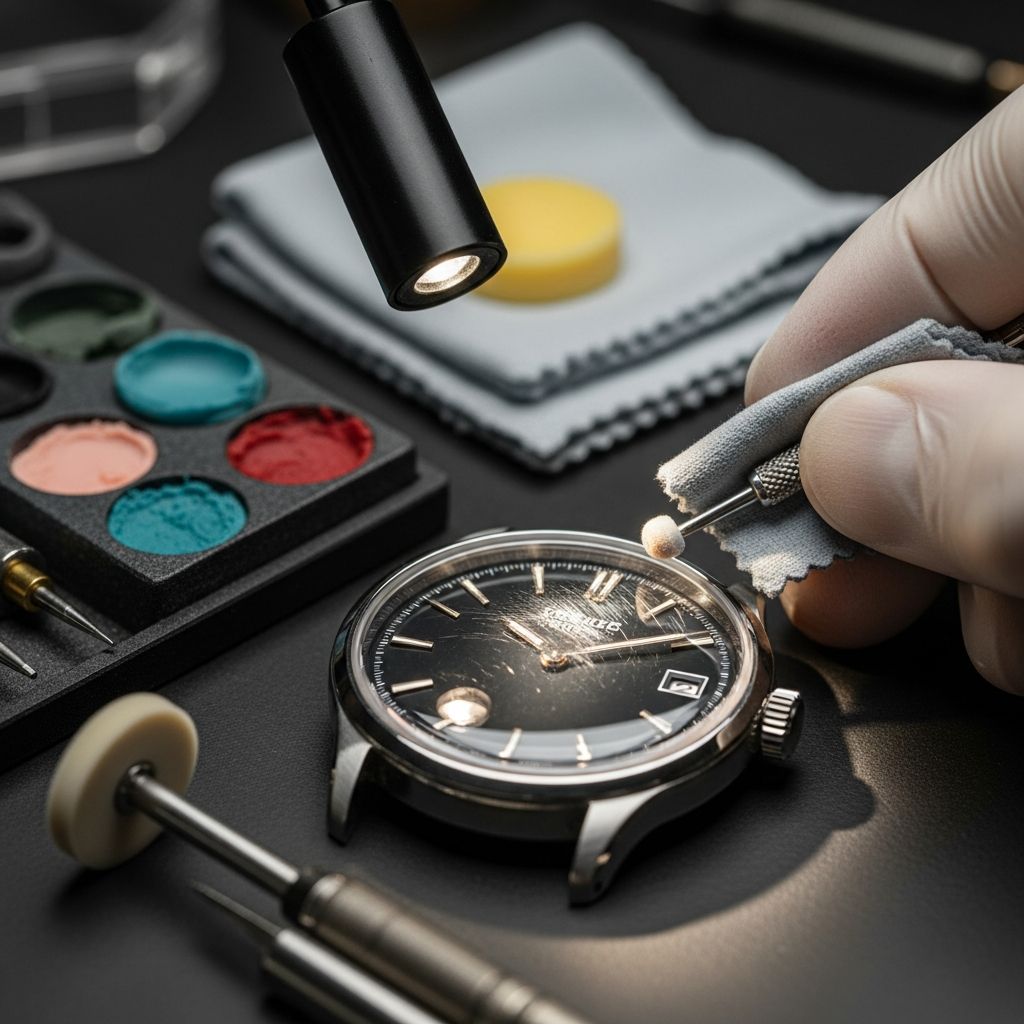
Watches endure daily wear and tear, and one of the most frustrating issues owners face is the accumulation of scratches on crystal surfaces and metal cases. These blemishes can diminish the aesthetic appeal of even the finest timepieces. Fortunately, several accessible methods exist for restoring your watch to its original condition without requiring professional intervention. This guide explores various approaches to tackle different types of scratches, from minor surface marks to more substantial damage.
Understanding Your Watch Surface Composition
Before attempting any restoration work, it is essential to identify what material comprises your watch’s external surfaces. Watches typically feature either mineral crystal, sapphire crystal, or hardlex crystal for the face, while cases may be constructed from stainless steel, titanium, gold, or other metals. Each material responds differently to restoration techniques, and applying the wrong method could cause additional damage rather than improvement.
The type of finish on your watch case also matters significantly. Metal surfaces feature either brushed (also called matte) finishes or polished (also called mirror) finishes. Some watches incorporate both finishes simultaneously, requiring distinct treatment approaches. Understanding these distinctions ensures you apply the most appropriate restoration method for your specific timepiece.
The Household Approach: Utilizing Common Products
Many watch enthusiasts discover that readily available household items can effectively address minor scratches. The most accessible solution involves using non-gel toothpaste, a product found in nearly every home. This method works particularly well for crystal surfaces that have experienced light scratching.
To implement this technique, apply a small amount of regular toothpaste directly onto the scratched crystal surface. Using your fingertip or a soft cloth, gently work the toothpaste in circular motions across the affected area. The mild abrasive properties of toothpaste help gradually diminish surface scratches without being too aggressive. Allow the paste to sit for approximately one minute, enabling the abrasive particles to work on the scratch. Subsequently, use a clean, non-abrasive cloth to gently wipe away the paste while checking the results under proper lighting. Repeat this process as necessary until you achieve satisfactory results.
The critical consideration when using toothpaste involves moisture management. Ensure that no toothpaste seeps into the watch at the crystal’s edge, as this could compromise water resistance or damage internal components. This method proves most suitable for vintage watches or those with lower water-resistance ratings where professional cleaning may be impractical.
Specialized Polishing Products for Enhanced Results
For those seeking more sophisticated solutions, specialized watch polishing products offer superior results compared to household alternatives. These products come in various formulations designed specifically for watch materials and finishes.
Polishing Cloths: The Easiest Solution
Polishing cloths represent one of the most straightforward approaches for addressing minor scratches on polished surfaces. These cloths, often impregnated with specialized compounds, can be applied directly to affected areas with minimal effort. The advantage of this method lies in its simplicity and low risk of causing further damage. When using polishing cloths on polished watch cases, apply gentle pressure with circular motions until the scratch fades. For optimal results, choose cloths specifically designed for watch materials rather than general-purpose options.
Metal Polish Applications
Traditional metal polishes such as Autosol or Duraglit provide excellent results for polished watch cases. These products work by gradually removing a microscopic layer of the metal surface, effectively erasing scratches. Apply a small quantity of polish to a soft cotton cloth and work it gently into the scratched area, following the natural lines of the case design. Avoid applying excessive pressure, as this can create uneven finishes or disturb protective elements like chamfered edges.
Progressive Sanding Techniques for Deeper Scratches
When household remedies and polishing cloths prove insufficient, progressive sanding offers a more aggressive but highly effective approach. This method requires patience and careful attention to technique but can address deeper scratches that surface polishing cannot resolve.
Selecting Appropriate Grit Levels
Professional watch restorers typically utilize P600 and P1500 wet-or-dry sandpaper for systematic scratch removal. The process begins with lower grit numbers, progressively advancing to higher grits to achieve a refined finish. Start with P600 grade paper when addressing more substantial scratches. This grit is aggressive enough to remove deeper marks but not so coarse as to create excessive new marks. After the scratch is no longer visible to the naked eye, transition to P1500 grade paper to refine the finish and eliminate any remaining surface irregularities.
Proper Sanding Methodology
When sanding watch surfaces, maintain even pressure and consistent directional strokes. Rather than concentrating on the scratch alone, work across a larger surrounding area to create a uniform finish that blends seamlessly with untouched portions. For brushed finishes, always sand in the direction of the original brushing pattern to maintain aesthetic consistency. For polished cases, work in the direction that follows the natural contours of the case design.
A critical technique involves wetting the sandpaper before use, which reduces debris accumulation and prevents clogging of the grit. This wet-sanding approach also minimizes the risk of removing excessive material. Complete the sanding process by thoroughly rinsing the watch with warm, soapy water and drying completely before proceeding to polishing stages.
Handling Brushed Versus Polished Finishes
Watches with brushed metal finishes require specialized treatment distinct from polished surfaces. The distinctive linear texture of brushed finishes must be preserved or recreated to maintain the watch’s original appearance.
For brushed finishes, specialized tools prove invaluable. The Beco Technic Pen, for instance, functions similarly to an eraser, allowing precise application of refinishing techniques without affecting surrounding areas. When working with brushed surfaces, consistency in pressure and directional strokes becomes paramount. Light, even strokes following the original brush pattern will gradually diminish scratches while maintaining the intended texture.
When watches feature both brushed and polished elements, tackle the brushed areas first, then mask off these sections with painter’s tape before working on polished surfaces. This prevents accidental transfer of polishing compounds to brushed areas. Remove masking tape carefully after completing polished surface work, using acetone or methylated spirits to eliminate any adhesive residue.
Professional-Grade Scratch Removal Pastes
For those preferring a middle ground between household solutions and full professional service, specialized scratch removal pastes offer promising results. These products combine mild abrasives with polishing compounds in a convenient paste format. Simply rub the paste into affected areas using a provided cloth, allow it to settle briefly, then buff away with a clean cloth. Many users report that these pastes deliver results comparable to professional cleaning, restoring watches to near-new condition with minimal effort.
Step-by-Step Restoration Process for Metal Cases
A systematic approach ensures the best outcomes when restoring watch cases. Follow these essential steps:
- Inspect and assess: Determine the depth and location of scratches under bright light, identifying whether surfaces are brushed or polished.
- Prepare the workspace: Lay out clean cloths to protect the watch and prevent debris from falling into crevices.
- Remove accessories: For bracelet work, disassemble the bracelet from the case to prevent accidental damage to the watch head.
- Begin sanding if necessary: For significant scratches, start with P600 sandpaper using light, even strokes in the appropriate direction.
- Progress through grits: Move to P1500 paper to refine the finish after initial scratches become undetectable.
- Apply appropriate polish: Use metal polish or polishing cloths suitable for your case material and finish type.
- Final cleaning: Rinse thoroughly with warm soapy water and dry completely before reassembly.
Protecting Against Future Damage
Once you have successfully restored your watch, preventive measures help minimize future scratching. Store watches in protective cases when not worn, and consider using clear protective films on crystal surfaces if you wear the watch during activities where scratching is likely. Regular cleaning with appropriate cloths removes fine debris that can cause micro-scratching over time.
When Professional Service Becomes Necessary
Certain situations warrant seeking professional watch repair services rather than attempting restoration independently. Deep scratches affecting substantial portions of the case, damage to high-end materials like platinum or specialized finishes, and any work near the crystal edge where water resistance could be compromised all justify professional intervention. Additionally, if your watch features intricate finishing details, chamfered edges, or multiple surface treatments, the expertise required may exceed what DIY approaches can safely provide.
Crystal-Specific Restoration Considerations
Watch crystals demand particular care, as improper restoration can compromise water resistance or cause permanent optical distortion. For mineral and hardlex crystals, the toothpaste method or polishing cloths generally suffice for minor scratches. Sapphire crystals, while more scratch-resistant than other materials, still benefit from the same gentle restoration techniques. However, never use aggressive sanding on sapphire crystals, as the technique may prove ineffective and could cause chipping. For any significant crystal scratching, replacement rather than restoration often represents the most practical solution.
Frequently Asked Questions
Q: Will toothpaste damage my watch crystal?
A: When applied carefully and prevented from seeping into the crystal edges, standard non-gel toothpaste poses minimal risk to most watch crystals. The mild abrasive action helps remove light scratches without causing damage. However, avoid this method on watches with questionable water resistance or sapphire crystals with existing damage.
Q: How do I know if a scratch requires professional service?
A: If you can feel the scratch with your fingernail, it has penetrated deeply enough that DIY methods may prove insufficient. Scratches affecting large portions of the case, or those on high-end watches, warrant professional assessment. When in doubt, consulting a professional watchmaker prevents potentially costly mistakes.
Q: Can I use the same technique on brushed and polished finishes?
A: No, these finishes require distinct approaches. Brushed finishes need work following the original grain direction, while polished finishes benefit from circular polishing motions. Applying brushed technique to polished surfaces, or vice versa, creates inconsistent finishes that diminish watch appearance.
Q: Is wet-sanding necessary for watch restoration?
A: Wet-sanding significantly improves results by reducing heat buildup, preventing grit clogging, and minimizing material removal. While dry-sanding can work, wet-sanding provides superior control and more predictable outcomes, making it worth the additional effort.
Q: How often can I restore watch scratches before causing damage?
A: Each sanding and polishing session removes microscopic amounts of material. While occasional restoration proves safe, repeated aggressive treatment can alter the watch’s dimensions and finish characteristics. Conservative approaches using polishing cloths rather than sanding extend the lifespan of your watch’s exterior.
References
- How to Remove Scratches from a Watch — WatchGecko. Accessed 2026-01-15. https://www.watchgecko.com/blogs/magazine/how-to-remove-scratches-from-a-watch
- How to Remove Scratches From a Watch — Watch Obsession. Accessed 2026-01-15. https://www.watchobsession.co.uk/blogs/watchobsession-blog/how-to-remove-scratches-from-a-watch
- How to Remove Scratches from a Watch (Brush & Polish) — YouTube. Accessed 2026-01-15. https://www.youtube.com/watch?v=PXzHyHdS5-k
- Scratch Removal Paste Product Information — The Watch Protect Company. Accessed 2026-01-15. https://thewatchprotect.com/products/scratch-removal-paste
Similar Articles






Read full bio of medha deb