Winter Car Survival Kit Guide
Essential guide to assembling a comprehensive winter car emergency kit to ensure safety during harsh cold weather conditions and unexpected breakdowns.
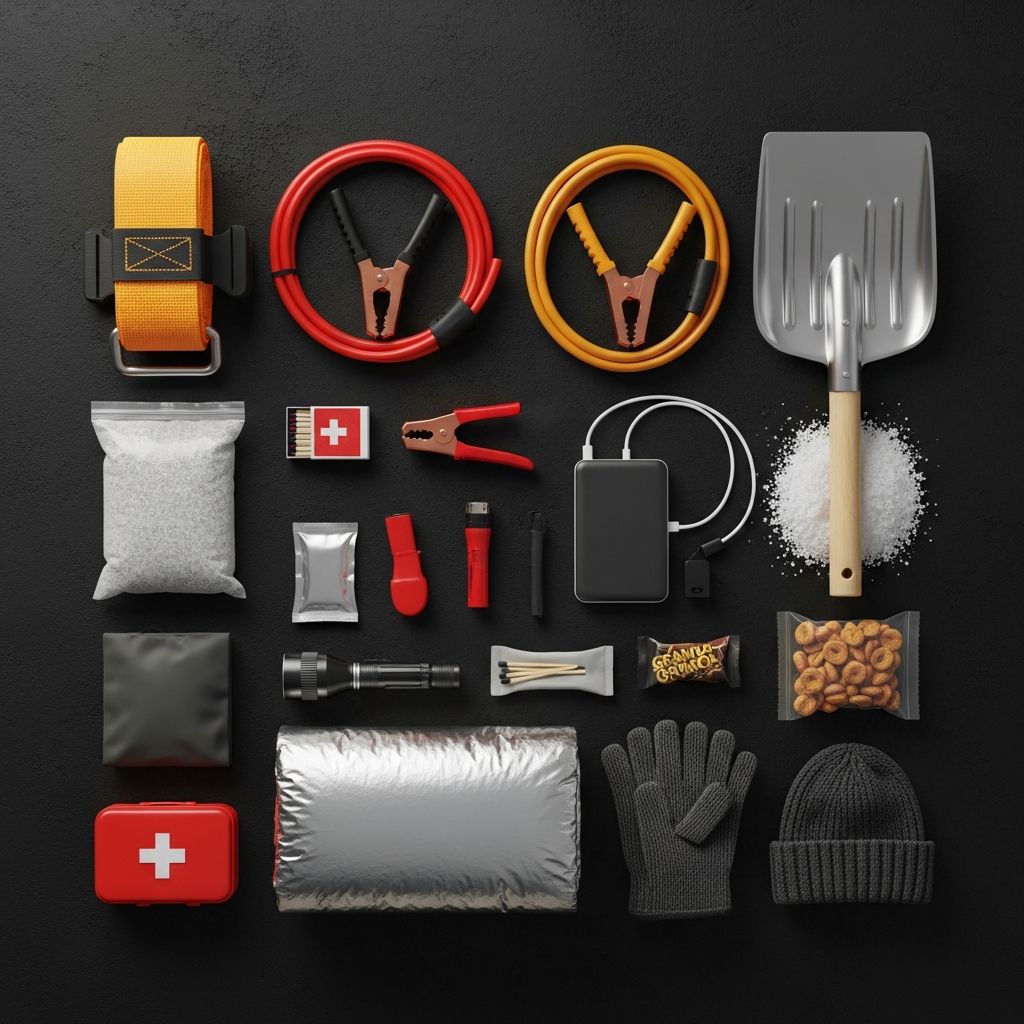
Preparing a dedicated winter car survival kit equips drivers to handle the perils of snow, ice, and extreme cold. These kits provide critical resources for staying warm, signaling for help, and performing basic repairs when stranded.
Why Every Driver Needs a Winter Survival Kit
Winter conditions transform roads into hazardous zones where visibility drops, traction fails, and temperatures plummet. A well-stocked kit addresses common risks like dead batteries from cold starts, skidding into drifts, or prolonged waits for assistance during storms. Government safety agencies emphasize that such preparations can prevent hypothermia and other cold-related emergencies.
Statistics from traffic safety divisions show that thousands of vehicles get stuck annually due to winter weather, underscoring the need for self-reliance until help arrives. Keeping supplies accessible in your trunk or cabin means you’re ready for black ice, whiteouts, or mechanical failures without panic.
Core Essentials for Vehicle Maintenance and Visibility
Begin with items that tackle immediate vehicle issues and ensure you’re seen by rescuers. Store these in a sturdy, waterproof container to protect against moisture.
- Jumper cables or portable jump starter: Cold weather drains batteries rapidly; these allow quick restarts without external aid.
- Flashlight with extra batteries: Essential for nighttime signaling and under-hood work when days shorten.
- Warning triangles, flares, or reflectors: Position these 100-200 feet behind your car to alert approaching traffic.
- Ice scraper and snow brush: Clear windows and lights promptly to maintain safe driving vision.
- Multi-tool or basic toolkit: Includes screwdrivers, pliers, and wrenches for minor fixes like loose battery terminals.
Staying Warm: Insulation and Clothing Essentials
Hypothermia sets in quickly when stranded; prioritize gear that traps body heat. Layering is key, as wet clothes lose insulation rapidly.
| Item | Purpose | Tips for Use |
|---|---|---|
| Thermal blankets or sleeping bags | Retain heat even if damp | Pack wool or mylar types; one per passenger |
| Extra socks, gloves, hat, scarf | Protect extremities | Waterproof and wool-blend for moisture resistance |
| Hand and foot warmers | Instant heat source | Disposable packets activate with air exposure |
| Waterproof poncho or parka | Shield from snow/rain | Compact for easy storage |
Run your engine periodically for heat, but crack a window to avoid carbon monoxide buildup. These items bridge the gap until professional help reaches you.
Nutrition and Hydration for Extended Stalls
Dehydration worsens in cold; maintain energy with non-freezing provisions. Aim for high-calorie, compact foods that store indefinitely.
- Bottled water (non-frozen): Insulate to prevent bursting; ration 1 liter per person daily.
- Energy bars, nuts, dried fruits: Provide sustained fuel without cooking.
- Canned goods with opener: Soups for warmth if conditions allow heating.
Avoid caffeine or alcohol, which accelerate heat loss. Refresh supplies seasonally to check expiration dates.
Traction and Recovery Tools for Snowbound Situations
Getting unstuck demands leverage and grip enhancers. These prevent digging deeper into drifts.
- Collapsible shovel: Dig out tires and create space around the vehicle.
- Cat litter, sand, or traction mats: Sprinkle under spinning wheels for friction.
- Tow strap or chain: Connect to a good Samaritan’s vehicle safely.
- Tire chains (if applicable): For off-road or extreme areas; check local laws.
Rock the car gently in gear while accelerating lightly to build momentum.
Health and Signaling: First Aid and Communication
Injuries or illness compound stranding risks; be ready to treat and call for aid.
- First aid kit: Bandages, antiseptics, pain relievers, scissors, tweezers.
- Personal medications: Extra doses for chronic conditions.
- Whistle and charged phone/power bank: Conserve battery; signal manually if needed.
- Notebook and pen: Log details for rescuers or insurance.
Stay with the vehicle unless it’s unsafe; it’s easier to spot than a pedestrian.
Advanced Preparations and Vehicle Checks
Beyond the kit, proactive steps enhance readiness. Consult a mechanic pre-winter.
- Antifreeze levels, brake function, tire tread (at least 6/32 inch).
- Half-full gas tank to avoid fuel line freezes.
- Cabin mini-kit for immediate access in sub-zero temps.
Maintaining Your Kit Year After Year
Inspect monthly; replace perishables like food, batteries, and warmers annually. Test electronics and note usage dates on a checklist taped inside the container.
Frequently Asked Questions
What’s the minimum size for a winter car kit?
A compact kit fits in a backpack with jumper cables, blanket, snacks, and scraper—expand based on travel distance.
Can I use regular blankets instead of thermal ones?
Yes, but mylar or wool outperform cotton in retaining heat when wet.
How long can I survive stranded with this kit?
Indefinitely if rationing supplies and using car heat wisely; kits support 24-72 hours typically.
Are tire chains necessary for cities?
Not always; traction aids suffice unless facing deep snow—verify regulations.
What if I’m in a multi-passenger vehicle?
Scale up quantities: extra blankets, water, and snacks per person.
This comprehensive setup turns potential disasters into manageable waits. Assemble today for peace of mind tomorrow.
References
- How to Build a Winter Car Emergency Kit for Cold-Weather Safety — Hawk Chevy Joliet. 2025-12-19. https://www.hawkchevyjoliet.com/blog/2025/december/19/winter-car-kit.htm
- Building Your Car’s Winter Emergency Kit — Allstate. 2025-01-01. https://www.allstate.com/resources/car-insurance/diy-winter-car-emergency-kit
- Be Ready for Winter: Build a Vehicle Emergency Kit — City of Saint Peter, MN. 2025-12-18. https://www.saintpetermn.gov/Blog.asp?IID=22&ARC=31
- Winter Survival Kit — NDDOT Traffic Safety Vision Zero North Dakota. N/A. https://visionzero.nd.gov/strategies/winterdriving/wintersurvivalkit/
- Emergency Car Kit: 10 Essential Items — American Red Cross. N/A. https://www.redcross.org/take-a-class/resources/articles/car-emergency-kit-what-to-include
- Building an Emergency Winter Supply Kit for Your Car — National Weather Service Central Illinois. N/A. https://www.weather.gov/ilx/winter_drive2_social
- Car Winter Survival Kit Checklist [PDF] — National Weather Service. N/A. https://www.weather.gov/media/dmx/Preparedness/CarWinterSurvivalKitChecklist.pdf
Similar Articles




Read full bio of Sneha Tete