Winter Oak Pruning: Essential Techniques For Healthy Trees
Master winter pruning for healthy oaks: timing, techniques, and safety to prevent oak wilt and promote strong growth.
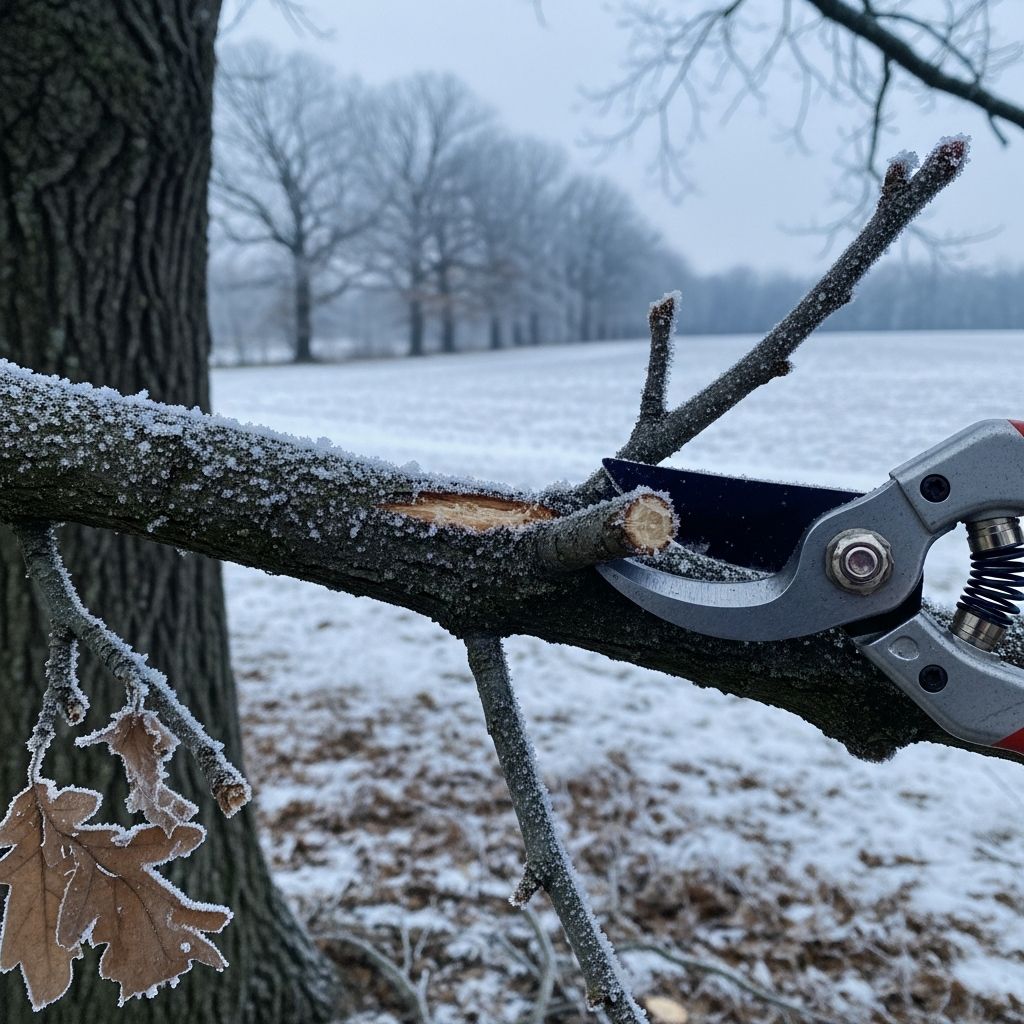
Winter Oak Pruning Guide: Essential Techniques for Healthy Trees
Oak trees thrive with proper winter pruning during their dormant phase, reducing disease risk and improving overall vigor. This guide covers timing, tools, methods, and precautions to help homeowners maintain robust oaks safely.
Why Prune Oaks in Winter?
Winter offers ideal conditions for oak pruning because deciduous oaks enter dormancy, shedding leaves and halting sap flow. This minimizes stress on the tree and lowers infection risks from pathogens like oak wilt fungus (*Bretziella fagacearum*), spread by sap-feeding beetles active in warmer months.
- Disease Prevention: Pruning from December to February avoids beetle transmission periods (April-July), preventing lethal oak wilt.
- Better Visibility: Leafless branches reveal structure, allowing precise cuts for health and shape.
- Reduced Stress: Dormant trees heal faster without active growth diverting energy.
- Structural Benefits: Removes weak, crossing, or diseased limbs to prevent future failures.
Authorities like Iowa State University Extension recommend winter pruning specifically for oaks to safeguard against oak wilt.
Optimal Timing for Dormant Pruning
The best window varies by region but generally spans late winter, after extreme cold but before bud swell. In temperate zones like the Capital Region, aim for mid-February to mid-March when daytime temperatures exceed 20°F ( -6°C) and no freezes loom.
| Region | Recommended Window | Key Signs to Start |
|---|---|---|
| Midwest (e.g., Iowa, Missouri) | December-February | Temps above freezing, dormant buds |
| Northeast/Capital Region | Mid-Feb to mid-March | No ice storms, buds tight |
| General U.S. | January-February | Post-frost, pre-sap flow |
Avoid fall pruning before full dormancy or spring when sap rises, as this invites pests. In high-risk oak wilt areas, confine cuts to October-March.
Essential Tools and Safety Gear
Sharp, clean tools ensure clean cuts that heal quickly, preventing disease entry. Disinfect blades with alcohol between trees.
- Hand Pruners/Shears: For branches under 1 inch diameter.
- Lopping Shears: 1-2 inch branches.
- Pruning Saw: Larger limbs up to 4 inches.
- Chainsaw: Only for experts on big jobs; never for DIY beginners.
- Safety Items: Hardhat, goggles, gloves, stable ladder, ropes for control.
Skip wound sealants—trees compartmentalize naturally without them.
Step-by-Step Pruning Techniques
Focus on purposeful cuts: prioritize safety, health, airflow, and structure. Never remove over 15-25% of canopy in one session to avoid shock.
1. Assess and Plan
Inspect for dead, damaged, diseased, or rubbing branches. Identify hazards near structures or power lines.
2. Thinning Cuts
Remove entire branches back to the trunk or parent limb to improve light and air circulation, aiding pest/disease control.
- Ideal for crowded interiors.
- Cut to branch collar, avoiding stubs.
3. Heading Back Cuts
Shorten branches to a lateral bud or side branch, promoting bushier growth. No stubs—cut precisely.
4. The 3-Cut Method for Large Branches
For limbs over 1.5 inches, use this to prevent bark tearing:
- Undercut: 6-12 inches from trunk, one-third through (stops tearing).
- Top Cut: 1-2 inches beyond undercut; branch drops safely.
- Final Cut: Just outside branch collar/bark ridge for healing.
The branch collar is the swollen base; bark ridge is the wrinkled seam—retain these for defense.
Common Mistakes to Avoid
Steer clear of practices harming oaks:
- Topping: Severe heading destroys structure, invites decay.
- Flush Cuts: Removes collar, slowing healing.
- Over-Pruning: Exceeds 25% canopy loss stresses tree.
- Wrong Season: Spring cuts attract oak wilt vectors.
- Dull Tools: Ragged wounds fester.
Special Considerations for Young vs. Mature Oaks
Young oaks (under 3-5 years) benefit from light structural pruning to build strong scaffolds. Focus on central leader and codominant stems.
Mature oaks require conservative thinning for airflow. For branches over 3-4 inches or heights needing ladders/chainsaws, hire ISA-certified arborists.
Post-Pruning Care
Monitor cuts for healing; water during dry spells if newly pruned. Mulch roots but avoid trunk. No fertilizers immediately—pruning stimulates growth naturally.
Frequently Asked Questions (FAQs)
Can I prune oaks in summer?
No—avoid April-July to prevent oak wilt; stick to dormant winter.
How much can I safely remove?
Limit to 15-25% of live canopy annually.
What if my oak shows oak wilt signs?
Consult professionals immediately; it’s often fatal. Symptoms include wilting leaves.
Do I need a permit for pruning?
Check local ordinances, especially near public areas or large trees.
Is pruning fruiting oaks different?
Similar, but thin more for fruit access and disease control.
Benefits Beyond Health: Aesthetics and Safety
Well-pruned oaks enhance landscapes, reduce storm damage risks, and boost property values. Proper winter care extends lifespans to centuries for these majestic trees.
In summary, winter pruning empowers oak vitality when done right. Patience and precision yield thriving trees season after season.
References
- Winter Dormant Tree Pruning — Progressive Tree. Accessed 2026. https://progressivetree.com/winter-pruning/
- Pruning Oak Trees to Avoid Oak Wilt — Iowa State University Extension. Accessed 2026. https://yardandgarden.extension.iastate.edu/how-to/pruning-oak-trees-avoid-oak-wilt
- Dormant Pruning Guide — Grasshopper Gardens. Accessed 2026. https://www.grasshoppergardens.com/resources/blog/dormant-pruning/
- DIY Tree Trimming Tips: Oaks & Maples in Winter — My Perfect Plants. Accessed 2026. https://myperfectplants.com/blogs/blog/diy-tree-trimming-tips-oaks-maples-in-winter
- How to Trim an Oak Tree Without Killing It — Treenewal. Accessed 2026. https://treenewal.com/how-to-trim-an-oak-tree-without-killing-it/
- Prune oak trees this winter to avoid oak wilt — University of Missouri Extension. Accessed 2026. https://extension.missouri.edu/news/prune-oak-trees-this-winter-to-avoid-oak-wilt
Similar Articles







Read full bio of Sneha Tete