Wire Multiple Lights to One Switch Guide
Master the safe, step-by-step process to connect several light fixtures to a single switch for unified room control.
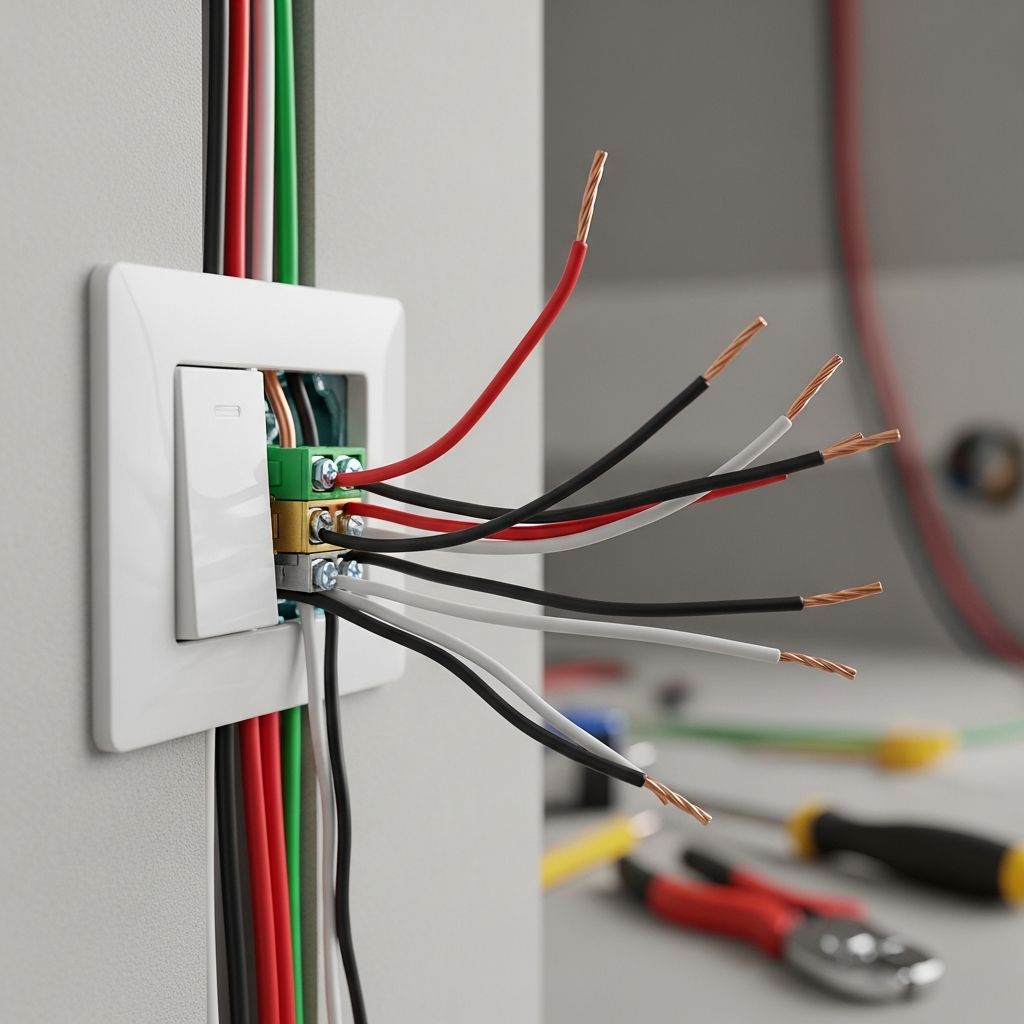
Connecting several light fixtures to a single switch creates convenient, centralized control over room illumination, ideal for kitchens, hallways, or living spaces. This approach uses parallel wiring to ensure all lights operate simultaneously without overloading the circuit.
Why Choose Single-Switch Control for Multiple Lights
Unified switch operation simplifies daily routines by eliminating the need for multiple toggles. It enhances energy efficiency since one breaker manages the total load, and aesthetically, it reduces wall clutter. Common in residential settings, this setup supports up to the circuit’s ampere rating, typically handling 1440 watts on a 15-amp household line.
Parallel configuration prevents issues like dimming or failure if one bulb burns out, unlike series wiring which distributes voltage unevenly. Homeowners often upgrade to LEDs for lower wattage, allowing more fixtures per switch.
Gathering Essential Tools and Materials
Preparation ensures a smooth project. Stock up on these items before starting:
- Wire strippers and cutters: Precisely expose copper without nicks.
- Screwdrivers (flathead and Phillips): For terminals and mounting.
- Voltage tester: Confirms power is off, preventing shocks.
- Wire nuts and electrical tape: Secure and insulate connections.
- 14/2 or 12/2 NM cable: Matches 15-20 amp circuits; use 12-gauge for longer runs to minimize voltage drop.
- Single-pole switch: Rated for your total load.
- Light fixtures: Compatible with your voltage and style.
Budget around $50-100 for basics, excluding fixtures. Always select UL-listed components for safety compliance.
Electrical Basics: Power Flow and Circuit Types
Household circuits deliver 120V AC via hot (black), neutral (white), and ground (green/bare) wires. The switch interrupts the hot leg, allowing current to reach fixtures only when on. Daisy-chaining links fixtures sequentially: power enters the switch, exits to the first light, then continues to others.
Key principle: Neutrals join continuously, hots daisy-chain through fixtures post-switch. Grounds connect everywhere for fault protection. Understand your panel’s capacity—standard breakers trip at 80% load (12 amps continuous on 15A).
| Wire Color | Function | Connection Point |
|---|---|---|
| Black | Hot | Switch input/output, fixture hots |
| White | Neutral | Spliced together, to fixtures |
| Green/Bare | Ground | All boxes, fixtures, switch yoke |
This table summarizes standard NM-B cable wiring for U.S. homes.
Planning Your Layout and Load Calculations
Map fixture and switch locations first. Measure cable runs, adding 20% extra for bends. Calculate total wattage: e.g., five 60W bulbs = 300W, well under limits. For LEDs (9W each), add more safely.
Consider voltage drop over distance: beyond 100 feet, upgrade to 12-gauge. Sketch a diagram showing power source to switch, then to fixtures in sequence. If power enters a fixture first (switch leg), reverse the hot path.
- Verify breaker size matches wire gauge (15A=14AWG, 20A=12AWG).
- Check local codes; some require AFCI/GFCI protection.
- Plan box sizes: 18 cu.in. minimum for multi-wire splices.
Safety Protocols Before Any Work
Electricity demands respect—faulty work causes fires or injuries. De-energize at the breaker, verify with tester at all points. Lock out/tag out if others access the panel. Wear insulated gloves and safety glasses.
Work in lit areas, avoid water proximity, and never bypass grounds. If aluminum wiring exists (pre-1970s), consult pros due to oxidation risks. Minors or untrained individuals should observe only.
Step-by-Step Wiring Instructions
Step 1: Shut Off and Verify Power
Flip the breaker off, test switch and fixtures. Confirm zero voltage across hot-neutral.
Step 2: Install Boxes and Run Cable
Mount switch and fixture boxes per code height (48″ switch, ceiling for lights). Feed cable: from panel/prior junction to switch box, then to first fixture, daisy-chain onward. Leave 6-8″ tails.
Step 3: Wire the Switch
Strip 3/4″ insulation. Incoming hot (black) to switch bottom screw; outgoing black (to lights) to top screw. Pigtail ground to green screw, splice all grounds with nut. Fold neatly.
Step 4: Daisy-Chain Fixtures
At first fixture: Splice incoming hot (from switch) with fixture black and outgoing hot (to next) via pigtail/wire nut. Splice all whites; grounds together to fixture green. Repeat per fixture.
Step 5: Grounding and Securing
Every box gets a ground pigtail to metal yoke/box. Use yellow wire nuts for 3+ wires. Tape nuts, tuck wires without pinching.
Step 6: Mount and Test
Attach fixtures/switches, restore power. Toggle switch—lights should illuminate evenly. Troubleshoot: no light? Check hots; partial? Loose neutral.
Advanced Configurations and Variations
For power at first fixture (common in remodels): Splice incoming hot to two: one to switch traveler (red), one pigtail to fixture. Return switched hot from switch to fixture black. Multi-gang boxes share neutrals/grounds, pigtail hots per switch.
Smart switches? Add neutral wire; follow app diagrams. Dimmers require compatible LEDs and load minimums.
Common Mistakes and Troubleshooting
| Issue | Cause | Solution |
|---|---|---|
| Lights won’t turn on | Power off or open hot | Retest breaker, check switch terminals |
| One light out | Loose daisy-chain | Inspect splices at failed fixture |
| Flickering | Voltage drop or loose neutral | Thicker wire or tighten whites |
| Breaker trips | Overload/short | Reduce watts, check for crossed hot/neutral |
Avoid backstabs—they loosen; use screw terminals. Never cap live wires.
Code Compliance and Permits
Follow NEC: Article 404 for switches, 410 for luminaires. Exposed splices prohibited; all in boxes. Permits often required for new circuits—check locally. Post-inspection ensures insurance validity.
When to Hire a Professional Electrician
DIY suits simple jobs, but call experts for: service panels, multi-circuit work, knob-and-tube integration, or uncertainty. Licensed pros carry liability, use proper tools, and guarantee code adherence. Costs $100-300 typically.
Enhancing Your Setup Post-Installation
Integrate timers, motion sensors, or hubs for automation. Upgrade to recessed cans or tracks for modern appeal. Regular bulb checks prevent loads spikes.
Frequently Asked Questions (FAQs)
Can I mix LED and incandescent bulbs?
Yes, but dimmers may buzz with LEDs; use LED-rated ones. Total wattage still governs.
How many lights per 15A circuit?
Up to 1440W continuous, so ~12 standard bulbs or 100+ LEDs. Factor in other loads.
What’s daisy-chaining?
Sequentially linking fixtures via cables, preserving full voltage per light.
Do I need a neutral at the switch?
Not for basic single-pole; yes for smart/dimmers.
Is series wiring okay?
Avoid for lights—one failure kills all; parallel is standard.
References
- How to Wire Multiple Lights to One Switch: A Step-by-Step Guide — Magnify Electric. 2023. https://magnifyelectric.com/how-to-wire-multiple-lights-to-one-switch-a-step-by-step-guide/
- Wiring Multiple Lights to a Single Switch: A Step-by-Step Guide — Orea Tech AI Blog. 2023. https://www.oreateai.com/blog/wiring-multiple-lights-to-a-single-switch-a-stepbystep-guide/ab05ae7ae5137144e83b9314dfd771a3
- Installing Multiple Light Switches With A Single Hot Wire — YouTube (ElectricalWiring). 2022-10-15. https://www.youtube.com/watch?v=9gcW4Q4wdnk
- Wire Several Light Switches w/ Only 1 Power Source — YouTube. 2022. https://www.youtube.com/watch?v=R-_dT5JFVcw
- Electrical 101: How To Wire Multiple Lights On A Switch (Leg) — YouTube. 2021. https://www.youtube.com/watch?v=8dLe62BUGAQ
- Single Pole Switch Lab — Iowa FFA Association (.edu resource). 2020. https://www.iowaffa.com/CMDocs/IowaFFAassociation/Ag%20Skills%20CDEs/AgMechanics/SinglePoleLabs7.pdf
Similar Articles








Read full bio of medha deb