Wiring Your Dishwasher: Safe Power Connection Guide
Master the essentials of connecting power to your dishwasher with this detailed, safety-first guide for reliable kitchen appliance installation.
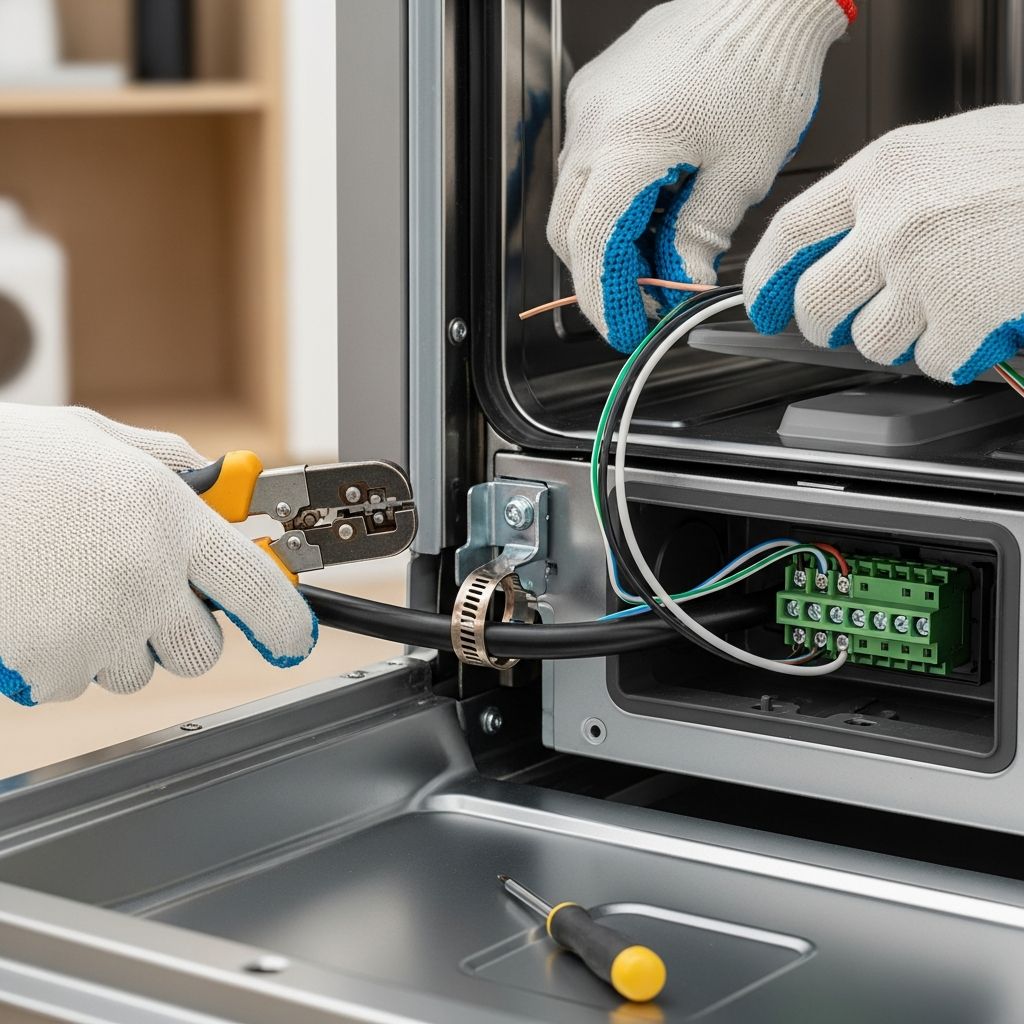
Installing a dishwasher often involves handling its electrical connection, a critical step that ensures safe and efficient operation. Whether replacing an old unit or setting up a new one, properly linking the power supply prevents hazards like shocks or fires. This guide details everything from preparation to final checks, drawing on standard practices for residential setups.
Understanding Dishwasher Power Needs
Dishwashers typically require a dedicated 120V, 60Hz circuit protected by a 15- or 20-amp breaker. This setup supports the appliance’s motor, heating element, and controls without overloading household wiring. Manufacturers specify using 14/2 or 12/2 NM cable for direct wiring or approved power cord kits for plug-in options.
Key requirements include:
- A grounded circuit to protect against faults.
- GFCI protection, either via breaker or outlet, especially near sinks.
- Minimum 24 inches of cable extension from the wall for flexibility.
Verify your home’s panel supports this; older homes may need an upgrade. Consult local codes, as some mandate GFCI for all kitchen circuits.
Gathering Essential Tools and Materials
Before starting, assemble these items to streamline the process:
- Wire strippers and cutters for precise prep.
- Screwdrivers (Phillips and flathead) for panels and terminals.
- Wire nuts, electrical tape, and strain relief clamps.
- Approved dishwasher power cord kit (e.g., 3-prong grounded type).
- Multimeter for voltage testing.
- Adjustable pliers and level for alignment.
For direct wiring, use NM cable; for cords, ensure compatibility like WX09X70910 kits. Non-conductive gloves and safety glasses add protection.
Preparation: Safety First
Power off at the breaker and confirm with a multimeter—no voltage means no risk. Shut off water supply under the sink to avoid surprises during access. Clear the cabinet space, removing old units if present by disconnecting lines first.
Position the dishwasher near its spot but not fully inserted. Access the junction box, usually on the right front underside, by removing the lower kick panel with screws. This exposes the terminal area for wiring.
Choosing Between Direct Wire and Power Cord
| Method | Pros | Cons | Best For |
|---|---|---|---|
| Direct Wire | Permanent, no exposed plug, cleaner look | Requires cabinet access, harder to service | New installs, code-preferred |
| Power Cord | Plug-and-play, easy removal | Needs nearby GFCI outlet, visible cord | Rentals, quick swaps |
Direct wiring involves routing house cable to the unit’s box; cords require a rear cabinet outlet 6-18 inches above floor.
Step-by-Step Direct Wiring Process
1. Route the Cable: Feed 14/2 NM cable through a cabinet hole, extending at least 24 inches. Secure with strain relief to prevent strain.
2. Prep Wires: Strip outer sheath, then ½-inch from black, white, and ground. Avoid nicking conductors.
3. Match Connections: In the junction box, twist black-to-black (hot), white-to-white (neutral), green/bare-to-green (ground) using wire nuts. Tighten securely.
4. Secure Cover: Tuck wires neatly, install box cover, ensuring no pinch points.
Test continuity before powering on.
Installing a Power Cord Kit
Many dishwashers ship without cords, requiring a kit. Steps include:
- Select UL-listed 3-prong cord matching model specs.
- Remove junction box cover; feed cord through knockout hole with bushing.
- Attach cord’s black to dishwasher black, white to white, green to green terminal or box ground.
- Secure strain relief clamp; replace cover.
Route cord to a dedicated GFCI outlet in the cabinet rear, positioned for easy access.
Integrating with Water and Drain Lines
Electrical work pairs with plumbing. Connect hot water line (3/8-inch min) to the unit’s inlet elbow, hand-tighten then use pliers sparingly. Attach drain hose high-looped to prevent backflow.
Slide unit into place, aligning flush with cabinets. Level using adjustable feet and locknuts—plumb setup ensures proper drainage.
Testing and Troubleshooting
Re-energize breaker, run a short cycle. Listen for hum, check water entry, inspect for leaks at all joints. No start? Verify breaker, door latch, and connections.
| Issue | Possible Cause | Solution |
|---|---|---|
| No Power | Tripped GFCI or loose wire | Reset GFCI, recheck nuts |
| Leaks at Power Box | Improper strain relief | Tighten clamp, reseat cover |
| Motor Hums but No Drain | Unlevel unit | Adjust legs, confirm level |
Run full cycle post-install; monitor first loads.
Safety Protocols and Code Compliance
Always de-energize before touching wires. Use torque specs for terminals if provided. Local codes may require permits—check with inspectors. GFCI is non-negotiable near water sources.
Avoid extension cords; they pose fire risks. If unsure, hire a licensed electrician.
Common Mistakes to Avoid
- Oversized wire nuts causing loose connections.
- Reversing hot/neutral, risking damage.
- Forgetting ground, voiding safety.
- Ignoring level—leads to poor cleaning/drainage.
Double-check polarities with a meter.
Advanced Tips for Longevity
Label circuits for quick identification. Upgrade to 20A if running high-draw cycles. For smart models, ensure Wi-Fi doesn’t interfere with power stability.
Annual checks: inspect wires for heat damage, tighten connections.
Frequently Asked Questions (FAQs)
Can I use a standard extension cord?
No—dishwashers need dedicated circuits. Extensions overheat.
What’s the difference between 15A and 20A breakers?
15A suffices for basic models; 20A for heated dry or heavy use.
Do all dishwashers need GFCI?
Yes, per NEC near sinks; confirm local rules.
How do I know if wiring is correct?
Use multimeter: 120V hot-to-neutral, continuity on ground.
What if my cabinet lacks an outlet for cord?
Install one or switch to direct wire with pro help.
Secure unit with brackets to countertop and cabinets post-testing. Replace panels for finished look.
References
- How to Install a Dishwasher — The Home Depot. 2023. https://ecoactions.homedepot.com/blog/projects/how-to-install-a-dishwasher/
- How To Install A Dishwasher – FAST AND EASY – Step By Step Guide — YouTube (Video Transcript). 2022. https://www.youtube.com/watch?v=Y_-T72WXZag
- Installation Instructions — Lowe’s (PDF). 2023. https://pdf.lowes.com/installationguides/084691817529_install.pdf
- Dishwasher Electrical Hookup — YouTube (Video Transcript). 2021. https://www.youtube.com/watch?v=fEZNNTsXBxs
- VIDEO: How to Direct Wire Electrical to a Dishwasher — Whirlpool Product Help. 2024. https://producthelp.whirlpool.com/Dishwashers/Product_Info/Dishwasher_Videos/VIDEO:_How_to_Direct_Wire_Electrical_to_a_Dishwasher
Similar Articles








Read full bio of Sneha Tete