Wood Inlay Patterns: A Complete Guide to Design & Techniques
Master stunning wood inlay patterns with expert techniques and design inspiration for every skill level.
Wood Inlay Patterns: A Complete Guide to Design and Techniques
Wood inlay is a sophisticated woodworking technique that has been used for centuries to create stunning decorative pieces. This intricate craft involves setting contrasting wood pieces, metals, or other materials into a recessed pattern carved into a base wood surface. Whether you’re a beginner looking to start your first project or an experienced woodworker seeking to refine your skills, understanding wood inlay patterns is essential to achieving professional results.
The art of wood inlaying combines precision, creativity, and technical skill to produce visually striking designs that enhance furniture, boxes, cutting boards, and decorative items. From simple geometric patterns to elaborate floral designs, the possibilities are virtually endless. This comprehensive guide will walk you through the most popular wood inlay patterns, essential techniques, and practical tips to help you create beautiful pieces.
Understanding Wood Inlay Fundamentals
Before diving into specific patterns, it’s crucial to understand the fundamental principles of wood inlay work. Wood inlay involves creating a cavity or depression in a base wood material and then filling it with contrasting wood or other materials. The key to successful inlay work lies in precise planning, accurate cutting, and careful fitting to ensure seamless integration between the inlay material and the base surface.
The basic process involves selecting complementary woods, designing your pattern, transferring the design to your base wood, routing or chiseling out the recessed area, preparing your inlay material, and finally fitting and finishing the piece. Each step requires attention to detail and the proper tools to achieve professional results.
Geometric Wood Inlay Patterns
Geometric patterns are excellent starting points for beginners because they feature clean lines and predictable shapes that are easier to execute than organic designs. These patterns provide visual interest while remaining manageable for novice woodworkers.
Circles and Rings
Circular inlay patterns create elegant, symmetrical designs that work beautifully on tabletops, box lids, and decorative panels. These designs can feature single circles, concentric rings, or multiple circles arranged in patterns. The simplicity of circular forms makes them ideal for beginners, while experienced craftspeople can create complex multi-circle compositions. Using a circle cutter or template ensures consistency and precision when creating these patterns.
Diamonds and Squares
Diamond and square patterns offer classic geometric appeal and work particularly well on larger surfaces such as table borders or panel decorations. These patterns can be arranged in grids, alternating colors, or in three-dimensional arrangements that create optical illusions. The straight lines and predictable measurements make these patterns relatively straightforward to execute with basic routing equipment.
Lines and Stripes
Linear inlay patterns create directional flow and visual continuity across a piece. Straight lines, herringbone patterns, and parallel stripes can be combined with different wood colors to create striking striped effects. These patterns work exceptionally well as borders, framing elements, or as the primary design focus on cutting boards and serving pieces.
Complex Geometric Combinations
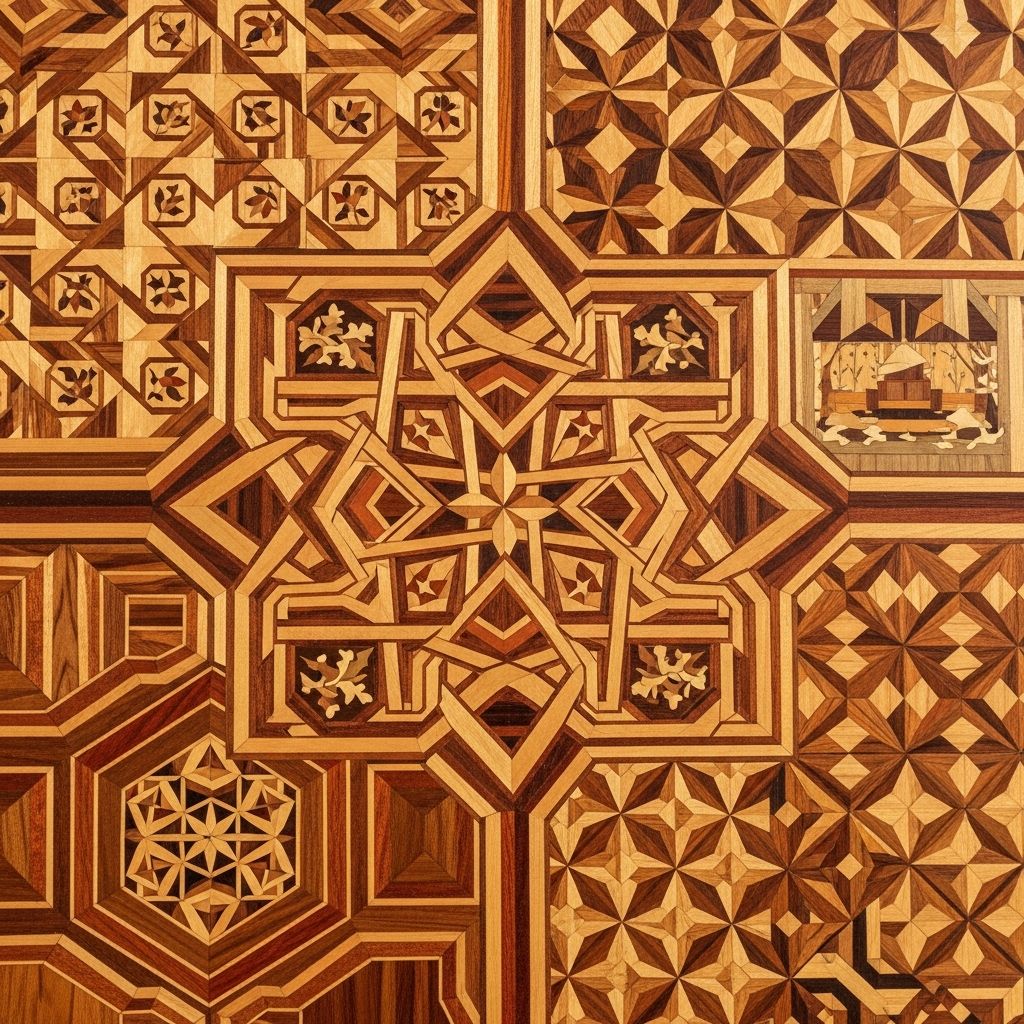
Advanced woodworkers can combine multiple geometric shapes to create intricate tessellating patterns. Hexagons, octagons, and star patterns create sophisticated designs that showcase technical mastery. These complex patterns require careful planning, precise measurements, and advanced routing techniques but result in truly impressive finished pieces.
Floral and Nature-Inspired Patterns
Floral and botanical designs bring organic beauty to wood inlay projects. These patterns range from simple stylized flowers to detailed botanical illustrations that require advanced skill and artistic ability.
Stylized Flower Designs
Simple flower motifs featuring basic petal shapes and stem elements offer an accessible entry point into organic pattern work. These designs can be created with several contrasting wood colors to add depth and visual interest. Stylized flowers work beautifully on jewelry boxes, table surfaces, and decorative panels.
Botanical and Floral Borders
Repeating floral border patterns create elegant framing elements around the perimeter of larger projects. Vine motifs, repeated flower clusters, and leaf patterns can be combined in borders that enhance the overall aesthetic of cutting boards, furniture edges, and decorative boxes. These designs benefit from careful pattern repetition to maintain visual consistency.
Detailed Botanical Illustrations
Advanced woodworkers can create highly detailed botanical designs featuring individual flowers, leaves with visible veining, and realistic proportions. These intricate pieces require artistic skill, patience, and often incorporate multiple wood species to achieve subtle color variations and shading effects.
Traditional and Cultural Patterns
Many traditional woodworking cultures have developed distinctive inlay patterns that carry historical and cultural significance. Learning these patterns connects your work to centuries of craftsmanship.
Celtic Interlace Patterns
Celtic designs feature interwoven lines and knots that create complex, mesmerizing patterns. These traditional designs work beautifully in decorative pieces, particularly those with cultural significance. Celtic patterns require careful planning to ensure the interlacing appears correct when inlaid into the base wood.
Islamic Geometric Patterns
Islamic art features sophisticated geometric patterns based on mathematical principles. These designs create stunning visual effects through careful arrangement of shapes, repeated motifs, and contrasting colors. Creating these patterns requires understanding geometric relationships and precise execution.
Native American and Indigenous Designs
Various indigenous cultures feature distinctive geometric and symbolic patterns in their artistic traditions. These designs often carry specific meanings and create powerful visual statements when incorporated into wood inlay projects. Respectful research and understanding of these cultural traditions is important when incorporating them into your work.
Abstract and Contemporary Patterns
Contemporary woodworkers often create modern, abstract designs that push the boundaries of traditional inlay work. These patterns allow for creative experimentation and personal artistic expression.
Color-Blocked Designs
Modern color-blocked patterns use contrasting wood colors to create bold, graphic designs. These designs can be completely abstract or semi-representational, creating striking visual effects through careful color choice and shape arrangement. The beauty of color-blocking lies in its simplicity and dramatic impact.
Gradient and Ombre Effects
Creating gradual transitions from one wood color to another produces sophisticated ombre effects. These patterns require careful selection of wood species with naturally complementary tones and precise arrangement to create seamless transitions. The result is a modern, sophisticated aesthetic.
Mixed Media Inlays
Contemporary designers often incorporate metals, stones, and other materials alongside wood to create unique contemporary pieces. Copper, brass, pewter, and semi-precious stones can add metallic accents, depth, and textural variety to wood inlay designs.
Choosing Woods for Inlay Patterns
The selection of wood species is crucial to the success of your inlay project. The contrast between the base wood and inlay material determines the visual impact of your design.
Contrasting Wood Selection
Successful inlay patterns rely on sufficient contrast between the base wood and inlay material. Classic combinations include light woods like holly or maple inlaid into dark woods like walnut or ebony, or vice versa. When selecting woods, consider both the natural color contrast and how the piece will look when finished.
Wood Species Characteristics
Different wood species have varying hardness, workability, and grain characteristics. Harder woods like holly and boxwood work well for inlay material because they resist movement and wear, while softer woods may compress or crack over time. Understanding wood movement due to moisture changes helps prevent gaps between the inlay and base wood.
Finishing Considerations
The finishing process affects how wood colors appear in the final piece. Some finishes darken wood, others highlight grain, and some create matte or glossy effects. Testing your finish on sample wood pieces helps ensure the final color contrast meets your expectations.
Tools and Equipment for Wood Inlay
Creating professional wood inlay work requires specific tools and equipment designed for precision work:
- Router: Essential for routing out inlay cavities with precision and consistent depth
- Chisels: Used for detailed work, final cleanup, and hand-carved elements
- Marking and Measuring Tools: Pencils, calipers, and marking gauges ensure accurate design transfer
- Cutting Tools: Jeweler’s saws, scroll saws, or band saws for cutting inlay material
- Clamping Equipment: Essential for holding work during routing and assembly
- Sanding Equipment: Sanders, scrapers, and abrasives for smoothing and finishing
- Templates and Patterns: Ensure consistency and accuracy in design reproduction
Step-by-Step Process for Creating Inlay Patterns
The successful execution of wood inlay follows a systematic process that ensures quality results:
Design Transfer
Begin by creating or selecting your pattern and transferring it accurately to the base wood using carbon paper, transfer tape, or direct marking. Precision in this step directly affects the quality of your finished piece.
Cavity Routing
Using appropriate bits and careful technique, route out the recessed areas for your inlay. Maintain consistent depth, which typically ranges from 1/8 inch to 1/4 inch depending on your design and materials. Stop blocks and careful handling prevent overshooting and ensure clean edges.
Inlay Material Preparation
Cut your inlay material to fit the prepared cavities with slight interference fit, meaning the inlay material is slightly larger than the cavity. This ensures no gaps remain after fitting and finishing.
Fitting and Installation
Carefully fit the inlay material into the cavity, adjusting and sanding as needed for a perfect fit. Use appropriate adhesives designed for wood-to-wood bonding, and clamp firmly until the adhesive cures completely.
Final Finishing
Once the adhesive cures, sand the surface flush using progressively finer grits until the inlay and base wood form a seamless, smooth surface. Apply finish to protect and enhance the appearance of your completed piece.
Common Mistakes and How to Avoid Them
Learning from common mistakes helps ensure success in your inlay projects:
Insufficient Wood Contrast: Ensure adequate color difference between base and inlay wood for visual impact.
Inconsistent Cavity Depth: Maintain uniform depth throughout your routed areas for professional appearance and proper fitting.
Poor Pattern Transfer: Take time to accurately transfer your design; mistakes at this stage compound through the entire project.
Inadequate Clamping Pressure: Apply sufficient pressure when gluing inlay material to ensure solid contact and strong adhesive bonds.
Over-Sanding: Sand carefully after installation to avoid creating depressions around the inlay or exposing the inlay material prematurely.
Design Inspiration and Pattern Resources
Finding inspiration for your patterns can come from numerous sources. Traditional woodworking books and publications showcase historical patterns. Nature provides endless inspiration for organic designs. Architectural elements, textile patterns, and cultural artifacts offer rich sources for pattern ideas. Digital design software allows you to preview patterns before committing to the actual inlay work.
Advanced Techniques for Pattern Enhancement
Once comfortable with basic inlay work, explore advanced techniques that add sophistication to your patterns:
Color Blending: Use multiple wood species to create subtle color transitions within a single pattern.
Surface Texturing: Add texture within inlay areas using tools like burrs or specialized bits for visual depth.
Three-Dimensional Effects: Create optical illusions using perspective and careful color arrangement.
Metal Accents: Incorporate metal inlays to create striking contrasts and highlight specific pattern elements.
Frequently Asked Questions
Q: What woods are best for wood inlay projects?
A: The best woods provide strong contrast and stability. Light woods like holly, maple, and ash work well with dark woods like walnut, ebony, and wenge. Choose dense, stable woods that resist movement and wear.
Q: How deep should I route inlay cavities?
A: Standard cavity depth ranges from 1/8 inch to 1/4 inch, depending on your design complexity and material thickness. Deeper cavities provide stronger mechanical anchoring but require more material.
Q: Can beginners create wood inlay patterns?
A: Yes, beginners should start with simple geometric patterns like circles, squares, or stripes. Master basic techniques before progressing to complex organic or cultural designs.
Q: What adhesives work best for wood inlay?
A: Wood glues like polyurethane or water-based adhesives work well for wood-to-wood bonding. Epoxy provides excellent strength and gap-filling properties. Always follow manufacturer recommendations.
Q: How do I prevent gaps between inlay and base wood?
A: Cut inlay material with slight interference fit, use strong clamp pressure during glue curing, and account for wood movement by understanding moisture content changes in your materials.
Q: What finish should I apply to inlay projects?
A: Oil, polyurethane, or lacquer finishes all work well on inlay projects. Test your chosen finish on sample wood combinations to ensure the color contrast remains visually appealing.
Q: How long does a wood inlay project typically take?
A: Simple projects may take a few hours, while complex designs can require several weeks. Curing time for adhesives typically ranges from 4 to 24 hours depending on the product used.
Q: Can I create curved inlay patterns?
A: Yes, using flexible inlay material, appropriate cutting tools, and careful technique allows creation of curved patterns. Test your approach on scrap material first.
References
- Mastering Wood Inlay: A Step-by-Step Guide to Creating Stunning Designs — Family Handyman. 2024. https://www.familyhandyman.com/list/wood-inlay-patterns/
- The Art of Woodworking: Traditional Joinery and Inlay Techniques — Fine Woodworking Magazine. 2023. https://www.finewoodworking.com/
- Wood Species Guide: Selecting Materials for Fine Woodworking — The Woodworkers Guild of America. 2024. https://www.thewoodworkersguild.com/
- Adhesives in Woodworking: Selection and Application — Woodcraft Magazine. 2023. https://www.woodcraftmagazine.com/
- Router Techniques for Precision Inlay Work — Sawdust Making Workshops. 2024. https://www.sawdustmaking.com/
Similar Articles







Read full bio of Sneha Tete