Wood Putty vs Wood Filler: Key Differences
Understand the key differences between wood putty and wood filler for your next woodworking project.
Wood Putty vs Wood Filler: Understanding the Key Differences
When it comes to repairing wood surfaces, two materials frequently come up in conversation: wood putty and wood filler. While many homeowners and DIY enthusiasts use these terms interchangeably, they are distinctly different products with unique compositions, applications, and advantages. Understanding these differences is essential for choosing the right material for your specific project. Whether you’re repairing unfinished furniture, fixing hardwood floors, or addressing cosmetic imperfections on finished woodwork, knowing when to use wood putty versus wood filler can mean the difference between a professional-looking repair and a job that requires redoing.
Both products serve the purpose of filling gaps, holes, and imperfections in wood, but their distinct chemical compositions and physical properties make them suitable for different scenarios. This comprehensive guide will explore the fundamental differences between these two materials, their respective advantages and disadvantages, and how to determine which one is best for your particular woodworking needs.
Composition and Material Makeup
Understanding what goes into each product is the first step in determining which one to use for your project. Wood filler and wood putty have distinctly different chemical compositions that directly affect their performance and suitability for various applications.
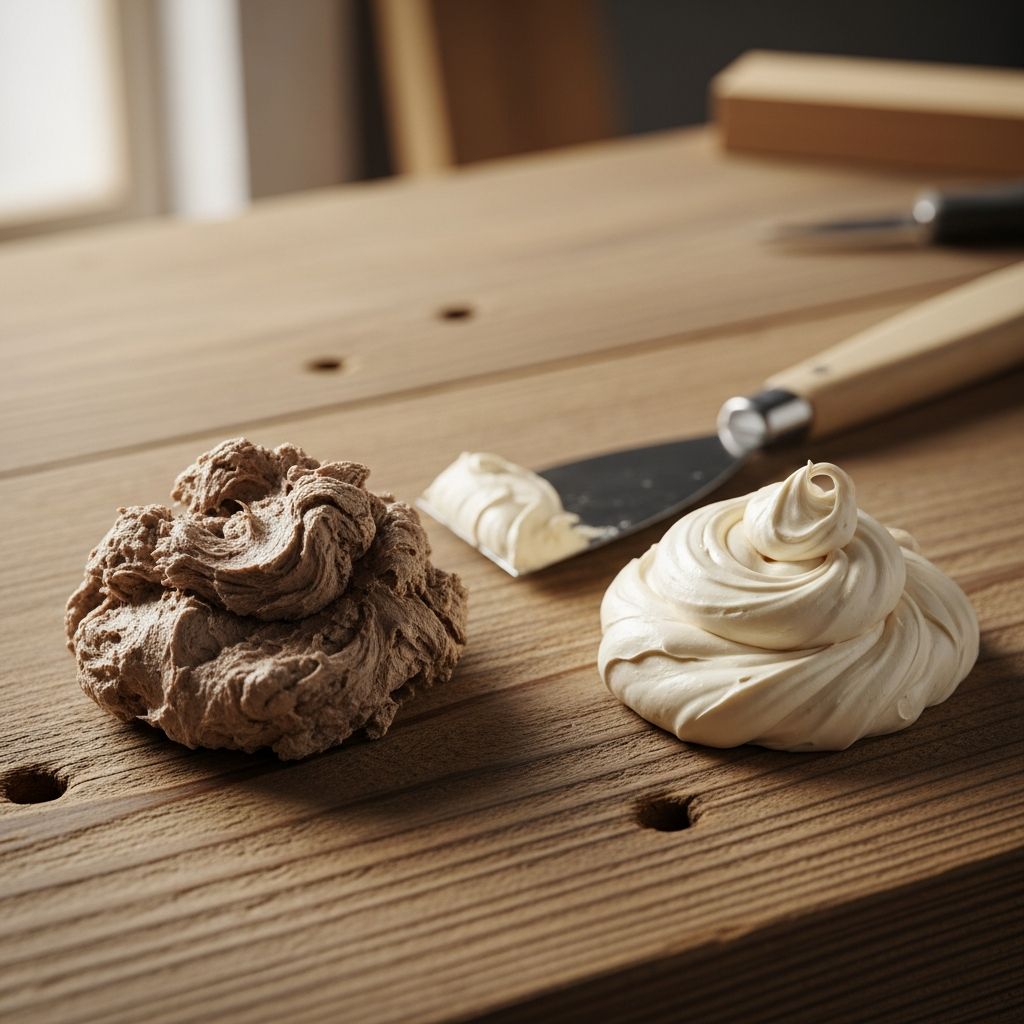
Wood Filler is typically a paste-like material composed of wood fibers, such as sawdust, combined with binders and resins that harden over time. These binders can be either water-based or solvent-based, each offering different advantages in terms of drying time, ease of application, and environmental impact. Water-based fillers dry quickly, are easier to clean up with soap and water, and produce minimal odor, making them ideal for indoor projects. Solvent-based fillers, on the other hand, offer superior resistance to temperature and humidity fluctuations but require chemical solvents for cleanup and produce volatile organic compounds. Wood filler comes in various colors to match different wood tones and is frequently available as a powder that you mix manually with water, though pre-mixed versions are also available. The ability to mix it yourself provides flexibility in controlling the hardness-to-pliability ratio to match your specific needs.
Wood Putty consists of a mixture of various chemicals, binders, and coloring agents formulated to create a uniform consistency. Often referred to as “wood plastic” because of its unique composition and feel, wood putty is primarily an oil-based compound that may include natural or synthetic ingredients. This formulation gives wood putty its characteristic pliability and soft texture that distinguishes it from the harder wood filler. Like wood filler, putty comes in a wide range of wood tones depending on the pigments used, allowing for color matching with different wood surfaces.
Compatibility With Different Wood Types
One of the most critical factors in choosing between wood putty and wood filler is understanding how each material interacts with different wood conditions and finishes.
Wood Filler and Unfinished Wood: Wood filler excels when used on unfinished or bare wood surfaces. Due to its high concentration of wood fibers, it bonds exceptionally well with unfinished wood, creating a strong, durable connection that becomes rock-solid when properly dried and sealed. This makes wood filler the preferred choice for repairing dents, gashes, and gouges in unfinished furniture or raw wood surfaces. While wood filler can technically be applied to finished wood, it requires additional preparation steps—specifically sanding and refinishing—since it’s not water-resistant and won’t adhere optimally to existing finishes.
Wood Putty and Finished Wood: Wood putty is primarily designed for use on finished wood surfaces. It forms excellent adhesion to existing finishes such as paint, stain, or varnish but does not create a strong bond with bare wood beneath the finish. If you attempt to use wood putty on unfinished wood, the chemicals in the putty can actually damage the wood fibers. This makes wood putty the logical choice for addressing cosmetic imperfections on already-finished woodwork, trim, and furniture where maintaining the existing finish is important.
Durability and Longevity Considerations
The durability of your wood repair depends largely on which product you choose and how well it’s applied and finished. These two materials offer markedly different performance characteristics in terms of how they hold up over time.
Wood fillers are engineered to become exceptionally hard when they dry, especially after sanding and sealing. This superior hardness makes wood filler ideal for applications where a rock-solid bond is critical, such as repairing high-traffic areas or furniture that experiences regular use. Once properly cured and finished, wood filler repairs can last for many years without significant deterioration.
Wood putty, conversely, is known for being less durable due to its softer composition. This softer nature makes it more prone to nicks, scratches, and surface damage, particularly in areas that experience frequent contact or impact. Because of this reduced durability, wood putty repairs may require periodic touch-ups to maintain their appearance. However, it’s worth noting that wood putty offers a distinct advantage in cost-effectiveness and longevity of storage—if wood putty dries in its container, a few drops of acetone will soften it and make it usable again, eliminating waste.
Pliability and Flexibility After Drying
The flexibility of a repair material after it dries is an important consideration, particularly for wood that experiences expansion and contraction due to temperature and humidity changes.
Wood filler varies in pliability depending on the specific product you choose. Some formulations are quite stiff, making them ideal for precise filling of larger holes, while others are more flexible, providing better control when working with intricate details. Regardless of the specific product, most wood fillers become notably harder after drying.
Wood putty distinguishes itself through superior pliability and flexibility. Even after drying, wood putty retains some flexibility, allowing it to accommodate the subtle expansion and contraction of wood when temperature and humidity levels change. This characteristic makes wood putty particularly valuable for woodwork in bathrooms, basements, and other environments where moisture fluctuations are common. Both materials are easy to spread into tight corners and cracks before drying, so application difficulty is not a significant differentiator.
Sanding and Finishing Properties
How easily a repair can be sanded and finished is a crucial advantage of wood filler that often makes it the preferred choice for projects requiring a seamless appearance.
A major advantage of wood filler is that it can be sanded smooth after it dries, thanks to how hard it becomes. This ability to sand provides you with a truly flawless finish that seamlessly integrates with the surrounding wood, allowing for professional-quality results that are virtually undetectable once properly painted or stained.
Wood putty, by contrast, typically should not be sanded due to its softer composition. Attempting to sand wood putty not only creates a mess but can actually increase surface imperfections if not done with extreme care. This limitation means that the final appearance of wood putty repairs is somewhat more dependent on initial application skill and color matching accuracy.
Versatility and Range of Applications
While both wood filler and wood putty are effective at their primary jobs, wood fillers offer slightly greater versatility across different materials and applications. Water-based fillers in particular can work with a variety of surfaces beyond just wood, including drywall, plaster, render (stucco), concrete, and siding. This broader compatibility makes wood filler a more valuable addition to a homeowner’s repair toolkit if you anticipate working on diverse home improvement projects. Wood putty, while excellent for its specific applications, is more limited in scope and is best reserved for wood-specific finishing work.
Wood Filler Advantages and Disadvantages
Understanding the specific strengths and weaknesses of wood filler can help you determine if it’s the right choice for your project.
Advantages of Wood Filler
- Easy to sand and paint after application and curing
- Hardens into a solid, durable surface ideal for long-term repairs
- Available in multiple types offering a wide range of choices for different needs
- Easy to store and allows you to prepare enough material for larger projects
- You maintain control over hardness by adjusting the water ratio during mixing
- Dries relatively quickly, allowing projects to progress at a good pace
- More versatile with various applications and compatible surfaces beyond just wood
- Can be stained before or after application for seamless color matching
Disadvantages of Wood Filler
- Cannot be sanded if it over-hardens in certain applications
- Doesn’t accept stain in the same way wood does, potentially showing color variation
- Can be challenging to work with paint application due to absorption differences
- Doesn’t perform well with unfinished wood in some formulations, potentially damaging fibers
- Some formulations take considerable time to achieve full hardness
- Not suitable for exterior applications due to weather resistance limitations
- Difficult to adhere to already-stained or painted finishes without surface preparation
Wood Putty Advantages and Disadvantages
Wood putty has its own set of distinct advantages and limitations that make it preferable in certain situations.
Advantages of Wood Putty
- More cost-effective than wood filler because it lasts longer when stored properly
- Can be revived if it dries in the container by adding a few drops of acetone
- Comes in numerous colors for accurate color matching with wood finishes
- Remains pliable even after drying, flexing with wood expansion and contraction
- Ideal for woodwork in moisture-prone environments like bathrooms and basements
- Adheres well to existing finishes without requiring extensive surface preparation
- No sanding required, simplifying the finishing process
Disadvantages of Wood Putty
- Less durable than wood filler and more prone to nicks and scratches
- Softer composition makes it unsuitable for high-traffic areas
- May require frequent touch-ups to maintain appearance
- Won’t accept stain the same way wood does, potentially showing visible color difference
- Cannot be sanded without creating mess and imperfections
- Not suitable for unfinished wood applications
- Longer drying time compared to water-based wood fillers
- Limited versatility compared to wood filler for non-wood applications
Comparison Table: Wood Filler vs Wood Putty
| Characteristic | Wood Filler | Wood Putty |
|---|---|---|
| Primary Composition | Wood fibers, sawdust, water or solvent-based binders | Oil-based compounds with chemicals and natural/plastic ingredients |
| Best Used On | Unfinished wood surfaces | Finished wood surfaces |
| Drying Time | Quick (water-based) to moderate (solvent-based) | Longer drying time |
| Hardness After Drying | Very hard, rock-solid | Soft, remains somewhat pliable |
| Sanding Capability | Yes, can be sanded smooth | Not recommended for sanding |
| Flexibility | Varies by product formulation | Retains flexibility after drying |
| Durability | Highly durable for long-term use | Less durable, prone to damage |
| Color Matching | Standard wood tones available | More color options for precise matching |
| Stainability | Can be stained before or after | Won’t stain uniformly like wood |
| Cost Effectiveness | Higher initial cost | More cost-effective, can be revived |
| Versatility | Works on drywall, concrete, plaster, etc. | Limited to wood applications |
Choosing the Right Product for Your Project
Selecting between wood putty and wood filler ultimately depends on the condition of your wood surface and your desired final outcome. Consider these guidelines when making your decision:
Choose Wood Filler if: You’re repairing unfinished wood, need a durable long-term solution, want to sand and paint the repair for a seamless appearance, are working on high-traffic areas, or need versatility for multiple surface types. Wood filler is also the better choice if you want to stain the repair to match surrounding wood.
Choose Wood Putty if: You’re addressing minor cosmetic blemishes on already-finished wood, want excellent color matching options, are working in moisture-prone environments where wood expansion and contraction occur, prefer a product that won’t require sanding, or need better long-term storage stability. Wood putty is also ideal for quick cosmetic fixes where durability for heavy use isn’t a concern.
Best Practices for Application
Regardless of which product you choose, proper application technique is crucial for achieving professional results. For wood filler, ensure the surface is clean and free of dust, apply the filler slightly overfilled so it can be sanded flush, and allow adequate drying time before sanding. For wood putty, apply to clean surfaces in thin layers, allow proper drying time between applications if multiple coats are needed, and avoid sanding the final coat.
Frequently Asked Questions
Q: Can I use wood filler on finished wood?
A: While it’s technically possible to use wood filler on finished wood, it’s not ideal. Wood filler requires sanding and refinishing after application because it doesn’t adhere well to existing finishes and isn’t water-resistant. Wood putty is the better choice for finished wood surfaces.
Q: Can I use wood putty on unfinished wood?
A: No, you should not use wood putty on unfinished wood. The chemicals in wood putty can damage bare wood fibers and won’t create a strong bond. Wood filler is the appropriate choice for unfinished wood repairs.
Q: Which dries faster?
A: Water-based wood fillers generally dry faster than wood putty. Solvent-based fillers may take longer but typically still dry faster than putty, which has a relatively long drying time.
Q: Can I sand wood putty?
A: It’s not recommended to sand wood putty due to its soft composition. Sanding wood putty creates a mess and can increase surface imperfections. If you need a sandable repair solution, use wood filler instead.
Q: Is wood putty more cost-effective than wood filler?
A: Yes, wood putty is generally more cost-effective, especially for storage purposes. If wood putty dries in its container, adding a few drops of acetone will revive it, whereas dried wood filler typically cannot be salvaged.
Q: Can both products be painted?
A: Yes, both wood filler and wood putty can be painted. However, wood filler generally accepts paint more uniformly after sanding, whereas wood putty may require careful color selection for cosmetic applications.
Q: Which product is better for exterior use?
A: Neither product is ideally suited for exterior use due to weathering concerns. However, if exterior repair is necessary, wood filler with a solvent-based formulation offers better resistance to temperature and humidity changes than wood putty.
Summary and Final Recommendations
Both wood filler and wood putty are valuable tools in any homeowner’s or woodworker’s toolkit, each serving distinct purposes. Wood filler excels at creating durable, hard repairs that can be sanded and finished to perfection, making it ideal for unfinished wood and projects requiring long-term durability. Wood putty, with its superior flexibility and color matching options, is perfectly suited for cosmetic touch-ups on finished wood surfaces where moisture fluctuations are a concern.
The key to successful wood repairs is understanding these differences and selecting the appropriate material for your specific project requirements. By following the guidelines and recommendations in this guide, you’ll be well-equipped to make informed decisions that result in professional-quality repairs that enhance the appearance and functionality of your wood surfaces.
References
- Wood Filler vs Wood Putty — Durham’s Rock Hard Water Putty. 2024. https://durhamswaterputty.com/wood-filler-vs-wood-putty/
- Wood Putty vs. Wood Filler: The Differences — Max Warehouse. 2024. https://www.maxwarehouse.com/blogs/business-blog/wood-putty-vs-wood-filler-whats-the-difference
- Wood Putty vs. Wood Filler: What’s the Difference? — This Old House. 2024. https://www.thisoldhouse.com/woodworking/23189969/wood-putty-vs-wood-filler
Similar Articles







Read full bio of medha deb